
Insurance Protection Designed for Contractors, Trades, and Construction Businesses
Contractor Insurance Built Around the Work You Perform
Contractors face risks that extend beyond damage to a building or job site. Injuries, property damage, employee accidents, vehicle claims, damaged tools and equipment, contractual requirements, and project-related losses can all affect a contracting business.
Florida contractor insurance can combine multiple commercial insurance coverages based on the work you perform, the employees and subcontractors you use, the vehicles and equipment you operate, and the requirements of your projects and contracts.
First Florida Agency helps general contractors, specialty contractors, trades, and construction businesses review coverage options such as:
-
General Liability
-
Workers’ Compensation
-
Commercial Auto
-
Hired and Non-Owned Auto
-
Builders Risk
-
Contractors Equipment and Inland Marine
-
Commercial Property
-
Commercial Umbrella or Excess Liability
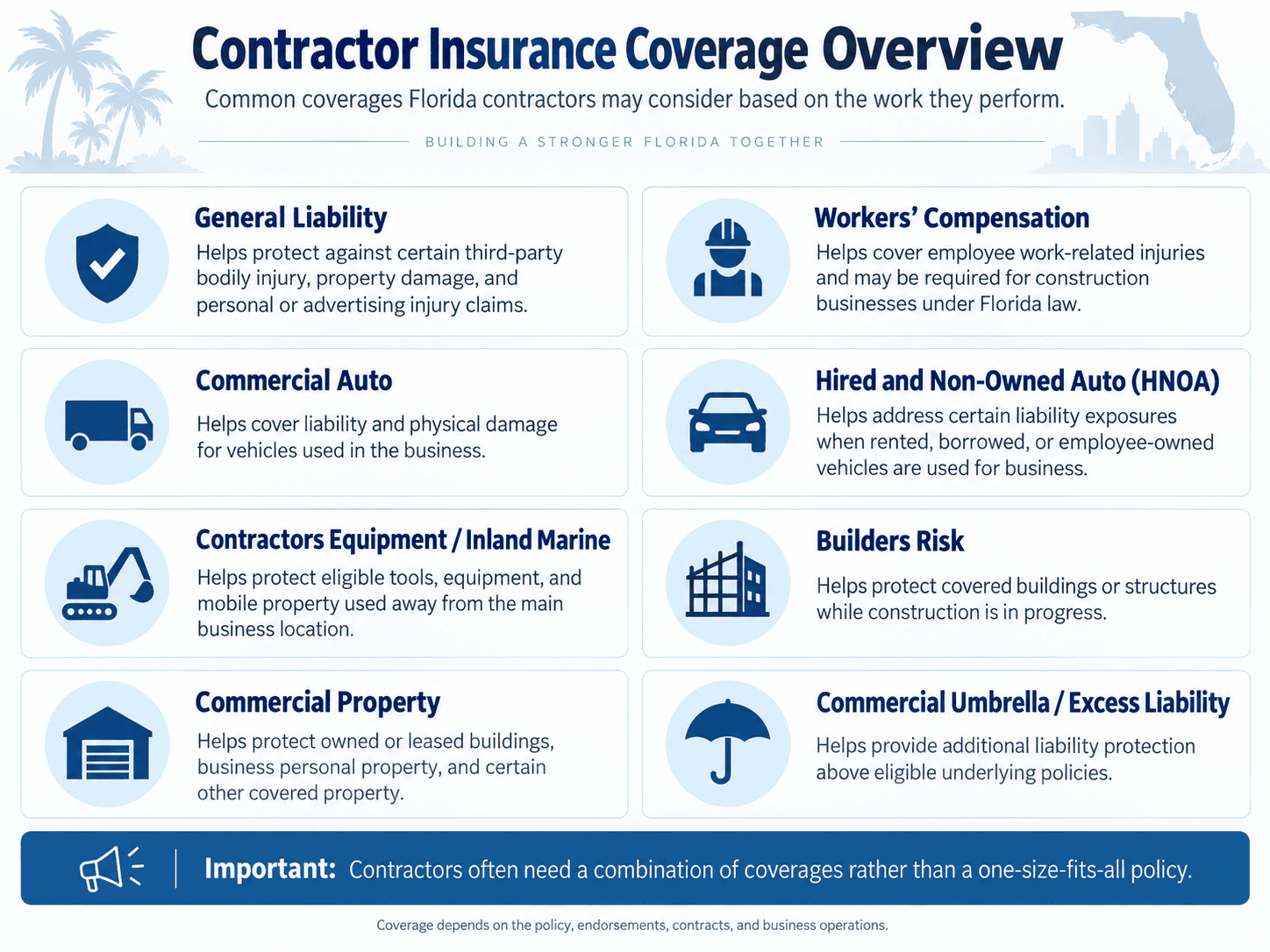 This overview highlights the main insurance coverages Florida contractors may need to consider, from liability and workers’ compensation to commercial auto, equipment, builders risk, property, and umbrella protection.
What Is Contractor Insurance in Florida?
Contractor insurance is not one standardized insurance policy. Instead, it generally refers to a combination of business insurance coverages selected to address the specific risks created by a contractor’s operations.
The appropriate insurance program can vary depending on factors such as:
-
The type of contracting work performed
-
Employees and payroll
-
Use of subcontractors
-
Vehicles used for business
-
Tools and equipment
-
Project size and value
-
Work performed at customer locations
-
Contractual insurance requirements
-
Licensing requirements
-
Prior claims and loss history
A general contractor may have very different insurance needs from an electrician, plumber, HVAC contractor, roofer, painter, carpenter, or excavation company.
The goal is to build an insurance program around the actual work the contractor performs and the risks created by that work, rather than assuming every contracting business needs the same coverage.
What Types of Contractors Need Business Insurance?
Contractor insurance can be important for businesses of many sizes and trades, from individual contractors to companies with employees, vehicles, equipment, and multiple crews working across different job sites.
Businesses that may need contractor insurance include:
-
General contractors
-
Electrical contractors
-
Plumbing contractors
-
HVAC contractors
-
Roofing contractors
-
Carpentry and framing contractors
-
Painting contractors
-
Flooring contractors
-
Remodeling contractors
-
Masonry and concrete contractors
-
Landscaping contractors
-
Excavation and grading contractors
-
Drywall contractors
-
Tile and countertop installers
-
Swimming pool contractors
-
Handyman and home improvement businesses
-
Other specialty trade contractors
The insurance needs of each contractor can be very different. A contractor working alone on residential remodeling projects may have different exposures from a company operating multiple work vehicles, employing crews, using subcontractors, or performing larger commercial projects.
The type of work performed, project size, employees, subcontractors, vehicles, tools and equipment, and contractual requirements should all be considered when building a contractor insurance program.
What Does General Liability Insurance Cover for Contractors?
General liability insurance can help protect contractors against certain third-party claims involving bodily injury, property damage, and personal or advertising injury arising from their business operations.
For contractors, these claims may involve situations such as:
-
A customer or other third party being injured at a job site
-
Accidental damage to a customer’s property
-
Damage caused while performing work
-
Certain claims arising from completed work
-
Legal defense costs for covered liability claims
General liability does not cover every contractor risk. Employee injuries, commercial auto accidents, professional errors, damage to your own tools or equipment, and certain pollution exposures generally require other insurance or specialized coverage.
For a broader explanation of business liability coverage, learn more about Florida General Liability Insurance.
Interactive Graphic

Commercial General Liability Coverage
Risk Factor
As a contractor, your business may be susceptible to many risks, such as claims due to bodily injury, property damage, personal injury, and more. And, if you hire other contractors to perform work on your behalf, you can be held responsible for any damage they cause on the job.
Solution
Commercial general liability insurance is an absolute necessity for every contractor. This type of protection provides broad coverage for premises, operations, products, and claims to third parties or property when you are deemed responsible and liable. It will also pay to defend any covered lawsuit or action regardless of its merit.
Commercial Property Coverage
Risk Factor
When a fire, theft, or another type of disaster strikes, your commercial property and everything within it can suffer a significant loss. This can have a detrimental effect on your business.
Solution
Commercial property insurance can help protect the property your business owns and leases, including things like equipment, inventory, furniture, and fixtures. Whether you own your building or lease your workspace, commercial property insurance can be purchased separately or can be combined with other necessary coverage to protect your business’ physical assets.
Contractors' Equipment Coverage
Risk Factor
You’re constantly moving your tools from one job site to another, exposing your contractor business to potential loss due to damage or theft. And without your specialized tools and equipment, your job site may come to a screeching halt.
Solution
As a contractor, you need contractors' equipment insurance - a policy specially designed to protect your tools and equipment on the move. The policy will cover equipment for a variety of losses, including fire, explosion, vandalism, theft, collision with other equipment or objects and overturning. Unlike standard commercial property insurance policies, contractors' equipment insurance often covers losses caused by floods and earthquakes.
Builders Risk and Installation Insurance
Risk Factor
A building under construction is not covered under a standard building insurance policy or a home insurance policy since it is not a complete structure. As a contractor, you may be responsible for unique loss exposures related to buildings under construction such as the theft of building materials and high valued equipment such as generators and compressors.
Solution
Builders risk and installation insurance provides coverage for homes or buildings while undergoing construction, until they are completed. The policy covers the contractors’ interest in materials at the job site before they are installed, construction materials in transit designated for the contractors' equipment insurance–a policy specially and the value of the property being constructed until it is completed.
Workers’ Compensation
Risk Factor
If one of your employees receives an injury or becomes ill due to a work-related occurrence, you are required by law to have the proper coverage in place.
Solution
Workers' compensation protects your employees should a job-related injury or sickness occur during the course of employment. This coverage is required by law and may vary by area, so be sure that you understand your obligations for all physical locations where your business operates in and all physical locations where you hire your employees.
Business Auto Insurance
Risk Factor
As a contractor, you have many exposures associated with your business vehicles–owned or leased. With a fleet of cars, trucks, vans, or other types of vehicles used in the course of business, a single accident can potentially put your contractor business in financial jeopardy.
Solution
Business auto insurance provides coverage for vehicles owned or leased by a contractor and provides coverage for bodily injury, property damage, and other exposures, and could include comprehensive and collision coverage as well.
Hold Harmless / Additional Insureds
Risk Factor
If you are performing as a contractor on a construction project where other contractors and vendors are involved, you could be held liable for any damages or injuries caused by the other contractors or vendors, leaving you with costly legal fees and settlement costs. Your business needs to be protected against the risk of some other company, vendor or subcontractor causing damage to people or property of your mutual customer.
Solution
Consider having a contract in place with each entity that includes a hold harmless agreement in your favor. A hold harmless agreement provides that the entity will hold you harmless for any injuries or damage caused by their negligence. In addition, the contract should require that the entity list you as an additional insured on their policy. This may provide you with coverage under their policy for injuries or damage they cause if you are named in a lawsuit.
Commercial Umbrella / Excess Insurance
Risk Factor
Losses and lawsuits are quite common in the construction business, and settlements can be substantial. If your business is found to be responsible for damage or injury on the job site, you could be facing a large liability loss that exceeds the basic limits of your standard policy.
Solution
You should consider purchasing a commercial umbrella insurance policy which provides higher limits, typically between $2,000,000 and $10,000,000, and often broadened coverages. Coverage is extended over various policies, including general liability insurance, business auto, and directors and officers liability insurance.
How Does Products-Completed Operations Coverage Protect Contractors?
A contractor’s liability exposure does not necessarily end when the job is finished.
Products-completed operations coverage, typically included within a Commercial General Liability policy subject to its terms and limits, can help address certain bodily injury or property damage claims that arise from completed work.
For example, a claim could involve:
-
Property damage allegedly caused by completed installation work
-
A customer or other third party being injured because of allegedly defective completed work
-
Damage that becomes apparent after the contractor has left the job site
-
Certain claims involving work performed by subcontractors, depending on the policy and endorsements
For contractors, this coverage can be especially important because some construction defects or workmanship-related problems may not become apparent until weeks, months, or even years after a project is completed.
Does General Liability Cover Faulty Workmanship?
Not automatically.
General Liability insurance is not a warranty on the contractor’s work and generally should not be expected to pay simply because work must be repaired or replaced.
However, depending on the policy language and circumstances, coverage may apply when allegedly faulty work results in covered bodily injury or property damage to other property.
Exclusions, subcontractor provisions, endorsements, and state law can all affect how a claim is handled.
How Do Subcontractors, Additional Insureds, and Contractual Requirements Affect Contractor Insurance?
Contractors often work with subcontractors and enter agreements that require specific insurance limits, endorsements, or proof of coverage. These contractual requirements can affect how a contractor’s insurance program should be structured.
A general contractor may be required to carry certain liability limits, name another party as an additional insured, provide a waiver of subrogation, maintain completed-operations coverage, or meet other insurance requirements before work begins.
What Is an Additional Insured?
An additional insured is a person or organization added to another party’s liability policy for certain covered claims arising from the named insured’s operations, subject to the policy wording and endorsement.
For contractors, additional insured requirements commonly arise in agreements with:
-
Property owners
-
General contractors
-
Developers
-
Landlords
-
Municipalities
-
Other businesses involved in a project
Being listed as an additional insured does not make that party the policyholder, and the scope of protection depends on the specific endorsement and circumstances of the claim.
Why Do Subcontractors Matter?
Using subcontractors can create additional liability and insurance considerations for a contractor.
Contractors may require subcontractors to maintain their own insurance, provide certificates of insurance, meet minimum liability limits, and name the contractor or other parties as additional insureds when required by contract.
A contractor should not assume that simply hiring an insured subcontractor eliminates its own potential liability exposure.
What Is Contractual Risk Transfer?
Contractual risk transfer refers to provisions in a contract that allocate certain responsibilities between parties.
Insurance requirements, indemnification provisions, additional insured status, and waiver-of-subrogation provisions may all play a role in how risk is allocated on a construction project.
Because contract language and insurance coverage do not always match automatically, contractors should review insurance requirements before signing agreements or beginning work.
What Are Certificates of Insurance and Why Do Contractors Need Them?
A Certificate of Insurance (COI) is a document that provides a summary of certain insurance coverage in effect at the time the certificate is issued. Contractors are often asked to provide certificates before beginning work, entering a job site, signing a contract, or receiving payment.
A certificate may show information such as:
-
Insurance company and policy numbers
-
Policy effective and expiration dates
-
Types of insurance carried
-
Liability limits
-
Workers’ Compensation coverage
-
Commercial Auto coverage
-
Certificate holder information
-
Certain additional insured or waiver-of-subrogation information when applicable
Does a Certificate of Insurance Provide Coverage?
Not by itself.
A certificate is generally evidence of insurance and does not create, change, or extend coverage beyond what is provided by the actual insurance policy and endorsements.
For example, simply listing a customer, general contractor, or property owner as a certificate holder does not automatically make that party an additional insured. Additional insured status generally requires the appropriate policy language or endorsement.
Why Should Contractors Collect Certificates From Subcontractors?
Contractors that hire subcontractors may require proof that those subcontractors maintain appropriate insurance before allowing them to begin work.
Reviewing certificates can help confirm items such as:
-
General Liability coverage
-
Workers’ Compensation coverage
-
Commercial Auto coverage when applicable
-
Required liability limits
-
Policy expiration dates
-
Additional insured requirements
-
Other contractual insurance requirements
Certificates should also be monitored for expiration because coverage shown on an older certificate may no longer be in force.
Why Certificates Matter on Construction Projects
Owners, developers, general contractors, lenders, property managers, and other parties may require certificates of insurance as part of a construction contract or vendor agreement.
Contractors should review these requirements carefully and make sure the underlying policy and endorsements—not just the certificate—are structured to satisfy the applicable contractual requirements.
 Certificates of Insurance can help document whether subcontractors maintain required coverage, but contractors should also confirm that the underlying policies and endorsements satisfy the applicable contract requirements.
What Are Florida’s Workers’ Compensation Requirements for Contractors?
Workers’ Compensation insurance can help provide benefits for employees who suffer qualifying work-related injuries or illnesses. For contractors, this coverage is especially important because construction work can involve job-site injuries, falls, lifting accidents, equipment-related injuries, and other occupational hazards.
Florida applies stricter Workers’ Compensation requirements to the construction industry than to many non-construction businesses.
When Is Workers’ Compensation Required for Florida Construction Businesses?
Florida construction-industry employers generally must maintain Workers’ Compensation coverage when they have one or more employees, including non-exempt corporate officers or members of a limited liability company.
This differs from many non-construction businesses in Florida, where the general threshold is four or more employees.
Whether a particular trade is considered part of the construction industry is determined under Florida’s Workers’ Compensation rules, including the classifications identified in Florida Administrative Code.
Can a Contractor Be Exempt From Workers’ Compensation?
Certain corporate officers and LLC members in the construction industry may qualify to apply for a Certificate of Election to Be Exempt from Florida’s Workers’ Compensation law.
An exemption applies to the qualifying individual—not automatically to the entire business—and does not eliminate the requirement to provide Workers’ Compensation coverage for other non-exempt employees when coverage is required.
Eligibility requirements, ownership requirements, application procedures, and limits on the number of exemptions can apply.
What About Subcontractors and Workers’ Compensation?
Subcontractors are generally responsible for maintaining required Workers’ Compensation coverage for their own employees. However, contractors should verify coverage rather than simply assume a subcontractor is properly insured.
Florida’s construction Workers’ Compensation rules can create additional responsibilities when contractors use uninsured or improperly insured subcontractors. Contractors should collect and review appropriate proof of coverage or valid exemption documentation before work begins.
Why Workers’ Compensation Matters for Contractors
Workers’ Compensation requirements can affect more than compliance with Florida law. General contractors, project owners, municipalities, and other parties may also require evidence of coverage before allowing a contractor or subcontractor onto a project.
Contractors should review their employee classifications, payroll, subcontractor relationships, exemptions, and certificates regularly to help ensure the Workers’ Compensation program reflects how the business actually operates.
For a more detailed explanation of coverage, exemptions, audits, and employer responsibilities, learn more about Florida Workers’ Compensation Insurance.
 Workplace safety plays an important role in a contractor’s overall risk-management strategy. Regular safety meetings, clear procedures, and active supervision may help reduce injuries, improve job-site awareness, and support a stronger workers’ compensation program.
How Does Commercial Auto Insurance Protect Contractors?
Contractors often rely on pickup trucks, vans, service vehicles, trailers, and other vehicles to travel between job sites, transport employees, carry materials, and support daily operations.
A personal auto policy may not provide appropriate coverage when a vehicle is owned by a business or regularly used for commercial purposes. Commercial Auto Insurance is designed to address many of the liability and physical-damage exposures created by business vehicle use.
Coverage may include:
-
Bodily Injury Liability — can help pay covered damages when the business or an insured driver is legally responsible for injuring another person.
-
Property Damage Liability — can help pay for covered damage to another person’s vehicle, building, or other property.
-
Collision Coverage — can help pay for covered damage to an insured business vehicle after a collision or overturn.
-
Comprehensive Coverage — can help cover certain non-collision losses such as theft, vandalism, fire, windstorm, falling objects, or other covered causes of loss.
-
Uninsured/Underinsured Motorist Coverage — may help protect qualifying insureds when an at-fault driver has no applicable Bodily Injury Liability coverage or insufficient limits.
-
Other Optional Coverages — may include rental reimbursement, roadside assistance, hired auto, non-owned auto, or other endorsements depending on the policy and business.
Why Vehicle Use Matters for Contractors
Commercial auto insurers may consider factors such as:
-
Vehicle type and weight
-
How vehicles are used
-
Who drives them
-
Driving radius
-
Annual mileage
-
Garaging location
-
Prior accidents and claims
-
Whether vehicles travel between multiple job sites
-
Whether employees take vehicles home
Contractors should make sure the vehicles, drivers, and business uses shown on the policy accurately reflect how the operation actually functions.
What About Tools and Equipment Carried in a Work Vehicle?
Commercial Auto Insurance generally should not be assumed to cover every tool, piece of equipment, or material carried inside a contractor’s vehicle.
Those items may require separate coverage, such as Contractors Equipment or Inland Marine Insurance, which we will address later in this page.
For a broader explanation of business vehicle coverage, learn more about Florida Commercial Auto Insurance.
What Is Hired and Non-Owned Auto Coverage for Contractors?
Contractors can have business auto liability exposures even when they are using vehicles the company does not own.
Hired and Non-Owned Auto (HNOA) coverage can help address certain liability exposures involving rented, hired, borrowed, or employee-owned vehicles used for business purposes.
What Is Hired Auto Coverage?
Hired Auto coverage generally applies to certain vehicles a business rents, hires, leases, or borrows for business use.
Contractors may have hired auto exposure when they:
-
Rent a pickup truck or van for a temporary project
-
Rent a vehicle while a company vehicle is being repaired
-
Lease or hire certain vehicles for short-term business use
-
Borrow a vehicle for company operations
Coverage depends on the policy terms, how the vehicle is obtained and used, who is driving, and other underwriting requirements.
What Is Non-Owned Auto Coverage?
Non-Owned Auto coverage can help protect the business from certain liability claims when employees use vehicles the company does not own, such as their personal vehicles, for work-related purposes.
Examples may include an employee using a personal vehicle to:
-
Travel to a job site
-
Pick up tools or materials
-
Visit a supplier
-
Meet with a customer
-
Deliver documents or small items
-
Run another business-related errand
The employee’s personal auto insurance may also be relevant to the claim. Non-Owned Auto coverage is generally intended to address the business’s liability exposure and should not be assumed to replace the employee’s personal auto insurance or cover damage to the employee’s own vehicle.
Why Hired and Non-Owned Auto Coverage Matters for Contractors
A contractor may own several company vehicles and still have gaps if employees occasionally use personal vehicles or the business rents or borrows additional vehicles.
A commercial auto review should consider not only the vehicles listed on the policy, but also whether the contractor has exposure involving rented, borrowed, leased, or employee-owned vehicles.
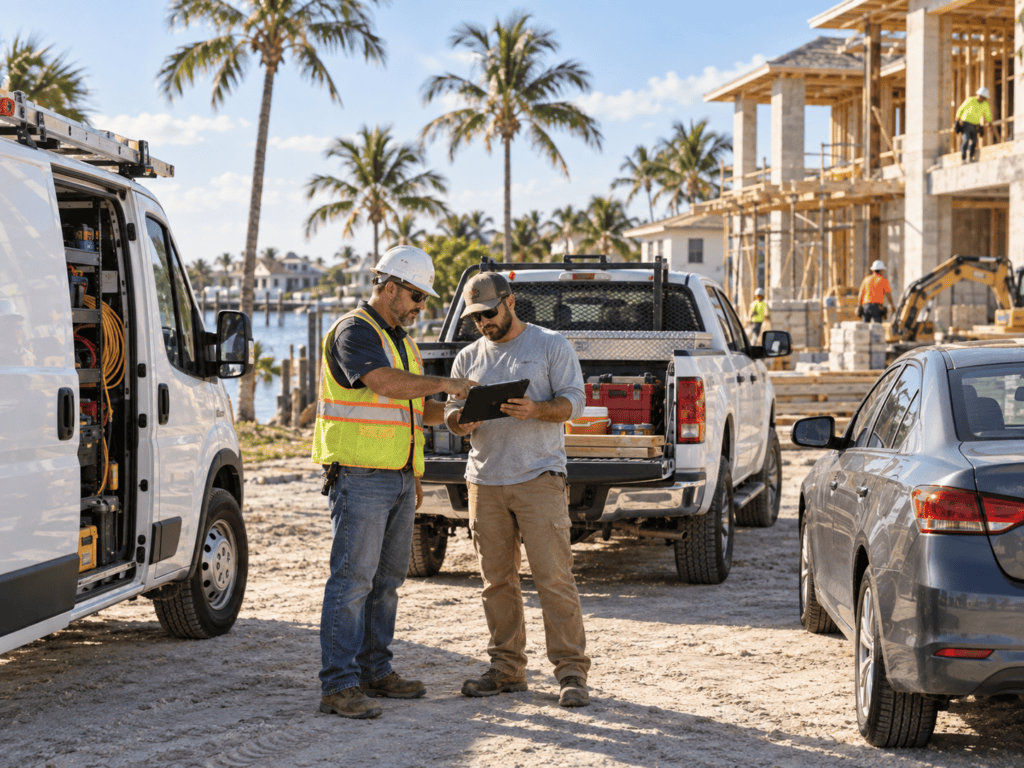 A contractor’s auto exposure may extend beyond vehicles owned by the business. Rented, borrowed, leased, and employee-owned vehicles used for work can create additional liability considerations that should be reviewed as part of the contractor’s overall commercial auto program.
How Are Contractors’ Tools and Equipment Insured?
Contractors often depend on tools, machinery, and equipment that move between job sites and may not remain at one fixed business location.
A standard Commercial Property policy may not provide the right protection for property that is regularly transported or used away from the insured premises. That is where Inland Marine Insurance and Contractors Equipment coverage can become important.
Coverage may be available for property such as:
-
Hand tools
-
Power tools
-
Generators
-
Compressors
-
Saws and cutting equipment
-
Welding equipment
-
Ladders and scaffolding
-
Mobile machinery
-
Specialized contractor equipment
-
Certain materials and supplies in transit
What Is Contractors Equipment Coverage?
Contractors Equipment coverage is generally designed to protect qualifying mobile tools and equipment used in a contractor’s operations.
Depending on the policy, coverage may apply while equipment is:
-
At a job site
-
In transit
-
Temporarily stored away from the contractor’s main location
-
Being moved between projects
Coverage terms, limits, deductibles, valuation methods, and exclusions can vary significantly by insurer and policy.
Why Is Inland Marine Insurance Important for Contractors?
Inland Marine Insurance can help address property exposures that move beyond the contractor’s primary business premises.
For contractors, this may include tools, equipment, materials, and other property that regularly travels to customer locations or construction sites.
Businesses should review how property is transported, stored, and used so the insurance program reflects where losses could actually occur.
For a more detailed explanation of property that moves between locations or job sites, learn more about Florida Inland Marine Insurance.
Does Contractor Insurance Cover Tools Stolen From a Vehicle or Job Site?
Not automatically.
Whether stolen tools or equipment are covered depends on the type of policy, where the property was located, how it was stored, the cause of loss, applicable limits, deductibles, and any exclusions or security requirements.
For contractors, theft exposures may arise when tools or equipment are:
-
Left inside a work van or pickup truck
-
Stored in a trailer
-
Kept overnight at a job site
-
Temporarily stored at a customer location
-
Transported between projects
-
Stored in a warehouse, shop, or other business location
Does Commercial Auto Insurance Cover Stolen Tools?
Commercial Auto Insurance generally should not be assumed to cover tools, equipment, or materials simply because they were inside an insured vehicle when stolen.
The vehicle itself may be covered for theft under comprehensive coverage, but the property carried inside it may require separate coverage.
Can Inland Marine or Contractors Equipment Coverage Help?
Depending on the policy, Inland Marine or Contractors Equipment coverage may help protect qualifying tools and equipment against covered causes of loss while they are in transit, at a job site, or temporarily stored away from the contractor’s primary premises.
Important policy details may include:
-
Whether tools must be individually scheduled
-
Coverage limits for unscheduled tools
-
Theft limitations
-
Deductibles
-
Valuation methods
-
Overnight storage requirements
-
Vehicle or trailer security requirements
-
Exclusions for unattended property
Contractors should review these details carefully, especially if they routinely carry expensive tools or leave equipment at job sites overnight.
 Commercial Auto Insurance should not be assumed to cover tools and equipment simply because they are stored inside an insured work vehicle. Contractors may need separate Inland Marine or Contractors Equipment coverage to protect qualifying property while it is in transit, at a job site, or temporarily stored away from the business premises.
What Are Builders Risk and Installation Floater Coverage?
Construction projects can create property exposures before the work is completed and turned over to the owner. Builders Risk Insurance and Installation Floater coverage can help address certain property losses involving buildings, materials, and equipment during construction or installation.
What Is Builders Risk Insurance?
Builders Risk Insurance is generally designed to cover qualifying property while a building or structure is being constructed, renovated, or remodeled.
Depending on the policy, coverage may apply to:
-
Buildings or structures under construction
-
Materials and supplies intended to become a permanent part of the project
-
Certain property temporarily stored at the job site
-
Materials in transit when specifically covered
-
Certain property belonging to the owner, contractor, or subcontractors when included by the policy
Covered causes of loss can vary by insurer and policy. Deductibles, limits, valuation, project type, location, construction method, and exclusions should all be reviewed carefully.
What Is an Installation Floater?
An Installation Floater is a type of Inland Marine coverage that can help protect qualifying materials, equipment, or property that a contractor is installing at a customer’s location.
It may be useful for contractors installing items such as:
-
HVAC equipment
-
Electrical equipment
-
Plumbing fixtures
-
Cabinets and countertops
-
Flooring
-
Windows and doors
-
Machinery
-
Other materials that will become part of a completed project
Depending on the policy, coverage may apply while property is in transit, temporarily stored, awaiting installation, or being installed.
How Are Builders Risk and Installation Floater Coverage Different?
Builders Risk generally focuses on the construction project or structure as a whole, while an Installation Floater is typically more focused on the specific property a contractor is responsible for installing.
The two coverages can overlap in certain situations, so contractors should confirm who is responsible for insuring the project, what property is covered, and when coverage begins and ends.
Why Contractors Should Review Project Insurance Before Work Begins
Contract requirements may specify whether the owner, general contractor, or subcontractor is responsible for Builders Risk or other project property coverage.
Contractors should confirm:
-
Who is purchasing the Builders Risk policy
-
Which parties are insured
-
What property is covered
-
Whether materials in transit or storage are included
-
Applicable deductibles and limits
-
When coverage starts
-
When coverage ends
-
Whether an Installation Floater is still needed
Assuming another party has insured the project can create significant gaps if the contract and actual policy do not match.
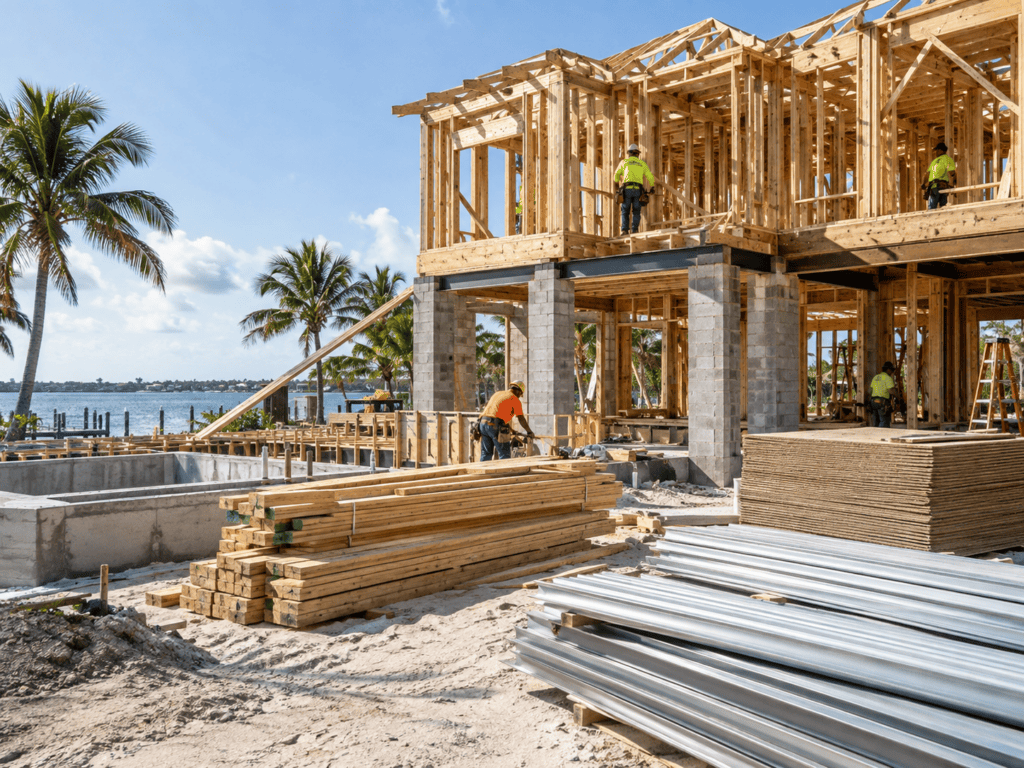 Construction projects can involve significant property exposure before the work is complete. Builders Risk and Installation Floater coverage can help address certain losses involving structures, materials, and property during construction or installation, subject to the policy terms and project responsibilities.
When Do Contractors Need Commercial Property Insurance?
Contractors may need Commercial Property Insurance when they own, lease, or are responsible for buildings, offices, warehouses, shops, storage facilities, or other business property.
This coverage is generally designed to help protect qualifying business property against covered causes of loss, subject to the policy’s terms, limits, deductibles, and exclusions.
What Property Can Commercial Property Insurance Cover?
Depending on the policy, coverage may be available for:
-
Buildings owned by the business
-
Tenant improvements and betterments
-
Office furniture
-
Computers and electronics
-
Inventory
-
Materials and supplies
-
Business equipment kept at the insured premises
-
Certain permanently installed fixtures or machinery
How Is Commercial Property Different From Inland Marine?
Commercial Property Insurance generally focuses on property located at a scheduled business premises, while Inland Marine coverage is often better suited for tools, equipment, and other property that moves between locations or is used away from the primary premises.
For contractors, both coverages may be important.
For example, a contractor may use:
-
Commercial Property Insurance for an office, warehouse, or shop
-
Inland Marine or Contractors Equipment coverage for tools and equipment taken to job sites
What About Property Stored Outdoors or in Detached Structures?
Coverage for property stored outdoors, in sheds, trailers, yards, or other detached locations may be limited or handled differently depending on the policy.
Contractors should review where property is actually stored and whether those locations and types of property are properly insured.
Why Contractors Should Review Property Values Regularly
The value of buildings, equipment, materials, and inventory can change over time.
Contractors should periodically review:
-
Building values
-
Equipment values
-
Inventory and material values
-
Improvements made to leased premises
-
Replacement costs
-
Deductibles
-
Coinsurance or valuation provisions where applicable
Keeping property values current can help reduce the risk of being underinsured after a covered loss.
For a broader explanation of business property protection, learn more about Florida Commercial Property Insurance.
How Can Commercial Umbrella or Excess Liability Protect a Contractor?
Contractors can face liability claims that exceed the limits of their underlying General Liability, Commercial Auto, or other qualifying liability policies. Commercial Umbrella or Excess Liability coverage can provide an additional layer of protection above certain underlying limits, subject to the terms of the policy.
This can be especially important for contractors because a severe accident may involve:
-
Serious bodily injury
-
Multiple injured people
-
Significant property damage
-
Large commercial auto losses
-
Job-site accidents
-
Completed-operations claims
-
Lawsuits and legal expenses
-
Large settlements or judgments
How Does Commercial Umbrella Coverage Work?
An umbrella policy may provide additional limits after the applicable underlying liability coverage is exhausted.
For example, if a covered contractor liability claim exceeds the available limit on the underlying General Liability or Commercial Auto policy, an eligible Commercial Umbrella policy may provide additional coverage up to its own limit.
Coverage depends on the umbrella policy’s terms, exclusions, required underlying limits, scheduled policies, and endorsements.
Is Excess Liability the Same as Umbrella Insurance?
Not always.
Excess Liability generally provides additional limits above an underlying liability policy, while a Commercial Umbrella may be structured differently and can sometimes apply more broadly, depending on the policy.
Contractors should not assume the two terms are interchangeable. The actual policy wording determines what additional protection is provided.
Why Contractors Should Review Underlying Limits and Umbrella Coverage Together
An umbrella or excess policy may require specific minimum limits on the underlying policies.
Contractors should review:
-
General Liability limits
-
Commercial Auto limits
-
Employers Liability limits where applicable
-
Required underlying policy limits
-
Contractual insurance requirements
-
Umbrella or excess exclusions
-
Completed-operations exposure
-
Vehicle and equipment exposures
The underlying policies and the additional liability coverage should be structured to work together.
For a broader explanation of additional business liability protection, learn more about Florida Commercial Umbrella Insurance.
When Do Contractors Need Professional Liability Insurance?
Contractors may need Professional Liability Insurance, sometimes referred to as Errors and Omissions (E&O) Insurance, when their work includes professional advice, design, consulting, planning, or other services that could lead to a claim alleging an error, omission, or negligent professional service.
This coverage can be especially relevant for:
-
Design-build contractors
-
Contractors providing design recommendations
-
Construction managers
-
Consultants
-
Contractors performing engineering-related or technical services
-
Contractors responsible for specifications, plans, or project coordination
-
Businesses that provide professional advice in addition to physical construction work
How Is Professional Liability Different From General Liability?
General Liability Insurance generally focuses on certain claims involving bodily injury, property damage, and personal or advertising injury.
Professional Liability Insurance is designed to address certain claims arising from professional services, advice, errors, omissions, or alleged negligence.
For example, a contractor may face a professional liability claim if an alleged design error, incorrect specification, or professional recommendation causes a client financial loss.
Why General Liability May Not Be Enough
A General Liability policy may contain exclusions or limitations for professional services. Contractors that provide both physical construction work and professional services should review whether those professional exposures are addressed by their insurance program.
This can be particularly important for design-build operations, where responsibility for both construction and design may create exposures that a standard contractor General Liability policy is not intended to cover.
What Should Contractors Review?
Contractors that provide professional services should consider:
-
The type of advice or design services provided
-
Whether design work is performed in-house or subcontracted
-
Contractual professional liability requirements
-
Project size and complexity
-
Professional-service exclusions in other policies
-
Retroactive dates and claims-made provisions where applicable
-
Limits and deductibles
-
Whether coverage extends to subcontracted professional services
For a broader explanation of professional liability protection, learn more about Florida Errors & Omissions Insurance.
When Might Contractors Need Pollution Liability Insurance?
Contractors may face pollution or environmental liability exposures that are not fully addressed by a standard General Liability policy.
Pollution Liability Insurance can help address certain claims involving the release, escape, dispersal, or cleanup of pollutants, subject to the policy’s terms, exclusions, and conditions.
This coverage can be especially relevant for contractors involved in work such as:
-
Excavation and grading
-
Roofing
-
Plumbing
-
HVAC
-
Painting and coatings
-
Demolition
-
Mold remediation
-
Environmental cleanup
-
Fuel or chemical handling
-
Work involving asbestos, lead, or other hazardous materials
-
Projects where contaminated soil or water may be disturbed
Why General Liability May Not Be Enough
Commercial General Liability policies often contain pollution exclusions or limitations.
That means a contractor could face a claim involving contamination, cleanup costs, third-party bodily injury, or property damage that is not covered under the standard General Liability policy.
What Can Pollution Liability Coverage Address?
Depending on the policy, coverage may be available for certain:
-
Cleanup costs
-
Third-party bodily injury
-
Third-party property damage
-
Environmental remediation expenses
-
Legal defense costs
-
Pollution incidents at job sites
-
Transportation-related pollution exposures
-
Gradual or sudden pollution events, depending on the policy
Which Contractors Should Review This Coverage?
Contractors should consider Pollution Liability Insurance when their work creates a realistic possibility of environmental contamination or when a project contract requires specific environmental coverage.
The need can depend on the trade, materials used, project location, environmental conditions, contractual requirements, and whether the contractor is handling substances that could create a pollution exposure.
What Other Insurance May a Contractor Need?
In addition to General Liability, Workers’ Compensation, Commercial Auto, property, and equipment coverage, some contractors may need additional insurance based on the size and complexity of their operations.
Cyber Liability Insurance
Contractors increasingly rely on email, mobile devices, estimating software, accounting systems, cloud storage, and electronic payments.
Cyber Liability Insurance can help address certain losses involving data breaches, ransomware, cybercrime, privacy incidents, and other technology-related risks, depending on the policy.
Contractors that store customer information, accept electronic payments, or rely heavily on digital systems should consider whether cyber coverage belongs in their insurance program.
Employment Practices Liability Insurance
Contractors with employees may also face claims involving employment practices.
Employment Practices Liability Insurance (EPLI) can help address certain allegations involving:
-
Discrimination
-
Harassment
-
Wrongful termination
-
Retaliation
-
Other covered employment-related claims
The need for EPLI can become more important as a contracting business grows and hires additional employees or supervisors.
Equipment Breakdown Coverage
Contractors that own or rely on mechanical, electrical, or pressure equipment may also need Equipment Breakdown coverage.
Depending on the policy, it can help address certain losses caused by mechanical breakdown, electrical failure, or other covered equipment-related events that may not be handled the same way as ordinary property damage.
Commercial Crime Coverage
Contractors may also have exposure to theft, fraud, or dishonest acts involving money, property, or employees.
Commercial Crime Insurance may provide protection for certain losses involving employee dishonesty, theft of money or securities, forgery, computer fraud, or other covered crime-related events.
The Right Coverage Depends on the Contractor
Not every contractor needs every available insurance policy.
The appropriate combination depends on factors such as:
-
Number of employees
-
Use of technology and electronic payments
-
Type of equipment
-
Handling of customer property
-
Contract requirements
-
Payroll and revenue
-
Business locations
-
Nature of the work performed
A contractor insurance program should be built around the exposures of the individual business rather than simply adding every available coverage.
What Insurance Do Florida Contractors Need for Licensing?
Florida contractor insurance requirements can vary by license classification, but contractors regulated by the Florida Construction Industry Licensing Board (CILB) must meet certain insurance requirements to maintain an active license.
According to the Florida Department of Business and Professional Regulation, active licensees must maintain minimum amounts of public liability and property damage insurance.
What Are Florida’s Minimum Contractor Liability Requirements?
For licensing purposes, Florida contractors may be required to maintain minimum amounts of public liability and property damage insurance based on their license classification.
-
General and Building Contractors: at least three hundred thousand dollars in public liability insurance and fifty thousand dollars in property damage insurance
-
Other contractor categories: generally at least one hundred thousand dollars in public liability insurance and twenty-five thousand dollars in property damage insurance, or other amounts established by board rule
These are minimum licensing requirements and may not reflect the amount of insurance a contractor should carry for a particular project, contract, or business operation.
Is Workers’ Compensation Required for a Florida Contractor License?
Active Florida contractor licensees must also maintain Workers’ Compensation coverage or a valid exemption when permitted by law.
Florida law requires contractors subject to the Construction Industry Licensing Board to provide evidence of Workers’ Compensation coverage as a condition of obtaining or renewing their license or registration, subject to applicable exemptions.
Are Licensing Minimums Enough Insurance for a Contractor?
Not necessarily.
A contractor can satisfy the minimum insurance requirements for licensing and still have significant uninsured or underinsured exposures.
Contractors should also consider factors such as:
-
Project size and value
-
Contractual liability limits
-
Employees and payroll
-
Subcontractor use
-
Commercial vehicles
-
Tools and equipment
-
Completed-operations exposure
-
Umbrella or excess liability requirements
-
Professional or pollution exposures
-
Requirements imposed by project owners or general contractors
The goal should be to satisfy applicable licensing requirements and structure coverage around the actual risks of the contracting business.
For official licensing requirements, contractors can also review the Florida Department of Business and Professional Regulation’s Construction Industry Licensing Board guidance.
How Much Does Contractor Insurance Cost in Florida?
There is no single average price that accurately represents what every Florida contractor will pay for insurance.
Contractor insurance premiums can vary significantly because insurers evaluate the type of work performed, payroll, revenue, subcontractor use, vehicles, tools and equipment, project size, coverage limits, deductibles, and prior claims history.
A small residential contractor working on lower-value projects may have a very different premium from a general contractor managing larger commercial projects, multiple employees, subcontractors, vehicles, and expensive equipment.
Is Contractor Insurance Priced by the Type of Trade?
Yes, the contractor’s trade is one of the most important rating factors.
Different trades can present very different liability and injury exposures. For example, roofing, excavation, electrical work, plumbing, HVAC, remodeling, and general contracting may each be evaluated differently by insurers.
The classification assigned to the business should accurately reflect the work actually being performed.
What Coverages Affect the Cost?
The total cost of a contractor insurance program may include several different policies or coverage parts, such as:
-
General Liability
-
Workers’ Compensation
-
Commercial Auto
-
Hired and Non-Owned Auto
-
Inland Marine or Contractors Equipment
-
Builders Risk
-
Commercial Property
-
Commercial Umbrella or Excess Liability
-
Professional Liability
-
Pollution Liability
-
Cyber Liability
-
Employment Practices Liability
The more exposures a contractor needs to insure, the more comprehensive the overall insurance program may become.
Why Comparing Only the Premium Can Be Misleading
Two contractor insurance quotes with different prices may also provide very different coverage.
Contractors should compare more than the total premium, including:
-
Liability limits
-
Deductibles
-
Completed-operations coverage
-
Subcontractor requirements
-
Additional insured provisions
-
Commercial auto limits
-
Tool and equipment coverage
-
Workers’ Compensation classifications
-
Exclusions and endorsements
-
Umbrella compatibility
-
Contractual insurance requirements
The goal should not simply be to find the lowest-priced policy. It should be to find coverage that appropriately reflects the contractor’s work, contracts, employees, vehicles, equipment, and overall liability exposure.
What Factors Affect Florida Contractor Insurance Premiums?
Florida contractor insurance premiums are based on the overall risk presented by the business, the type of work performed, and the coverages selected.
Insurers may consider factors such as:
-
Type of contracting work — roofing, electrical, plumbing, HVAC, excavation, remodeling, and general contracting can present very different exposures.
-
Annual payroll — payroll is an important rating factor for Workers’ Compensation and can also affect other coverages.
-
Annual revenue — higher sales can reflect greater project activity and exposure.
-
Number of employees — a larger workforce can increase both liability and Workers’ Compensation exposure.
-
Use of subcontractors — insurers may consider how much work is subcontracted and whether subcontractors maintain appropriate insurance.
-
Project size and value — larger or more complex projects can increase potential claim severity.
-
Residential versus commercial work — insurers may evaluate these operations differently.
-
New construction versus remodeling — the type of work performed can affect underwriting.
-
Vehicle use — the number and type of vehicles, drivers, mileage, and travel radius can affect Commercial Auto premiums.
-
Tools and equipment values — higher-value mobile property may increase Inland Marine or Contractors Equipment costs.
-
Claims history — frequent or severe prior losses can affect pricing, deductibles, and carrier availability.
-
Coverage limits — higher liability or property limits generally increase premium.
-
Deductibles — higher deductibles may reduce premium but increase the contractor’s out-of-pocket cost after a covered loss.
-
Business location and territory — where the contractor operates can affect weather, theft, litigation, and other exposures.
-
Safety practices — driver screening, job-site safety programs, employee training, and documented procedures may affect how an insurer evaluates the business.
-
Licensing and experience — years in business, contractor experience, and licensing status may also be considered.
How Does Claims History Affect Contractor Insurance?
A contractor with frequent or severe claims may face higher premiums, stricter underwriting, higher deductibles, or fewer available insurance options.
Loss history may reveal patterns involving:
-
Employee injuries
-
Property damage
-
Auto accidents
-
Water damage
-
Theft of tools or equipment
-
Completed-operations claims
-
Repeated losses involving the same type of work
Identifying and correcting recurring loss patterns can help improve the contractor’s risk profile over time.
Why Accurate Business Classification Matters
Contractors should make sure their insurance classifications accurately describe the work they perform.
If a contractor expands into new trades, begins performing higher-risk work, increases subcontracting, or takes on larger projects, the insurer should be informed so the policy can be reviewed appropriately.
How Can Contractors Reduce Insurance Risk and Cost?
Contractors may be able to improve their insurance risk profile by combining appropriate coverage with strong safety, hiring, vehicle, equipment, and subcontractor-management practices.
No strategy guarantees a lower premium, but insurers generally look more favorably on businesses that can demonstrate consistent risk-management procedures.
Ways contractors may help reduce risk include:
-
Use written safety procedures — establish clear job-site rules for employees and supervisors.
-
Provide employee training — reinforce safe equipment use, fall prevention, lifting procedures, driving practices, and other job-specific hazards.
-
Screen drivers carefully — review motor vehicle records before allowing employees to operate company vehicles.
-
Maintain vehicles and equipment — document inspections, repairs, preventive maintenance, and equipment servicing.
-
Manage subcontractors carefully — verify licensing where applicable, collect certificates of insurance, and confirm required limits and endorsements.
-
Use written contracts — clearly define responsibilities, insurance requirements, and scope of work before a project begins.
-
Review job-site controls — address housekeeping, access, lighting, security, fall protection, and storage of tools and materials.
-
Protect tools and equipment from theft — use secure storage, locked vehicles or trailers, inventory tracking, and other appropriate security measures.
-
Report changes in operations — tell the agent or insurer when the business adds new trades, vehicles, locations, employees, or types of work.
-
Review insurance classifications — make sure payroll, subcontractor costs, vehicle use, and business classifications accurately reflect actual operations.
-
Review deductibles carefully — higher deductibles may reduce premium, but the contractor should be financially prepared to absorb the additional cost after a covered loss.
-
Review claims and near misses — identify recurring patterns and take corrective action before similar incidents happen again.
Why Subcontractor Management Can Affect Insurance Costs
Poor subcontractor controls can create additional liability, Workers’ Compensation, and audit issues for a contractor.
Contractors should consider maintaining a consistent process for collecting and reviewing:
-
Certificates of Insurance
-
Workers’ Compensation coverage or valid exemptions
-
Additional insured endorsements when required
-
License information where applicable
-
Written subcontract agreements
-
Expiration dates for required insurance
Keeping this information organized can help reduce surprises during insurance audits and may also strengthen the contractor’s overall risk-management program.
Why Annual Insurance Reviews Matter
A contractor’s operations can change quickly.
New employees, larger projects, additional vehicles, different subcontractors, new equipment, or expansion into different types of work can all affect insurance needs.
Reviewing coverage at least annually—and whenever there is a meaningful change in operations—can help identify coverage gaps, outdated classifications, or limits that no longer reflect the size of the business.
Florida Contractor Insurance for Northeast Florida Businesses
Contractors throughout Northeast Florida often work across multiple communities, job sites, and project types, creating insurance needs that can vary significantly from one business to another.
First Florida Agency helps contractors in Jacksonville, Ponte Vedra, Ponte Vedra Beach, Nocatee, St. Augustine, St. Johns County, and surrounding Northeast Florida communities review insurance based on how their businesses actually operate.
 Contractors working throughout Northeast Florida may face different exposures depending on project location, job-site conditions, travel between communities, vehicle use, weather, and the type of construction being performed.
Local contractors may face exposures involving:
-
Residential and commercial construction
-
Coastal and severe-weather conditions
-
Hurricane and tropical-storm exposure
-
Flooding and water damage
-
Multiple job sites
-
Heavy use of pickup trucks, vans, trailers, and equipment
-
Subcontractor relationships
-
Municipal and project-specific insurance requirements
-
Theft of tools and equipment
-
Construction activity in growing residential communities
Why Local Operations Matter
A contractor’s insurance needs can be affected by where projects are located, how far crews travel, the type of construction performed, and the value of the property, tools, vehicles, and equipment involved.
For example, a residential remodeling contractor working primarily in Ponte Vedra and Nocatee may have different exposures from a commercial contractor managing larger projects throughout Jacksonville and St. Augustine.
The insurance program should reflect the contractor’s actual territory, projects, vehicles, employees, subcontractors, and equipment rather than relying on a generic package.
Contractor Insurance Throughout Florida
Although First Florida Agency is based in Northeast Florida, we can help contractors review insurance options throughout the state.
Our goal is to help identify the coverages, limits, deductibles, endorsements, and contractual requirements that fit the contractor’s specific operations.
What We Review When Comparing Contractor Insurance
Comparing contractor insurance involves more than looking at the premium. Two policies can have similar prices but very different limits, exclusions, endorsements, classifications, and requirements.
At First Florida Agency, we review how the contractor actually operates so we can compare coverage on a more complete basis.
Important items may include:
-
Type of work performed — including primary and secondary trades
-
Residential versus commercial work
-
New construction, remodeling, service, or repair work
-
Annual revenue and payroll
-
Use of subcontractors
-
General Liability limits
-
Products-completed operations coverage
-
Additional insured requirements
-
Waivers of subrogation
-
Workers’ Compensation classifications
-
Commercial Auto limits and vehicle schedules
-
Hired and Non-Owned Auto exposures
-
Tools, equipment, and Inland Marine coverage
-
Builders Risk or Installation Floater needs
-
Commercial Property exposures
-
Umbrella or Excess Liability requirements
-
Professional Liability exposures
-
Pollution Liability exposures
-
Contractual insurance requirements
-
Deductibles
-
Policy exclusions and endorsements
-
Prior claims and loss history
-
Licensing or project-specific insurance requirements
Why Policy Details Matter
A lower premium does not necessarily mean a better insurance program.
For example, one policy may have broader completed-operations protection, fewer restrictive endorsements, more favorable subcontractor provisions, or stronger coverage for tools and equipment.
Another policy may appear less expensive but include exclusions or limitations that are important to the contractor’s actual work.
Why Contractor Operations Should Be Reviewed Carefully
A contractor’s insurance should reflect the work the business is actually performing.
If a contractor adds new trades, starts larger projects, hires employees, uses more subcontractors, purchases vehicles, or expands into different types of work, the insurance program may need to be adjusted.
The goal is to compare policies based on coverage, limits, exclusions, endorsements, and how well the policy matches the contractor’s operations—not just the price.
What Information Is Needed for a Contractor Insurance Quote?
To obtain an accurate contractor insurance quote, a business should be prepared to provide detailed information about its operations, employees, subcontractors, vehicles, equipment, projects, and current insurance program.
Insurers commonly request information such as:
-
Business name and entity type
-
Years in business
-
Contractor license information
-
Description of the work performed
-
Primary and secondary trades
-
Residential versus commercial work
-
New construction, remodeling, service, or repair work
-
Annual revenue
-
Annual payroll
-
Number of employees
-
Use of subcontractors
-
Estimated subcontractor costs
-
Whether subcontractors provide Certificates of Insurance
-
Workers’ Compensation classifications
-
Commercial Auto vehicle and driver information
-
Tools and equipment values
-
Business property values
-
Largest project completed
-
Largest project expected
-
Typical project size
-
Geographic territory
-
Prior insurance carrier information
-
Current coverage limits and deductibles
-
Prior claims and loss runs
-
Contractual insurance requirements
-
Requested additional insured or waiver-of-subrogation endorsements
Why Accurate Information Matters
Contractor insurance is highly dependent on the work actually being performed.
Incomplete or inaccurate information can delay quoting, affect underwriting, or result in a proposal that does not properly reflect the contractor’s true exposures.
For example, insurers may evaluate a contractor differently if the business performs roofing, excavation, structural work, commercial projects, or other higher-risk operations.
What Are Loss Runs?
Loss runs are reports showing a business’s prior insurance claims history.
They may include information such as:
-
Date of loss
-
Type of claim
-
Amount paid
-
Amount reserved
-
Whether the claim is open or closed
-
Frequency and severity of prior losses
Insurers commonly use loss runs to evaluate a contractor’s historical claim experience.
What Should a Contractor Review Before Accepting a Quote?
Before choosing a policy, contractors should compare more than the premium.
Important items include:
-
Coverage limits
-
Deductibles
-
Classifications
-
Exclusions
-
Endorsements
-
Completed-operations coverage
-
Subcontractor requirements
-
Workers’ Compensation classifications
-
Commercial Auto coverage
-
Tools and equipment protection
-
Additional insured provisions
-
Umbrella compatibility
-
Contractual requirements
A contractor insurance proposal should reflect how the business actually operates, not simply the lowest available price.
Why Work With First Florida Agency for Contractor Insurance?
Contractor insurance can involve multiple policies, classifications, endorsements, and contractual requirements. The goal is not simply to purchase individual coverages, but to make sure the overall insurance program reflects how the contracting business actually operates.
First Florida Agency is an independent insurance agency based in Ponte Vedra, Florida, helping contractors and construction businesses throughout Northeast Florida and statewide.
When reviewing contractor insurance, we can help evaluate:
-
Type of contracting work performed
-
General Liability and completed-operations exposures
-
Employees and Workers’ Compensation requirements
-
Subcontractor use and insurance requirements
-
Commercial vehicles and drivers
-
Hired and Non-Owned Auto exposures
-
Tools, equipment, and Inland Marine coverage
-
Builders Risk and project-related property exposures
-
Commercial Property needs
-
Umbrella or Excess Liability
-
Professional or Pollution Liability exposures
-
Additional insured and waiver-of-subrogation requirements
-
Certificates of Insurance
-
Contractual and licensing requirements
-
Available limits, deductibles, endorsements, and exclusions
As an independent agency, First Florida Agency can work with multiple insurance markets rather than representing only one carrier. That allows us to compare available options based on the contractor’s operations, coverage needs, and underwriting profile.
Our goal is to help contractors understand what is covered, where gaps may exist, and how different insurance options compare before a loss occurs.
Florida Contractor Insurance FAQs
What Insurance Does a Contractor Need in Florida?
The appropriate insurance depends on the contractor’s trade, employees, vehicles, equipment, projects, subcontractors, and contractual requirements. Common coverages may include General Liability, Workers’ Compensation, Commercial Auto, Inland Marine or Contractors Equipment, Builders Risk, Commercial Property, and Umbrella or Excess Liability.
Is General Liability Insurance Required for Florida Contractors?
Certain Florida contractor license classifications are subject to minimum public liability and property damage insurance requirements. Contractors may also face higher limits or additional insurance requirements from customers, general contractors, project owners, municipalities, lenders, or construction contracts.
Do Florida Contractors Need Workers’ Compensation Insurance?
Florida construction-industry employers generally must maintain Workers’ Compensation coverage when they have one or more employees, including non-exempt owners or officers. Certain qualifying individuals may be eligible for an exemption, but an exemption does not automatically eliminate the business’s obligations for other workers.
Does Contractor Insurance Cover Subcontractors?
Not automatically. Subcontractors may be required to maintain their own insurance, and contractors should review subcontractor agreements, Certificates of Insurance, additional insured requirements, Workers’ Compensation documentation, and applicable policy provisions.
What Is Products-Completed Operations Coverage?
Products-completed operations coverage can help address certain bodily injury or property damage claims that arise from completed work. It is particularly important for contractors because some problems may not become apparent until after a project has been finished.
Does General Liability Cover Faulty Workmanship?
General Liability Insurance is not a warranty on a contractor’s work and should not be assumed to pay simply because defective work must be repaired or replaced. Depending on the policy and circumstances, coverage may apply when allegedly faulty work results in covered bodily injury or property damage to other property.
Are Tools and Equipment Covered by Contractor Insurance?
They may be, but tools and mobile equipment often require Inland Marine or Contractors Equipment coverage rather than relying solely on Commercial Property or Commercial Auto Insurance. Coverage can depend on where the property is located, how it is transported, applicable limits, deductibles, and policy exclusions.
Are Tools Stolen From a Work Truck Covered?
Not necessarily. Commercial Auto Insurance generally should not be assumed to cover tools simply because they were inside an insured vehicle. Inland Marine or Contractors Equipment coverage may be needed to protect qualifying tools and equipment against covered theft losses.
Does a Contractor Need Commercial Auto Insurance?
Contractors that own or use vehicles for business should review Commercial Auto Insurance. Pickup trucks, service vans, trailers, and other business vehicles can create liability and physical-damage exposures that may not be appropriately covered by a personal auto policy.
What Is Hired and Non-Owned Auto Coverage for Contractors?
Hired Auto coverage can address certain liability exposures involving rented, hired, leased, or borrowed vehicles. Non-Owned Auto coverage can help address the business’s liability exposure when employees use personal vehicles for company business.
What Is the Difference Between Builders Risk and Contractors Equipment Coverage?
Builders Risk generally focuses on buildings, structures, and certain materials during construction or renovation. Contractors Equipment coverage is generally designed for qualifying mobile tools and equipment used in a contractor’s operations. A contractor may need both depending on the project and property involved.
How Much Does Contractor Insurance Cost in Florida?
There is no single price for Florida contractor insurance. Premiums can depend on the contractor’s trade, payroll, revenue, employees, subcontractor use, project size, vehicles, equipment values, coverage limits, deductibles, claims history, and other underwriting factors.
Let’s Get Started
Florida Contractor Insurance Quote Request
"*" indicates required fields
Don’t like forms? Contact us at or email us.
