
Insurance Protection Built for Florida Bars, Nightclubs, and Entertainment Venues
Florida bars and nightclubs face a unique combination of liquor liability, customer injury, security, property, employee, and business interruption risks. The right insurance program should reflect how the business actually operates, including alcohol service, hours, entertainment, security practices, property values, employees, and other exposures that can affect coverage and underwriting.
Interactive Graphic

Premises Liability
Risk Factor
Water on the floor, slippery entry in the winter, broken glass/hazardous debris, dim lighting, etc. These are all accidents waiting to happen that make your business susceptible. Claims may arise due to bodily injury, property damage, personal injury, and more. Outside, there is also a security risk in parking lots and with potential physical altercations between guests and/or staff.
Solution
Commercial general liability insurance is an absolute necessity for any business. It provides broad coverage when you are deemed responsible and liable and will also pay to defend any covered lawsuit or action, regardless of its merit.
Liquor Liability
Risk Factor
If a patron is over-served at your establishment, you may be held responsible and liable for damages or injuries related to the patron’s intoxication.
Solution
Liquor liability insurance covers defense costs and damages to persons and property caused by intoxicated patrons. Training staff to recognize patrons who pose a liquor liability risk is a key risk control measure to consider.
Crime and Fidelity Bond
Risk Factor
What will you do if one of your trusted employees is found guilty of doing something dishonest as it relates to his or her work with you?
Solution
Crime and fidelity coverage is designed to provide coverage for employee dishonesty, forgery and depository, theft, destruction and disappearance, and more. Discuss the details of this coverage with your agent to learn more.
Workplace Violence
Risk Factor
Traditional general liability and property coverage are not designed to adequately cover workplace violence claims.
Solution
Workplace violence and crisis response policies are created to provide coverage for damages related to third-party liability, loss of business income, and other expenses related to workplace violence.
Workers' Compensation and State Disability
Risk Factor
If one of your employees receives an injury or becomes ill due to a work-related occurrence, you are required by law to have the proper coverage in place.
Solution
State disability and workers' compensation protects your employees should a job-related injury or sickness occur during the course of employment. This coverage is required by law, so be sure that you have it.
Commercial Property
Risk Factor
Your business property is a significant financial investment. What if something happens to it?
Solution
Commercial property insurance can help protect the property your business owns or leases, including things like equipment, inventory, furniture, and fixtures. Whether you own your building or lease your space, commercial property insurance can be purchased separately or can be combined with other necessary coverages to protect your business’ physical assets.
Business Income
Risk Factor
In the event of a covered cause of loss, most policies include coverage for the income you cannot collect. What happens if one of your key suppliers, such as your food or beverage distributor, is incapable of supplying you with what you need to keep your business running?
Solution
Make sure that your business income insurance includes contingent business income coverage to protect against the loss of potential earnings to your restaurant caused by the inability of a key vendor to provide a component necessary for the completion or execution of your services.
Sign Coverage
Risk Factor
Exterior signs associated with your business are vulnerable to fire, vandalism, and weather. Most commercial property policies offer a sublimit of coverage for signs, but it might not be enough.
Solution
Evaluate your sign exposures and determine if your existing commercial property insurance policy provides sufficient coverage. If not, increase the policy limit as required.
Flood Insurance
Risk Factor
Flooding is the most commonly occurring natural disaster in the United States. It can occur in almost any location and to any business, even if your area isn’t designated as a high-risk flood zone. Are you protected?
Solution
Flood insurance is typically not included in a commercial property insurance policy but can generally be added by endorsement as long as the property is not in a high-risk flood zone. If coverage is excluded from the policy, you should look into the cost to add it. If your property is in a high-risk flood zone, you will need to obtain a standalone policy. In either case, it’s important to have coverage.
Employment Practices Liability Insurance (EPLI)
Risk Factor
On average, it's estimated that three out of five businesses will be sued by their employees. Companies are vulnerable during the pre-hire process, throughout employment, and during a reduction in workforce. Claims can arise in any size operation. You can do everything right and still be sued.
Solution
Coverage to protect you against this risk normally comes as a standalone policy. The right coverage is critical to your risk management process as it protects against discrimination, wrongful termination, sexual harassment, and other employment-related allegations. Typically, the policy will cover your business, as well as your directors and officers. Third party coverage is an added option, usually accomplished via a policy endorsement, and addresses claims made by customers or vendors against you from acts committed by employees.
Cyber Liability
Risk Factor
Just about all businesses rely on technology in some way; it's increasingly used to store sensitive information, such as credit cards, passwords, and social security numbers. However, you're at risk if this information is lost, stolen, or compromised. In fact, you may even be legally obligated to alert those impacted by the breach and possibly pay for any financial loss incurred.
Solution
Experiencing a data breach is often not a question of if but when. Securing a cyber liability policy can offer coverage for expenses associated with compliance regarding data breach notification laws, securing legal counsel to advise on incident response, credit monitoring services, as well as paying for regulatory defense and penalties arising from privacy law violations.
Valet Parking
Risk Factor
Providing a valet service is convenient for your guests, but damaging a vehicle, property, or causing injury is a very real risk associated with it.
Solution
Obtain a general liability policy to protect your business from lawsuits by a third party. Be certain that a garagekeepers legal liability policy is also in effect with adequate limits to cover any physical damage to your guest's vehicle or other vehicles on site. If you are using an independent valet service, obtain a certificate of insurance to verify they have the proper coverage with adequate limits. Also make sure that your business is named as an additional insured under their policy.
Commercial Umbrella
Risk Factor
What happens when your business faces a large liability loss that exceeds the basic limit of your standard policy?
Solution
You should consider purchasing a commercial umbrella insurance policy which provides higher limits, typically between $2,000,000 and $10,000,000, and often broadened coverages. Coverage is extended over various policies, including general liability insurance, business auto, and directors and officers liability insurance.
What Is Florida Nightclub and Bar Insurance?
Florida Nightclub and Bar Insurance is a combination of commercial insurance coverages designed to protect bars, nightclubs, lounges, taverns, and other nightlife businesses from the property, liability, alcohol-related, employee, security, and operational risks associated with their business.
It is not one standardized insurance policy. The appropriate coverage depends on how the establishment operates, including alcohol sales, hours of operation, customer capacity, entertainment, security practices, property values, employees, food service, valet operations, special events, and other exposures.
A nightclub or bar insurance program may include General Liability Insurance, Liquor Liability Insurance, Commercial Property Insurance, Business Income and Extra Expense coverage, Workers’ Compensation Insurance, Equipment Breakdown Insurance, Commercial Crime Insurance, Cyber Insurance, Employment Practices Liability Insurance, Commercial Auto coverage, and Umbrella or Excess Liability.
For nightlife businesses, however, simply having these policies is not enough. The actual policy language can be especially important because exclusions, limitations, or sublimits involving assault and battery, security operations, entertainment, alcohol service, and late-night operations can materially affect how coverage responds to a claim.
Bars and Nightclubs Have Different Risks Than Many Other Businesses
Bars and nightclubs often combine several higher-severity exposures in one location. Customers may consume alcohol, stay on the premises for extended periods, gather in crowded spaces, dance, attend live entertainment, interact with security personnel, and leave the establishment late at night.
A single incident could involve a customer injury, an altercation, allegations involving security, alcohol-related liability, property damage, or several of these exposures at the same time.
The insurance program should therefore reflect both the ordinary business risks of operating a commercial establishment and the specialized exposures associated with nightlife operations.
Liquor Liability Is Only One Part of the Exposure
Alcohol service is a major consideration for most bars and nightclubs, but it should not be viewed as the only important risk.
A business may also face claims involving slips and falls, assault and battery, negligent security, crowded dance floors, broken glass, customer property damage, employee injuries, theft, cyber incidents, equipment failure, fire, storm damage, or a temporary shutdown after a covered loss.
Different policies may respond to different parts of the same incident, which makes coordination between coverages particularly important.
Coverage Should Reflect How the Business Actually Operates
A neighborhood tavern can have very different insurance needs from a large nightclub with DJs, dancing, bottle service, private security, promoters, valet parking, and late-night operations.
Similarly, a cocktail lounge with limited entertainment may present a different risk from a sports bar, live-music venue, or high-capacity entertainment establishment.
Factors such as customer capacity, alcohol revenue, operating hours, security personnel, entertainment, prior claims, building characteristics, and contractual requirements can all affect underwriting and coverage.
The goal is to build an insurance program around the actual bar or nightclub rather than assuming every nightlife business can be protected by the same package.
Which Florida Businesses May Need Nightclub and Bar Insurance?
Nightclub and Bar Insurance can apply to a wide range of businesses that serve alcohol, host entertainment, operate late hours, or manage large numbers of customers in social settings.
The appropriate insurance program depends on how the business operates, how much alcohol it sells, whether it offers food, entertainment, dancing, security, special events, or valet service, and how customers use the premises.
Businesses that may need specialized bar or nightclub insurance include:
-
Nightclubs
-
Cocktail bars
-
Sports bars
-
Lounges
-
Taverns
-
Pubs
-
Wine bars
-
Dance clubs
-
Live-music venues
-
Entertainment venues with alcohol service
-
Bars with DJs or dancing
-
Rooftop bars
-
Beach or waterfront bars
-
Hookah lounges that also serve alcohol
-
Other nightlife or alcohol-focused establishments
Different Nightlife Businesses Create Different Risks
A neighborhood bar with limited seating and no entertainment can present a very different insurance exposure from a high-capacity nightclub with dancing, private security, bottle service, DJs, promoters, and late-night hours.
A live-music venue may have additional exposures involving performers, sound equipment, crowds, temporary staging, and event contracts. A sports bar may have significant customer traffic and alcohol sales but little or no dancing. A lounge may operate in a smaller space but still have substantial liquor liability and security exposure.
These differences can affect insurer eligibility, premiums, limits, exclusions, deductibles, and the types of coverage that should be considered.
Alcohol Sales Are Only Part of the Risk
Although alcohol service is central to many bars and nightclubs, insurers may evaluate much more than liquor revenue.
Customer capacity, operating hours, security personnel, prior incidents, dancing, live entertainment, food service, valet parking, special events, outdoor areas, building characteristics, and prior claims can all influence underwriting.
For some establishments, the most important coverage issue may not be the amount of alcohol sold, but whether the policy appropriately addresses assault and battery, security, crowd control, or other nightlife-specific exposures.
Coverage Should Match the Actual Operation
Two businesses that both describe themselves as a “bar” can require very different insurance programs.
A small wine bar closing early in the evening should not automatically be insured the same way as a nightclub operating until late at night with large crowds and private security.
The insurance program should be built around the establishment’s real operations, customer activity, property, employees, alcohol exposure, and contractual obligations rather than relying only on the business classification.
What Types of Insurance Can a Florida Bar or Nightclub Need?
A Florida bar or nightclub may need several types of commercial insurance because its risks can involve alcohol service, customer injuries, security, property, employees, entertainment, vehicles, technology, and interruptions to normal operations.
The right combination depends on the establishment’s size, hours, alcohol sales, customer capacity, entertainment, security practices, property values, lease requirements, employees, and other operational characteristics.
Common coverages may include:
-
General Liability Insurance for certain third-party bodily injury, property damage, and personal and advertising injury claims.
-
Liquor Liability Insurance for certain claims arising from the sale or service of alcoholic beverages.
-
Assault and Battery coverage when available and appropriate for claims involving fights, altercations, security personnel, or other intentional acts.
-
Commercial Property Insurance for buildings, furniture, bar equipment, sound and lighting systems, inventory, tenant improvements, and other covered property.
-
Business Income and Extra Expense coverage to help address certain lost income and continuing expenses after a covered property loss disrupts operations.
-
Workers’ Compensation Insurance for qualifying employee work-related injuries or illnesses.
-
Employment Practices Liability Insurance (EPLI) for certain employment-related claims.
-
Commercial Crime Insurance for certain employee theft, fraud, or other covered dishonest acts.
-
Cyber Insurance for certain data breaches, ransomware, payment-system compromises, and other cyber incidents.
-
Commercial Auto or Hired and Non-Owned Auto coverage when vehicles are used for business purposes.
-
Garagekeepers or related valet coverage when the business takes custody of customers’ vehicles.
-
Umbrella or Excess Liability Insurance for additional limits above certain underlying liability policies.
Liquor Liability and Assault and Battery Deserve Separate Attention
For bars and nightclubs, the most important coverage questions often go beyond whether General Liability is included.
Liquor-related claims and incidents involving fights, security personnel, or customer altercations can be subject to separate exclusions, limitations, sublimits, or policy conditions.
A policy can appear comprehensive while still providing limited protection for some of the exposures most likely to produce a serious nightlife claim.
Entertainment and Security Can Change the Insurance Program
A neighborhood bar with no entertainment may have a relatively straightforward insurance structure.
A nightclub with DJs, dancing, promoters, private security, bottle service, live performances, or special events may require broader review because those activities can change both liability exposure and insurer appetite.
The policy should reflect the actual operation rather than relying on a generic bar classification.
Property and Income Protection Matter Too
Liability often receives the most attention for bars and nightclubs, but property and business interruption exposures can also be significant.
A fire, storm, equipment failure, or other covered property loss can damage bar equipment, sound systems, lighting, furniture, inventory, and tenant improvements while also forcing the business to close temporarily.
That is why Commercial Property, Business Income, Equipment Breakdown, and related coverages should be considered alongside the liability program.
The Insurance Program Should Work as a Whole
The strongest nightclub or bar insurance program is not simply the one with the longest list of policies.
The coverages should work together so that alcohol service, security, property, employees, entertainment, vehicles, and contractual requirements are addressed in a coordinated way.
 A Florida bar or nightclub may need several insurance coverages working together to address its different exposures. General Liability, Liquor Liability, Assault and Battery, Commercial Property, Business Income, and Workers’ Compensation can each address a different part of the risk. The appropriate combination, limits, and policy terms depend on how the establishment actually operates.
General Liability Insurance for Bars and Nightclubs
General Liability Insurance is one of the core coverages for most bars and nightclubs because these businesses regularly interact with customers, vendors, performers, delivery personnel, and other third parties.
It can help protect the business against certain claims involving bodily injury, property damage, personal and advertising injury, and legal defense costs, subject to the policy terms, exclusions, limits, and circumstances of the claim.
Premises Liability Is a Major Exposure
Bars and nightclubs can have significant premises liability exposure because customers may move through crowded entrances, bar areas, dance floors, restrooms, patios, stairways, and parking areas.
Claims can arise from incidents such as slips on wet floors, falls on stairs, injuries involving broken glass, poorly maintained walking surfaces, or other conditions on the premises.
General Liability Insurance can help respond to certain covered customer injury claims, but strong housekeeping, lighting, maintenance, and safety procedures remain important.
Customer Property Damage Can Also Create Claims
Liability claims are not limited to bodily injury.
A customer, vendor, performer, or other third party may allege that the business damaged personal property during normal operations.
Depending on the policy and circumstances, General Liability coverage may help address certain third-party property damage claims and related legal defense costs.
Legal Defense Can Be an Important Part of the Coverage
Even when a bar or nightclub disputes responsibility for an incident, defending a lawsuit can be expensive.
Depending on the policy, General Liability Insurance may help pay defense costs, settlements, or judgments for covered claims.
Businesses should review how defense costs are treated because some policies pay defense expenses outside the liability limit, while others may structure coverage differently.
Assault and Battery Requires Separate Review
One of the most important issues for bars and nightclubs is how the policy treats assault and battery.
A standard General Liability policy may contain an assault and battery exclusion, limitation, sublimit, or endorsement that materially changes coverage for claims involving fights, altercations, security personnel, or other intentional acts.
This is especially important for establishments with dancing, late-night operations, private security, large crowds, or a history of incidents.
A General Liability policy should not be assumed to provide broad protection for assault and battery claims simply because bodily injury coverage is included.
Liquor Liability Is Also a Separate Exposure
General Liability Insurance should not automatically be assumed to cover claims arising from the sale or service of alcoholic beverages.
Bars and nightclubs that sell alcohol may need separate Liquor Liability Insurance or a specific endorsement depending on the insurer and policy structure.
That distinction is particularly important because an incident can involve both premises liability and alcohol-related allegations at the same time.
Coverage Should Reflect the Nightlife Operation
The appropriate General Liability limits and policy structure depend on the business’s actual exposure.
A small neighborhood tavern may have different needs from a nightclub with high customer capacity, DJs, dancing, security personnel, promoters, valet service, and late-night operations.
When comparing policies, the business should review the liability limits, exclusions, assault and battery provisions, alcohol-related restrictions, defense-cost treatment, deductibles or retentions, and how General Liability coordinates with Liquor Liability and Umbrella or Excess coverage.
Liquor Liability Insurance
Liquor Liability Insurance is one of the most important specialized coverages for Florida bars and nightclubs because alcohol service can create liability exposures that are different from ordinary premises or General Liability claims.
Depending on the policy, Liquor Liability Insurance can help protect the business against certain claims alleging bodily injury or property damage arising from the sale, service, or furnishing of alcoholic beverages. Coverage may also include legal defense costs for covered claims, subject to the policy terms, exclusions, limits, deductibles or retentions, and circumstances of the incident.
Why General Liability May Not Be Enough
Bars and nightclubs should not assume that their General Liability policy automatically provides liquor liability protection.
Commercial General Liability policies can contain exclusions that restrict coverage for alcohol-related liability when the insured is in the business of manufacturing, distributing, selling, serving, or furnishing alcoholic beverages.
For a bar or nightclub, Liquor Liability coverage may therefore need to be specifically included, endorsed, or written under a separate policy.
What Types of Claims Can Involve Liquor Liability?
An alcohol-related incident can occur on the premises or after a patron leaves the establishment.
For example, a bar or nightclub could face allegations following an automobile accident, customer injury, property damage, or another serious incident in which the claimant contends that the establishment’s alcohol service contributed to the loss.
Whether a particular claim is covered depends on the allegations, applicable law, and policy language. Having Liquor Liability Insurance does not mean every incident involving an intoxicated patron is automatically covered or that the establishment is legally responsible.
Florida’s Alcohol Liability Law Matters
Florida law does not create broad automatic liability every time a business serves alcohol to a person of lawful drinking age who later causes injury or damage.
Florida Statute §768.125 generally limits liability arising from an adult’s intoxication, while identifying circumstances involving the willful and unlawful furnishing of alcohol to someone who is not of lawful drinking age and knowingly serving a person habitually addicted to alcohol.
Those legal standards are important, but they do not eliminate the need for Liquor Liability Insurance. Alcohol-related incidents can still result in lawsuits, defense expenses, investigations, and significant disruption even when liability is disputed.
We will examine Florida’s alcohol liability law more closely in the next section.
Assault and Battery Can Affect Liquor Liability Claims
For bars and nightclubs, an alcohol-related incident may also involve a fight, altercation, or allegation concerning security personnel.
That makes the policy’s assault and battery wording especially important.
Liquor Liability policies can contain assault and battery exclusions, sublimits, or other restrictions. A business should not assume that an incident is fully protected simply because Liquor Liability coverage appears on the policy.
This issue deserves separate review because an assault-and-battery limitation can materially change the protection available for some of the most serious nightlife claims.
Alcohol Sales and Operations Affect Underwriting
Insurers may consider more than whether the business serves alcohol.
Underwriting can also be affected by the percentage of revenue generated from alcohol, closing time, customer capacity, dancing, bottle service, entertainment, security personnel, prior incidents, employee training, and the overall nature of the establishment.
A neighborhood tavern with modest alcohol sales and earlier closing hours may present a substantially different risk from a large nightclub with late-night operations, DJs, dancing, bottle service, promoters, and private security.
Policy Limits and Defense Costs Should Be Reviewed
Liquor Liability limits should be evaluated in relation to the potential severity of an alcohol-related claim and any requirements contained in a lease, contract, or Umbrella policy.
The business should also understand how legal defense costs are handled. Depending on the policy, defense expenses may be paid outside the liability limit or may reduce the amount available to pay settlements or judgments.
The lowest-priced Liquor Liability option may therefore not provide the strongest protection.
Liquor Liability Should Work With the Rest of the Insurance Program
Liquor Liability Insurance should be reviewed together with General Liability, Assault and Battery coverage, security-related exposures, Commercial Auto where applicable, and Umbrella or Excess Liability.
A serious nightlife incident can involve several allegations at once. Coordinating these coverages can help reduce the chance that an important exposure falls between policies.
How Does Florida’s Alcohol Liability Law Affect Bars and Nightclubs?
Florida’s alcohol liability law is more limited than the broad “dram shop” liability that exists in some states, but bars and nightclubs can still face serious exposure when alcohol service is involved.
Under Florida Statute §768.125, a person who sells or furnishes alcoholic beverages to someone of lawful drinking age generally does not become liable solely because that person later causes injury or damage as a result of intoxication. The statute identifies two important exceptions: liability may arise when alcohol is willfully and unlawfully furnished to someone who is not of lawful drinking age or when alcohol is knowingly served to a person habitually addicted to alcohol.
Serving Alcohol to Someone Under Age 21
Florida law prohibits selling, giving, serving, or permitting alcoholic beverages to be served to a person under age 21. It also prohibits permitting a person under 21 to consume alcoholic beverages on licensed premises.
For bars and nightclubs, this makes age-verification procedures especially important.
A failure involving underage alcohol service can create potential criminal, administrative, licensing, and civil consequences depending on the circumstances.
Knowingly Serving a Person Habitually Addicted to Alcohol
The second exception in Florida Statute §768.125 applies when alcohol is knowingly served to a person who is habitually addicted to alcoholic beverages.
That statutory language is more specific than simply saying a customer appeared intoxicated on one occasion.
Whether the standard is met in a particular claim depends on the facts and applicable law.
Florida Law Does Not Eliminate Alcohol-Related Exposure
A bar or nightclub should not interpret Florida’s limited statutory liability as meaning alcohol service creates little risk.
An alcohol-related incident can still lead to a lawsuit, legal defense costs, licensing issues, investigations, insurance claims, or reputational and operational disruption even when the business ultimately disputes liability.
The same incident may also involve additional allegations such as negligent security, assault and battery, premises liability, or employee misconduct.
Liquor Liability Insurance Still Matters
Florida’s statutory framework does not make Liquor Liability Insurance unnecessary.
Bars and nightclubs should review the Liquor Liability limits, exclusions, assault-and-battery provisions, defense-cost treatment, and any deductible or retention that applies.
This is especially important because a serious nightlife incident can involve both alcohol-service allegations and claims involving security or customer altercations.
Responsible Service Procedures Are Important
Insurance should work alongside strong alcohol-service procedures.
Bars and nightclubs should have consistent processes for checking identification, refusing unlawful sales, training employees, documenting significant incidents when appropriate, and complying with Florida beverage laws and licensing requirements.
For more information about Florida’s liability rules involving alcohol service, review Florida Statute §768.125 on the Florida Legislature’s official website.
For more information about Florida’s prohibition on serving alcohol to people under age 21, review Florida Statute §562.11 on the Florida Legislature’s official website.
Responsible Alcohol Service, ID Checks, and Florida’s Responsible Vendor Program
Responsible alcohol service is an important part of operating a Florida bar or nightclub because the business may face significant legal, licensing, and insurance consequences when alcohol is served improperly.
Strong procedures for checking identification, training employees, refusing unlawful sales, documenting incidents, and managing intoxicated or disruptive patrons can help reduce risk and may also be relevant to insurance underwriting.
ID Checks and Underage Service
Florida law prohibits the sale, service, or furnishing of alcoholic beverages to people under age 21. For bars and nightclubs, consistent identification procedures are therefore especially important.
Employees responsible for alcohol service should understand when identification is required, what forms of identification the business accepts, and when a transaction should be refused.
Bars and nightclubs should also maintain procedures for dealing with suspected fake identification, attempted underage purchases, and other situations that may create compliance concerns.
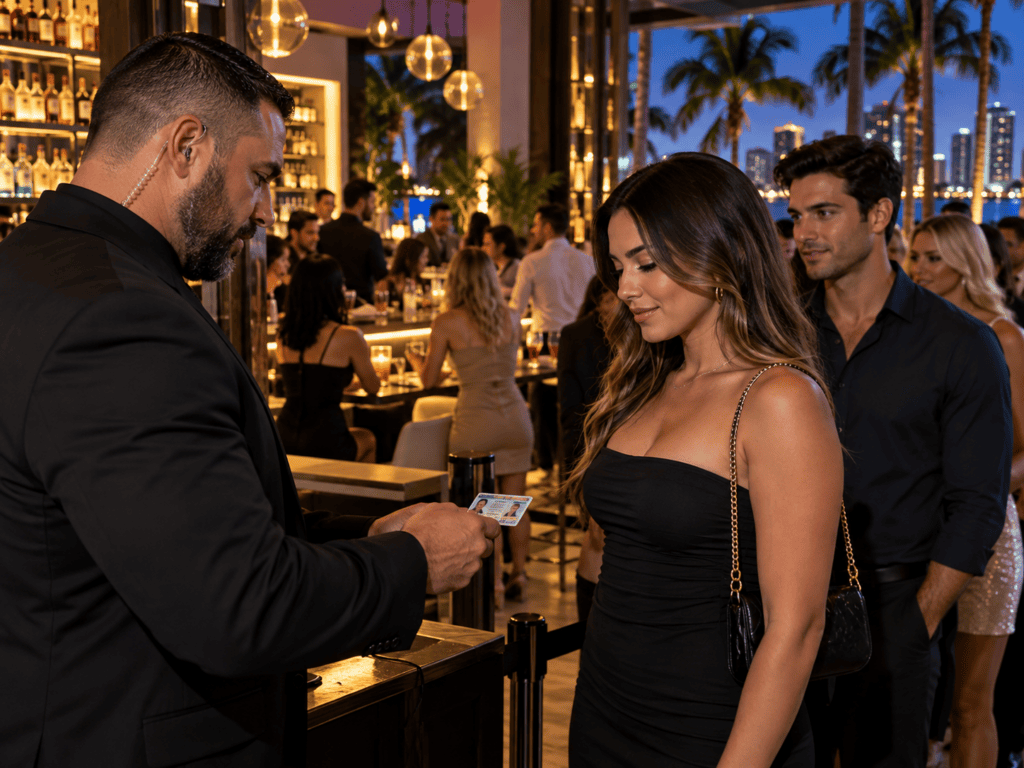 Consistent age-verification procedures are an important part of responsible alcohol service. Florida bars and nightclubs should train employees on when identification must be checked, how to recognize questionable identification, and when alcohol service should be refused. Clear procedures can help reduce underage-service exposure while supporting stronger overall risk management.
What Is Florida’s Responsible Vendor Program?
Florida’s Responsible Vendor Act was created to encourage licensed alcohol vendors to use responsible serving practices, reduce underage alcohol sales, reduce intoxication-related harm, and promote professional alcohol-service standards.
The program is not simply a one-time training course. To qualify as a responsible vendor, a business must satisfy specific training, management, recordkeeping, policy, and posting requirements established under Florida law.
Employee and Manager Training Requirements
Under Florida Statute §561.705, a vendor seeking responsible-vendor qualification must provide training covering subjects such as alcohol-service laws, the effects of alcohol, and methods for recognizing and dealing with underage customers. Nonmanagerial employees who serve alcohol must complete the required training within 30 days after beginning employment, and managers must complete the management course within 15 days after beginning employment.
The statute also requires periodic employee meetings, recordkeeping, written policies concerning certain controlled-substance activity, and customer notices regarding underage alcohol service and prohibited conduct.
Why Responsible Vendor Qualification Can Matter
Responsible Vendor qualification can provide important regulatory benefits.
Under Florida Statute §561.706, a qualified vendor may receive protection from license suspension or revocation for certain employee violations involving unlawful alcohol service to an underage person when the statutory conditions are satisfied. Qualification must also be considered in mitigation of certain administrative penalties. These protections are subject to important limitations, including situations in which the vendor knew, should have known, participated in, or committed the violation.
The Florida Division of Alcoholic Beverages and Tobacco also notes that vendors who successfully complete responsible-vendor training and maintain compliance may receive a reduction in liability insurance premiums, although any insurance benefit depends on the insurer and underwriting program.
Responsible Service Goes Beyond Minimum Compliance
Even when a bar or nightclub does not participate in the Responsible Vendor program, strong alcohol-service practices can still be important.
Businesses should consider procedures for checking identification, monitoring alcohol service, refusing unlawful sales, training bartenders and servers, documenting serious incidents, supervising employees, and responding consistently when a patron becomes disruptive or presents a safety concern.
For nightlife businesses, these procedures can work together with Liquor Liability Insurance, Assault and Battery coverage, and security practices to reduce the likelihood and severity of serious incidents.
For more information about Florida’s Responsible Vendor program, review the Florida Division of Alcoholic Beverages and Tobacco’s Responsible Vendor Act resources.
Assault and Battery Coverage
Assault and battery is one of the most important coverage issues for bars and nightclubs because fights, altercations, security incidents, and allegations involving employees or patrons can result in serious bodily injury claims.
A business should not assume that General Liability or Liquor Liability Insurance automatically provides broad protection for these incidents. Depending on the insurer and policy form, assault and battery may be covered, excluded entirely, subject to a separate endorsement, or limited by a much lower sublimit.
Why Assault and Battery Exclusions Matter
Some policies contain broad assault and battery exclusions that can apply not only to the physical altercation itself, but also to related allegations against the business.
For example, a lawsuit following a fight may allege that the nightclub or bar failed to provide adequate security, allowed an unsafe condition to develop, negligently hired or supervised employees, or failed to intervene appropriately.
Depending on the wording, a broad assault and battery exclusion may restrict coverage for those related allegations as well.
This makes the actual policy language especially important for nightlife businesses.
Security Personnel Can Change the Exposure
Bars and nightclubs that use bouncers, door staff, private security, or contracted security companies can have additional liability exposure.
A claim may allege excessive force, negligent restraint, failure to remove a dangerous patron, inadequate crowd control, or failure to protect customers from another person.
The insurance program should identify whether security is provided by employees or an outside contractor and how the applicable policies address claims arising from those activities.
Contracted Security Does Not Automatically Eliminate the Bar’s Risk
Using an outside security company may transfer some responsibility, but it does not necessarily eliminate the bar or nightclub from a lawsuit.
The contract with the security provider should be reviewed for insurance requirements, indemnification provisions, additional insured status, liability limits, and the security company’s responsibility for its employees.
The establishment should also verify that the security provider maintains appropriate insurance rather than relying only on the contract language.
Assault and Battery Sublimits Should Be Reviewed Carefully
A policy may technically include Assault and Battery coverage while providing a limit that is substantially lower than the main General Liability or Liquor Liability limit.
For example, a business could have a higher overall liability limit but only a smaller sublimit available for assault-and-battery claims.
The policy should also be reviewed to determine whether defense costs reduce that sublimit. A serious claim can generate substantial legal expenses before any settlement or judgment is reached.
The Source of the Incident Can Matter
Assault-and-battery claims can involve different parties and circumstances.
An incident might involve two customers, a patron and an employee, a security guard and a customer, or an altercation that begins inside the establishment and continues outside.
Coverage can depend on the allegations, who was involved, where the incident occurred, and how the policy defines and excludes assault or battery.
For that reason, nightlife businesses should not evaluate coverage based only on whether the words “Assault and Battery” appear somewhere on the quote.
Liquor Liability and Assault and Battery Can Overlap
A serious nightclub incident may involve allegations of both improper alcohol service and inadequate security.
That can create potential interaction between Liquor Liability, General Liability, and Assault and Battery coverage.
The policies should be reviewed together so the business understands whether an alcohol-related altercation is covered, excluded, or subject to a special limit.
Umbrella Coverage Should Also Be Checked
A Commercial Umbrella or Excess Liability policy should not automatically be assumed to provide additional limits for assault-and-battery claims.
If the underlying policy excludes Assault and Battery or carries a special sublimit, the Umbrella may also restrict or exclude the exposure.
Bars and nightclubs seeking higher liability limits should confirm whether Assault and Battery coverage is actually included beneath the Umbrella or Excess policy.
Coverage Should Match the Actual Nightlife Operation
A small neighborhood bar with limited customer traffic may present a different assault-and-battery exposure from a large nightclub with late-night hours, dancing, bottle service, promoters, large crowds, and private security.
When comparing insurance options, the business should review the Assault and Battery wording, applicable sublimits, defense-cost treatment, security operations, exclusions, and how the coverage coordinates with General Liability, Liquor Liability, and Umbrella or Excess coverage.
Security, Crowd Control, and Negligent Security Exposure.
Bars and nightclubs can face significant liability exposure when large crowds, alcohol service, late-night operations, security personnel, and customer conflicts occur in the same environment.
A claim may allege that the business failed to provide adequate security, control a dangerous situation, manage crowd movement, respond appropriately to threatening behavior, or protect patrons from foreseeable harm. Whether the business is legally responsible depends on the facts, applicable law, and the specific circumstances of the incident.
Security Operations Should Reflect the Venue
The level of security appropriate for a small neighborhood bar may be very different from what is appropriate for a high-capacity nightclub with dancing, bottle service, promoters, special events, and late-night crowds.
Relevant considerations can include customer capacity, operating hours, prior incidents, alcohol exposure, entertainment, entry procedures, parking areas, exterior gathering areas, and whether security personnel are employees or independent contractors.
Security should be structured around the actual venue rather than treated as a one-size-fits-all function.
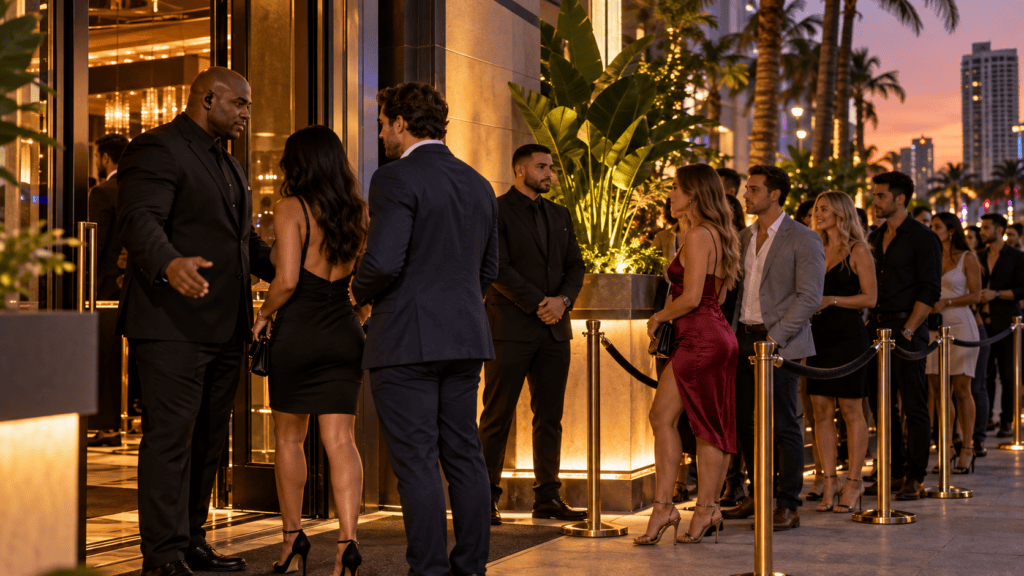 Effective security and crowd-control procedures should reflect the size, hours, customer capacity, entertainment, and overall risk profile of the venue. Florida bars and nightclubs may need clearly defined entry procedures, trained security personnel, appropriate staffing levels, and consistent processes for managing crowds and responding to developing situations.
Crowd Control Can Affect Liability
Crowd-related incidents do not always involve a fight.
A business may also face allegations involving overcrowding, blocked exits, unsafe entry or exit procedures, pushing or congestion near doors, unmanaged lines, or inadequate staffing during busy periods.
Nightclubs and bars should consider how customers enter, move through, and leave the premises, especially during peak hours, special events, or closing time.
Negligent Security Claims Can Involve More Than Security Guards
A negligent security allegation may involve claims that the establishment failed to take reasonable precautions in light of the circumstances.
The allegations could involve lighting, surveillance, staffing, access control, response to prior incidents, parking areas, entrances and exits, or how employees handled a developing situation.
This is one reason security exposure should be reviewed as part of the overall liability program rather than treated solely as an operational issue.
Employee Security vs. Contracted Security
Some bars and nightclubs use their own employees for door control or security, while others hire a licensed outside security company.
Those arrangements can create different insurance and contractual considerations.
If the business uses its own security personnel, the insurer should understand their duties, training, and role.
If security is outsourced, the nightclub or bar should review the security company’s insurance, contract terms, indemnification provisions, and additional insured requirements rather than assuming the outside contractor accepts all responsibility.
Training and Documentation Can Matter
Clear procedures can help employees and security personnel respond more consistently to difficult situations.
Bars and nightclubs may want documented procedures for entry control, ID checks, patron removal, de-escalation, incident reporting, emergency response, and communication between management and security staff.
Incident reports, surveillance footage, staffing records, and other documentation can also become important after a serious event.
Security Claims Can Interact With Assault and Battery Coverage
A lawsuit involving a fight or violent incident may include several allegations at the same time.
A claimant may allege assault and battery, negligent security, negligent hiring, inadequate supervision, or improper use of force.
Because these allegations can overlap, a broad Assault and Battery exclusion may affect claims that are framed as negligent security or supervision claims.
Bars and nightclubs should therefore review the security exposure together with General Liability, Liquor Liability, Assault and Battery coverage, and Umbrella or Excess Liability.
Parking Lots and Exterior Areas Should Not Be Overlooked
Security exposure may extend beyond the interior of the establishment.
Incidents can occur in parking lots, valet areas, sidewalks, entrance lines, smoking areas, patios, or other spaces associated with the business.
The insurance review should consider where customers gather before entering, while on the premises, and after leaving.
Security Should Be Part of the Insurance Review
For bars and nightclubs, security is not just an operational concern.
It can affect insurer appetite, policy terms, Assault and Battery coverage, deductibles, sublimits, and the availability of Umbrella or Excess Liability.
The insurance program should reflect how the establishment actually manages security, crowds, customer access, and high-risk periods.
Premises Liability, Dance Floors, Broken Glass, and Customer Injuries
Bars and nightclubs can face frequent premises-liability exposure because customers move through crowded spaces, dimly lit areas, dance floors, restrooms, patios, entrances, and bar service areas where spills and broken glass may occur.
A customer injury does not automatically mean the business is legally responsible, but an allegation involving unsafe conditions can lead to a claim, investigation, and potentially significant defense costs.
Slips, Trips, and Falls
Spilled drinks, wet floors, uneven surfaces, loose mats, crowded walkways, and poor lighting can contribute to falls.
Nightlife businesses should have procedures for monitoring high-traffic areas, cleaning spills promptly, documenting incidents, and addressing conditions that could create a hazard.
General Liability Insurance may help respond to certain covered premises-related bodily injury claims, subject to the policy terms and facts of the loss.
Dance Floors Can Create Additional Exposure
Dance floors can increase the likelihood of customer injuries because patrons may be moving quickly, dancing in groups, carrying drinks, or navigating low-light conditions.
The business should consider floor condition, crowd density, lighting, surrounding furniture, drink service near the dance area, and how employees monitor the space during busy periods.
A nightclub with a dedicated dance floor can present a different risk than a neighborhood bar with no dancing.
Broken Glass and Beverage Service
Broken bottles and glassware can create serious injury hazards if they are not identified and removed promptly.
Bars and nightclubs should consider how glassware is handled in high-traffic areas and whether alternative service methods are appropriate during especially crowded events.
Incidents involving broken glass can create both customer injury and employee injury exposure.
Restrooms, Patios, and Exterior Areas
Premises liability extends beyond the main bar or dance floor.
Claims can also arise in restrooms, patios, stairways, sidewalks, entry lines, smoking areas, parking areas, or other spaces used by customers.
Lighting, maintenance, housekeeping, and regular inspections can be particularly important in these areas.
Crowd Density Can Increase Injury Risk
A busy nightlife venue may experience congestion near bars, exits, entrances, stairways, restrooms, and entertainment areas.
High customer density can make it more difficult to identify spills, remove broken glass, or respond quickly to an injured patron.
The business should consider staffing, housekeeping, crowd flow, and emergency access during peak periods.
Incident Documentation Can Be Important
When an injury occurs, consistent documentation can help preserve important facts.
Depending on the incident, useful records may include photographs, surveillance footage, employee statements, witness information, cleaning logs, inspection records, and an incident report.
Documentation should be factual and completed as soon as practical after the event.
Premises Liability Should Be Reviewed With Other Nightlife Exposures
A customer injury may involve more than one coverage issue.
For example, a claim might begin as a slip-and-fall incident but also involve allegations concerning alcohol service, security, or an altercation.
General Liability, Liquor Liability, Assault and Battery coverage, and security-related provisions should therefore be reviewed together when appropriate.
Commercial Property Insurance for Bars and Nightclubs
Commercial Property Insurance can help protect a bar or nightclub’s building, furniture, fixtures, equipment, inventory, and other covered business property against certain causes of physical loss or damage.
For nightlife businesses, property exposure can be substantial because a single location may include bar equipment, refrigeration systems, sound and lighting equipment, furniture, televisions, point-of-sale systems, liquor inventory, décor, security equipment, and significant tenant improvements.
What Property Can Be Insured?
Depending on the policy and whether the business owns or leases the premises, Commercial Property Insurance may cover the building, business personal property, equipment, inventory, furniture, fixtures, electronics, signage, and certain improvements made to the space.
A business that owns the building may need coverage for both the structure and its contents. A tenant may primarily need protection for its own property, leasehold improvements, and other interests that are not insured by the landlord.
Bars and Nightclubs Can Have Expensive Specialized Property
Nightlife establishments often invest heavily in equipment and interior finishes.
That can include bar refrigeration, draft-beer systems, ice machines, glasswashers, sound systems, DJ equipment, lighting systems, televisions, security cameras, furniture, decorative finishes, built-in bars, and other specialized property.
These values should be reviewed carefully because replacing a customized nightclub or bar interior after a major loss can be significantly more expensive than replacing ordinary office furnishings.
 The property investment inside a bar or nightclub can extend far beyond tables and chairs. Built-in bars, refrigeration, point-of-sale systems, liquor inventory, professional sound and lighting equipment, televisions, furniture, décor, and tenant improvements can represent substantial replacement value. These values should be reviewed carefully so Commercial Property limits reflect what the business could realistically need to repair or replace after a covered loss.
Fire Can Create a Significant Property Loss
Bars and nightclubs may face fire exposure from electrical systems, kitchens, commercial equipment, lighting, entertainment systems, and other sources.
A fire can damage much more than the immediate area where it begins. Smoke, heat, water from sprinklers or firefighting efforts, and resulting business interruption can affect equipment, inventory, furniture, walls, ceilings, and neighboring property.
Commercial Property Insurance may help address covered physical damage, while Business Income and Extra Expense coverage may help with certain financial losses if the establishment must temporarily close because of a covered property loss.
Theft and Vandalism Can Also Matter
Bars and nightclubs may contain high-value electronics, liquor inventory, cash-handling equipment, sound systems, and other property that can be attractive targets for theft.
Late-night operations and periods when the premises are closed may also create vandalism or break-in exposure.
Coverage depends on the policy terms, limits, exclusions, security protections, and circumstances of the loss.
Tenant Improvements Should Be Reviewed Carefully
Many bars and nightclubs operate from leased commercial space and invest heavily in customized interiors.
Tenant improvements may include built-in bars, dance floors, stages, lighting systems, sound installations, wall treatments, flooring, plumbing, electrical upgrades, restrooms, and other permanent improvements.
The lease should be reviewed to determine which improvements the tenant is responsible for insuring and how those improvements will be valued after a covered loss.
Property Valuation Matters
The amount of insurance selected should reflect realistic repair and replacement costs.
Depending on the policy, covered property may be valued on a replacement-cost basis, an actual-cash-value basis, or another method.
Underestimating the value of specialized equipment, décor, lighting systems, sound systems, or tenant improvements can create a significant problem after a major loss.
Property Values Should Be Updated as the Business Changes
Bars and nightclubs frequently remodel, add technology, upgrade sound and lighting systems, purchase new furniture, expand liquor inventory, or make other capital improvements.
The insurance program should be reviewed when those values change so that the policy continues to reflect the property the business actually owns and would need to replace.
Bar Equipment, Furniture, Sound Systems, Lighting, and Improvements
Bars and nightclubs often invest heavily in specialized property that goes well beyond ordinary furniture and fixtures.
A single location may contain commercial refrigeration, draft systems, ice machines, glasswashers, point-of-sale equipment, sound systems, DJ equipment, televisions, lighting systems, security cameras, built-in bars, furniture, décor, and substantial tenant improvements.
These values should be reviewed carefully so the insurance program reflects what the business would actually need to repair or replace after a covered loss.
Bar and Beverage Equipment
Bar operations can depend on equipment such as refrigeration units, bottle coolers, ice machines, draft-beer systems, glasswashers, sinks, beverage dispensers, and point-of-sale hardware.
Some of this property may be covered under Commercial Property Insurance when damaged by a covered cause of loss.
Internal mechanical or electrical failure, however, may be treated differently and may require Equipment Breakdown coverage depending on the policy.
Sound, DJ, and Entertainment Equipment
Nightclubs and entertainment-focused bars may have significant values tied to sound systems, speakers, amplifiers, mixers, DJ equipment, microphones, video systems, and related electronics.
These items can be expensive to replace and may also be moved, rented, or used in different parts of the premises.
The business should confirm how the policy treats permanently installed equipment compared with portable or mobile property.
Lighting Systems and Specialty Installations
Nightclubs may also invest heavily in architectural lighting, stage lighting, control systems, illuminated décor, special effects equipment, and other custom installations.
These items can represent substantial value even though they may not be obvious during a basic property review.
Specialized electrical systems and controls should be included when estimating replacement costs.
Furniture, Fixtures, and Décor
Tables, chairs, booths, bar stools, lounge furniture, shelving, decorative fixtures, artwork, wall treatments, and other interior finishes can add significant value to a bar or nightclub.
Custom-designed interiors can be especially expensive to recreate after a major loss.
The business should consider both the quantity and replacement cost of these items rather than relying only on original purchase prices.
Tenant Improvements and Betterments
Bars and nightclubs operating in leased space may invest substantial amounts in customizing the property.
Tenant improvements can include built-in bars, stages, dance floors, flooring, lighting, electrical systems, plumbing, restrooms, wall finishes, sound installations, and other permanent improvements.
The lease should be reviewed carefully to determine whether the landlord or tenant is responsible for insuring those improvements and how they will be valued after a covered loss.
Inventory and Stock Should Also Be Considered
Property values may also include liquor, beer, wine, mixers, food, merchandise, supplies, and other stock held for business operations.
Inventory values can fluctuate significantly depending on season, special events, purchasing cycles, and the size of the operation.
Bars and nightclubs with substantial beverage inventory should make sure the policy limit reflects the maximum amount of stock that could realistically be on the premises at one time.
Accurate Values Help Reduce Underinsurance Risk
Property limits should reflect current replacement costs, not simply what equipment, furniture, or improvements originally cost.
Inflation, labor costs, specialized installation, and changes in technology can all increase the amount needed to rebuild or replace damaged property.
A nightclub that has upgraded its sound system, remodeled its interior, or added custom lighting may need substantially higher limits than when the policy was first written.
Business Income and Extra Expense Coverage
A serious property loss can affect a bar or nightclub long after the physical damage occurs. Even if the building, equipment, and interior can be repaired, the business may lose substantial revenue while remaining responsible for rent, payroll, loan payments, and other continuing expenses.
Business Income and Extra Expense coverage can help address certain financial losses when operations are suspended or reduced because of a covered property loss.
How Business Income Coverage Can Help
Business Income coverage is generally designed to replace certain income the business would have earned if the covered loss had not interrupted normal operations.
For a bar or nightclub, this can be especially important because a large portion of annual revenue may be concentrated into weekends, holidays, special events, or peak tourism periods.
If a covered fire, storm, or other insured property loss forces the establishment to close temporarily, Business Income coverage may help replace qualifying lost income during the covered period of restoration.
Continuing Expenses Can Remain Even While the Business Is Closed
A temporary closure does not necessarily eliminate the business’s financial obligations.
Rent, payroll, taxes, loan payments, utilities, insurance, and other continuing expenses may still need to be paid while repairs are underway.
Depending on the policy, Business Income coverage can help with certain continuing expenses that remain necessary during the interruption.
What Is Extra Expense Coverage?
Extra Expense coverage can help pay certain additional costs reasonably incurred to continue operations or reduce the length of a covered business interruption.
For example, a bar or nightclub might incur additional expenses to rent temporary equipment, expedite repairs, secure an alternate location, replace damaged technology, or take other reasonable steps intended to reopen more quickly.
The policy determines which expenses qualify and how much coverage is available.
The Cause of the Closure Matters
Business Income coverage is generally tied to a covered cause of physical loss or damage.
A nightclub forced to close because of a covered fire may present a different insurance situation from one that closes because of poor sales, a licensing issue, an excluded flood loss, or another event that does not satisfy the policy’s coverage requirements.
This is why Business Income protection should be reviewed alongside Commercial Property, Equipment Breakdown, Utility Service Interruption, and Flood Insurance rather than evaluated separately.
The Period of Restoration Is Important
Business Income coverage does not ordinarily continue indefinitely.
Policies typically define a period of restoration that helps determine how long covered income losses may be payable while damaged property is repaired, rebuilt, or replaced.
Bars and nightclubs should also review whether a waiting period applies before Business Income coverage begins.
Nightlife Businesses Can Take Time to Reopen
Reopening a bar or nightclub after a major property loss can involve more than simply repairing walls or replacing furniture.
The business may need to rebuild custom bars, replace sound and lighting systems, reinstall security equipment, complete inspections, restore electrical systems, repair tenant improvements, obtain permits, and satisfy fire or building requirements before reopening.
For a heavily customized venue, that process can take longer than expected.
Seasonal and Event Revenue Should Be Considered
Bars and nightclubs can have highly variable revenue.
A venue that generates significant income from weekends, holiday periods, live entertainment, special events, or tourism may need Business Income limits that reflect those peak periods rather than relying only on an average month.
A closure during a major revenue period can create a much larger financial impact than the same closure during a slower time of year.
Partial Closures Can Also Create Losses
A business does not necessarily have to close completely to suffer a serious financial loss.
A covered event could limit occupancy, close a dance floor, disable part of the sound or lighting system, shut down a bar area, or otherwise reduce the venue’s ability to operate at normal capacity.
Whether the policy responds depends on the coverage terms and the effect of the covered loss on operations.
Business Income Limits Should Reflect the Actual Operation
Coverage should be based on realistic financial information, including revenue, continuing expenses, payroll, seasonal fluctuations, and the amount of time a major loss could reasonably disrupt the business.
A high-volume nightclub with expensive custom equipment and complex tenant improvements may need substantially different protection from a small neighborhood bar that can reopen more quickly.
Equipment Breakdown Insurance
Bars and nightclubs rely on electrical, mechanical, refrigeration, audio, lighting, and technology systems that can be expensive to repair and critical to daily operations.
Equipment Breakdown Insurance can help cover certain losses caused by the sudden and accidental breakdown of covered equipment, subject to the policy terms, limits, deductibles, and exclusions.
This coverage can be important because Commercial Property Insurance does not necessarily respond to every type of internal mechanical or electrical failure.
What Types of Equipment Can Be Covered?
Depending on the policy, Equipment Breakdown coverage may apply to items such as:
-
Commercial refrigeration systems
-
Ice machines and beverage coolers
-
Electrical panels and distribution equipment
-
HVAC systems
-
Pumps and motors
-
Point-of-sale equipment
-
Sound and lighting systems
-
Certain electronic and communications equipment
-
Other covered mechanical or electrical equipment
The exact equipment protected depends on the policy definition and the cause of loss.
Refrigeration Failure Can Create a Larger Loss
A refrigeration or electrical breakdown can create more than a repair bill.
If a cooler, freezer, or refrigeration system fails, the business may also lose beer, wine, food, mixers, or other perishable inventory.
Some Equipment Breakdown policies may provide related spoilage coverage, but this should be confirmed rather than assumed.
We will address liquor, food, and perishable inventory more specifically in the next section.
Electrical Breakdown Can Affect Multiple Systems
Nightclubs and bars often place significant demand on their electrical systems.
A serious electrical breakdown can affect refrigeration, lighting, sound systems, point-of-sale equipment, security systems, HVAC, and other operations at the same time.
Even when the physical equipment damage is limited, the business may be unable to operate normally until repairs are completed.
Mechanical Breakdown Is Different From Normal Wear and Tear
Equipment Breakdown Insurance is generally intended for sudden and accidental breakdowns rather than routine deterioration, poor maintenance, corrosion, or equipment that simply reaches the end of its useful life.
Regular maintenance remains important even when the business carries this coverage.
The cause of failure must satisfy the policy terms for coverage to apply.
Business Income Can Be Affected by Equipment Failure
A major equipment breakdown can also cause lost revenue.
For example, a nightclub may be unable to operate if a critical electrical system, refrigeration unit, HVAC system, or sound system is damaged.
Depending on the insurance program, Equipment Breakdown coverage may include or coordinate with Business Income and Extra Expense coverage for certain covered interruptions.
The business should review whether those protections are included and what limits or waiting periods apply.
Utility-Related Damage Should Be Reviewed Carefully
Damage involving outside electrical service, power surges, or utility interruptions can be complicated because coverage may depend on where the failure occurs and how the policy defines covered equipment.
Bars and nightclubs should understand whether their Equipment Breakdown and Property policies address damage originating off premises or from utility-supplied power.
Coverage Limits Should Reflect Critical Equipment
The value of individual equipment can be substantial, but the larger concern may be how dependent the business is on that equipment.
A failed cooler may be inconvenient for one business but operationally devastating for another.
A nightclub with sophisticated lighting, sound, electrical, and climate-control systems should review both the replacement value of the equipment and the financial impact of losing it temporarily.
Liquor, Food, and Perishable Inventory
Bars and nightclubs can maintain substantial values in liquor, beer, wine, mixers, food, garnishes, and other inventory. Those values can fluctuate significantly depending on purchasing schedules, weekends, holidays, special events, and the size of the operation.
Commercial Property Insurance may cover certain inventory damaged by a covered cause of loss, but businesses should not assume that every type of stock loss—particularly spoilage, contamination, temperature change, or power interruption—is automatically included.
Liquor Inventory Can Represent Significant Value
Premium spirits, wine, champagne, beer, and other alcoholic beverages can represent a substantial portion of a bar or nightclub’s business personal property.
The property limit should reflect the amount of inventory that could realistically be on the premises during peak periods, not simply the average amount maintained throughout the year.
This can be particularly important for establishments that purchase larger quantities before holidays, private events, major weekends, or other high-volume periods.
Food and Perishable Stock Create Additional Exposure
Bars and nightclubs that also serve food may depend on refrigerated or frozen inventory.
A refrigeration failure, electrical problem, or extended loss of power could cause food and other temperature-sensitive stock to become unusable even when there is little visible damage to the building.
Standard Commercial Property coverage may not automatically cover every loss caused by temperature change or equipment failure.
Spoilage Coverage May Be Needed
Spoilage coverage can help protect certain perishable property against qualifying losses caused by events such as refrigeration breakdown or changes in temperature, depending on the policy.
Coverage can vary substantially between insurers.
Important issues may include the covered causes of loss, spoilage limit, deductible, whether power interruption is included, and where the equipment or utility failure must occur for coverage to apply.
Equipment Breakdown Coverage Can Work With Spoilage Protection
If a refrigeration system or other covered piece of equipment experiences a qualifying mechanical or electrical breakdown, Equipment Breakdown Insurance may help address the damaged equipment and, when included, resulting spoilage.
The business should confirm whether spoilage coverage is included automatically, added by endorsement, or subject to a separate limit.
A policy that pays to repair the refrigeration unit does not necessarily mean it will also reimburse the full value of lost inventory.
Utility Service Interruption Can Create Coverage Gaps
A loss of electrical service can shut down coolers, freezers, ice machines, point-of-sale systems, lighting, HVAC, and other critical equipment.
Coverage for an off-premises utility failure may depend on specific endorsements and policy definitions.
Bars and nightclubs should review whether their property, Equipment Breakdown, spoilage, and Business Income coverages address qualifying utility-service interruptions and whether distance, waiting-period, or cause-of-loss requirements apply.
Contamination Is Different From Ordinary Property Damage
Inventory can also become unusable because of contamination rather than direct physical damage from a traditional property loss.
Whether contamination is covered depends on the cause and policy language.
Businesses should not assume that stock must only be physically destroyed to create a significant inventory loss—or that every situation in which inventory must be discarded will be insured.
Theft of Inventory Should Also Be Considered
Liquor inventory can be vulnerable to burglary, employee theft, and other forms of loss.
Coverage may depend on how the property disappeared and which policy applies.
Commercial Property Insurance and Commercial Crime Insurance address different types of exposures, so a business concerned about theft should review both rather than assuming one policy covers every inventory loss.
Inventory Values Should Be Reviewed Regularly
Bars and nightclubs should periodically review liquor, food, and other stock values as purchasing patterns and operations change.
A growing business, expanded bottle-service program, larger wine selection, or increase in special events can materially increase the amount of inventory at risk.
The insurance limits should reflect those changes before a loss occurs.
Workers’ Compensation Insurance for Florida Bars and Nightclubs
Bars and nightclubs employ bartenders, servers, cooks, managers, security personnel, cleaning staff, and other workers who may be exposed to injuries while performing their jobs.
Workers’ Compensation Insurance can help provide benefits for qualifying work-related injuries and occupational illnesses, including certain medical expenses and wage-replacement benefits, subject to Florida law and the circumstances of the claim.
When Is Workers’ Compensation Required in Florida?
Bars and nightclubs are generally considered non-construction businesses for Florida Workers’ Compensation purposes.
Florida generally requires a non-construction employer with four or more employees, whether full-time or part-time, to maintain Workers’ Compensation coverage, subject to the state’s rules concerning business owners, exemptions, and entity structure.
A business should not assume it is exempt simply because some workers are part-time or because the operation is relatively small.
Nightlife Employees Can Face a Wide Range of Injuries
The work environment in a busy bar or nightclub can create several potential employee injury exposures.
Bartenders and servers may suffer cuts from broken glass, burns, slips and falls, lifting injuries, or injuries while carrying cases, kegs, trays, or supplies.
Kitchen employees may face burns, cuts, lifting injuries, and slips. Security personnel may face additional risk when responding to disturbances or removing patrons.
These exposures can vary substantially depending on the size and nature of the operation.
Employee Injuries Are Different From Customer Injuries
General Liability Insurance is primarily designed to address certain claims made by third parties.
Workers’ Compensation is intended to address qualifying injuries suffered by employees in the course and scope of their employment.
For example, a customer who slips on a wet floor may present a General Liability claim, while an employee injured after slipping in the same area may present a Workers’ Compensation claim.
Security Personnel Require Careful Review
Bars and nightclubs frequently use door staff, bouncers, or other security personnel.
If those workers are employees of the establishment, their duties should be accurately disclosed to the Workers’ Compensation insurer.
If security is provided by an outside company, the bar or nightclub should verify the contractor’s insurance and understand how responsibility is addressed in the agreement.
Using an outside contractor does not mean the establishment should ignore the Workers’ Compensation exposure.
Independent Contractor Status Should Not Be Assumed
Nightlife businesses may work with DJs, performers, promoters, security personnel, cleaners, or other individuals who are paid as independent contractors.
Simply labeling someone an independent contractor or issuing a Form 1099 does not by itself determine that person’s status for Workers’ Compensation purposes.
Florida applies specific criteria to independent-contractor status in non-construction industries, and misclassification can create compliance and insurance problems.
Payroll and Employee Duties Affect Premium
Workers’ Compensation premiums are influenced by factors including payroll, the type of work employees perform, and the employer’s claims history.
Accurate employee classifications are particularly important for bars and nightclubs because a bartender, kitchen employee, office worker, and security employee may present different workplace exposures.
Businesses should report payroll and job duties accurately and notify the insurer when operations or staffing change.
Workplace Safety Can Help Reduce Injuries
Workers’ Compensation Insurance does not replace the need for strong safety procedures.
Bars and nightclubs can reduce workplace risk by maintaining clean walking surfaces, handling broken glass promptly, training employees on lifting and equipment use, maintaining kitchen and refrigeration equipment, providing appropriate security procedures, and documenting workplace injuries when they occur.
A safer operation can help protect employees while also reducing the likelihood and severity of claims.
Coverage Should Keep Pace With Growth
A bar or nightclub that begins with only a few employees may later add bartenders, servers, kitchen staff, managers, security, or additional shifts.
Employee counts, payroll, and job duties should be reviewed as the business grows so the insurance program continues to reflect the actual operation and Florida’s coverage requirements.
Employment Practices Liability Insurance (EPLI)
Bars and nightclubs can face employment-related claims involving hiring, supervision, discipline, scheduling, termination, harassment, discrimination, retaliation, and other workplace practices.
Employment Practices Liability Insurance (EPLI) can help protect the business against certain claims brought by employees, former employees, or job applicants, subject to the policy terms, exclusions, limits, deductibles or retentions, and circumstances of the claim.
What Types of Claims Can EPLI Address?
Depending on the policy, EPLI may help respond to allegations involving wrongful termination, employment discrimination, workplace harassment, retaliation, failure to hire or promote, and certain other employment-related conduct.
Coverage can also include legal defense costs for covered claims.
The exact protection varies significantly between policies, so businesses should review the definitions of covered claims, who qualifies as an insured, exclusions, reporting requirements, and how defense costs affect the available limit.
Bars and Nightclubs Can Have Unique Employment Exposures
Nightlife businesses often operate with late hours, changing schedules, part-time employees, tipped workers, security personnel, bartenders, servers, entertainers, and high employee turnover.
Employees may also work closely with customers who have been consuming alcohol.
Those conditions can create employment concerns involving supervision, workplace conduct, harassment allegations, scheduling disputes, disciplinary actions, and how management responds when an employee reports inappropriate behavior.
Harassment Claims Can Involve Customers or Other Third Parties
Workplace harassment concerns are not necessarily limited to conduct between employees.
A bartender, server, or other employee may allege that management failed to respond appropriately to harassment or inappropriate conduct by customers, vendors, contractors, performers, or other third parties.
Whether an EPLI policy responds to a particular allegation depends on its terms, but bars and nightclubs should review how the policy addresses third-party conduct and harassment claims.
Managers and Supervisors Create Additional Exposure
Managers frequently make decisions involving hiring, scheduling, promotions, discipline, employee complaints, and termination.
Inconsistent treatment or poorly documented employment decisions can increase the likelihood of disputes.
Training managers on workplace policies and maintaining consistent documentation can help support better employment practices and provide important records if a claim later occurs.
Wage-and-Hour Claims Require Separate Attention
Bars and nightclubs frequently employ tipped workers, hourly employees, and staff whose hours may vary substantially from week to week.
Claims involving minimum wage, overtime, tip practices, timekeeping, or other wage-and-hour issues should not automatically be assumed to fall within standard EPLI coverage.
Many EPLI policies exclude or significantly restrict wage-and-hour claims, although some may provide limited defense-cost protection by endorsement or sublimit.
The business should review this issue separately rather than assuming EPLI covers every employment dispute.
EPLI Is Different From Workers’ Compensation
Workers’ Compensation and EPLI address different types of employee-related risk.
Workers’ Compensation generally concerns qualifying job-related injuries and occupational illnesses.
EPLI addresses certain allegations involving employment decisions and workplace conduct.
A business may therefore need both forms of protection because one does not replace the other.
Employee Policies and Documentation Still Matter
Insurance should complement strong employment practices rather than replace them.
Bars and nightclubs should consider maintaining clear policies covering harassment, discrimination, retaliation, workplace conduct, employee complaints, discipline, attendance, and other employment matters.
Employee complaints should be taken seriously and handled consistently, and significant employment decisions should be documented appropriately.
EPLI Limits Should Reflect the Business
The appropriate EPLI limit can depend on the number of employees, turnover, management structure, prior claims, operating locations, and the financial impact of defending an employment lawsuit.
A growing nightclub with a large staff and multiple managers may have a different exposure from a small owner-operated bar with only a few employees.
The insurance program should be reviewed as staffing and operations change.
Employee Theft and Commercial Crime Insurance
Bars and nightclubs can handle significant amounts of cash, liquor inventory, credit-card transactions, and other property that may be vulnerable to theft or fraud.
Commercial Crime Insurance can help protect the business against certain financial losses caused by employee dishonesty, theft, forgery, fraud, and other covered criminal acts, depending on the policy and coverages selected.
Employee Theft Can Be Difficult to Detect
Employee theft does not always involve a single large loss.
A business may experience repeated smaller losses involving cash, liquor, inventory, refunds, voided transactions, discounts, or other manipulation that continues for months before it is discovered.
Bars and nightclubs can be particularly exposed because multiple employees may handle cash, inventory, point-of-sale systems, and customer payments during busy shifts.
What Can Employee Theft Coverage Protect?
Employee Theft coverage may help protect the business when an employee intentionally steals money, securities, or other covered property.
Depending on the policy, losses could involve:
-
Cash removed from registers or deposits
-
Theft of liquor or other inventory
-
Fraudulent refunds or transaction manipulation
-
Misappropriation of business funds
-
Certain dishonest acts involving company property
The policy definitions, limits, exclusions, and proof requirements determine whether a particular loss is covered.
Commercial Property Insurance Is Not the Same as Crime Insurance
A business should not assume its Commercial Property policy covers every theft loss.
Property Insurance may respond to certain burglary or theft losses involving covered property, but employee dishonesty and financial fraud are often handled differently.
Commercial Crime Insurance is designed specifically for certain theft and fraud exposures that may not be adequately addressed by a standard property policy.
Cash Handling Creates Additional Exposure
Bars and nightclubs may receive substantial cash payments, especially during weekends, special events, cover-charge collection, or high-volume nightlife periods.
The business should have procedures for register access, cash drawers, deposits, safe access, reconciliation, and management review.
Crime policies may also offer coverage for certain losses involving money and securities inside the premises or while being transported, depending on the policy.
Liquor Inventory Can Be a Target for Theft
Liquor, wine, champagne, and other beverage inventory can be valuable, portable, and difficult to track without strong inventory controls.
Losses may involve individual bottles, repeated unauthorized consumption, inventory removed from storage, or manipulation of sales records to conceal missing stock.
Regular inventory counts and comparison with point-of-sale records can help identify unusual patterns before losses become substantial.
Point-of-Sale Systems Can Help—or Create New Opportunities for Fraud
Modern POS systems can provide detailed transaction records, employee login information, refund histories, discounts, voids, and other data that can help management identify irregular activity.
At the same time, employees with excessive system permissions may be able to manipulate transactions or conceal theft.
Businesses should consider role-based system access, unique employee credentials, management approval for certain transactions, and regular review of unusual refunds, voids, or discounts.
External Crime Exposures Should Also Be Considered
Commercial Crime Insurance can extend beyond employee theft.
Depending on the policy, available protections may include certain losses involving robbery, forgery or alteration, computer fraud, funds-transfer fraud, counterfeit currency, or theft of money and securities.
These coverages are not automatically identical from one policy to another, so the business should review which crime exposures are actually included.
Cyber Insurance and Crime Insurance Address Different Risks
Some financial crimes involve both technology and theft, which can create overlap between Cyber Insurance and Commercial Crime Insurance.
For example, a fraudulent electronic transfer may involve compromised credentials, deceptive instructions, or computer-system access.
Whether the loss is handled by a Cyber policy, Crime policy, or neither can depend on how the incident occurred and the exact policy wording.
The two coverages should therefore be reviewed together rather than assumed to be interchangeable.
Internal Controls Remain Important
Insurance is only one part of protecting the business from employee theft and fraud.
Bars and nightclubs can reduce exposure by separating cash-handling duties, limiting access to safes and inventory, using individual POS credentials, reviewing refunds and voids, reconciling deposits, maintaining surveillance where appropriate, and conducting regular inventory checks.
Strong internal controls can help identify losses earlier and may also be relevant during insurance underwriting.
Coverage Limits Should Reflect the Potential Loss
The appropriate Commercial Crime limit should reflect more than the amount of cash normally kept in a register.
The business should consider cash flow, bank-account access, inventory values, employee responsibilities, electronic payment systems, and the amount of money or property that one dishonest employee—or coordinated group of employees—could potentially access.
Cyber Insurance, POS Systems, and Customer Data
Bars and nightclubs increasingly rely on point-of-sale systems, online reservations, payment processing, Wi-Fi, email, cloud-based software, and other connected technology to operate.
Cyber Insurance can help address certain financial, operational, and liability losses arising from covered cyber incidents, subject to the policy terms, limits, deductibles or retentions, exclusions, and circumstances of the event.
Point-of-Sale Systems Create Cyber Exposure
POS systems may process payment-card information, employee credentials, sales data, refunds, customer information, and other sensitive business records.
If a system is compromised, the business may face costs involving forensic investigation, system restoration, customer notification, legal expenses, payment-card issues, and business interruption.
Coverage depends on the policy and the nature of the incident.
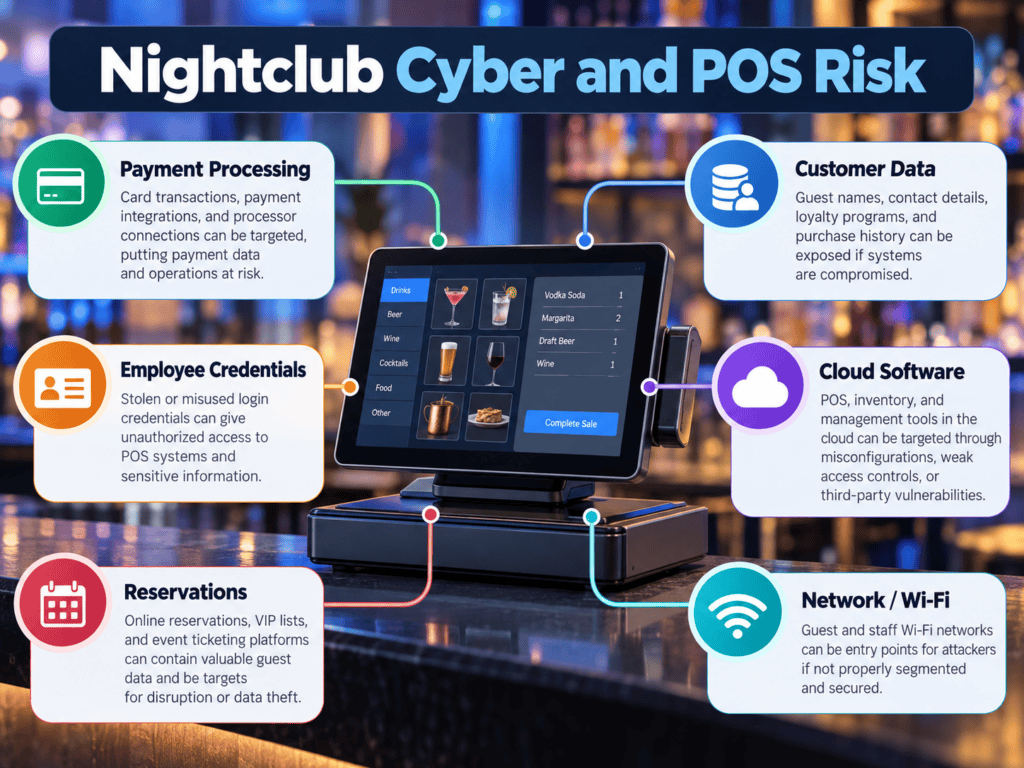 Nightclubs and bars often rely on interconnected POS, payment, reservation, customer-data, employee, and network systems, which can create multiple cyber and technology-related exposures.
Customer and Employee Data Can Be at Risk
Bars and nightclubs may collect more data than they realize.
Depending on the operation, that can include customer contact information, reservation details, loyalty-program data, payment information, employee records, payroll information, and other personal or business information.
A cyber incident affecting that data can create both financial and regulatory concerns.
Ransomware and System Disruption Can Affect Operations
A cyberattack does not have to involve stolen customer information to create a serious loss.
Ransomware, malware, unauthorized access, or other system failures can disrupt POS terminals, online reservations, accounting systems, email, security systems, or other technology the business depends on.
A nightclub or bar that cannot process payments or access critical systems may lose revenue even if the physical premises are undamaged.
Cyber Business Interruption Should Be Reviewed Separately
Traditional Business Income coverage is generally tied to covered physical property damage.
Cyber policies may provide separate business-interruption protection for certain technology-related events.
The business should review what triggers Cyber Business Interruption coverage, whether a waiting period applies, how lost income is calculated, and whether dependent-system or cloud-service outages are included.
Payment-Card Incidents Can Create Additional Costs
Bars and nightclubs often process a high volume of card transactions.
A compromise involving payment-card data can lead to investigation costs, notification expenses, card-brand assessments, contractual obligations, or other expenses depending on the circumstances.
Cyber coverage can vary significantly in how these costs are addressed, so businesses should not assume every policy responds the same way.
Social Engineering and Funds-Transfer Fraud Require Careful Review
Cybercriminals may use fraudulent emails, messages, invoices, or payment instructions to convince an employee to transfer money or disclose credentials.
These losses can fall into a complicated area between Cyber Insurance and Commercial Crime Insurance.
Coverage for social engineering, fraudulent instruction, computer fraud, and funds-transfer fraud should be reviewed specifically rather than assumed to be included automatically.
Third-Party Technology Can Create Exposure
A bar or nightclub may depend on outside vendors for payment processing, reservations, payroll, accounting, website hosting, cloud software, online ordering, or other services.
If one of those providers experiences a cyber incident, the business may still suffer operational or financial consequences.
Depending on the policy, coverage for dependent systems, contingent business interruption, or vendor-related cyber events may be available.
Cybersecurity Practices Can Affect Underwriting
Insurers may evaluate the business’s cybersecurity controls before offering coverage or determining terms.
Common underwriting considerations can include multi-factor authentication, software updates, backups, employee access controls, password practices, email security, payment-system protections, and how sensitive data is stored.
The business should answer cyber applications accurately because coverage can depend on representations made during underwriting.
Cyber Insurance Should Be Coordinated With Crime Coverage
Cyber Insurance and Commercial Crime Insurance address different but sometimes overlapping risks.
A stolen customer database, ransomware attack, fraudulent wire transfer, employee theft, and compromised POS system may each involve different coverage triggers.
Reviewing Cyber and Crime policies together can help identify gaps and clarify which policy may respond to different types of incidents.
Live Entertainment, DJs, Bands, Performers, and Dance Floors
Live entertainment can materially change the risk profile of a bar or nightclub.
A venue that hosts DJs, bands, live performers, dance events, themed nights, or other entertainment may face exposures involving crowds, equipment, performers, temporary staging, contracts, and additional liability that may not exist in a traditional neighborhood bar.
Entertainment Should Be Disclosed to the Insurer
Bars and nightclubs should accurately describe the entertainment they provide when applying for or renewing insurance.
Insurers may distinguish between recorded music, DJs, live bands, dancing, ticketed events, performances, comedy, karaoke, special productions, or other entertainment.
The frequency and type of entertainment can affect eligibility, pricing, exclusions, and coverage terms.
A venue that occasionally hosts an acoustic performer may be treated differently from a nightclub with regular DJs, dancing, large crowds, and late-night events.
DJs and Bands Can Create Contractual and Liability Issues
DJs, musicians, bands, and other performers may be employees, independent contractors, or outside businesses.
The venue should understand who is responsible for equipment, injuries, property damage, and other incidents arising from the performance.
Contracts may require the performer or entertainment company to carry its own insurance, name the venue as an additional insured, or accept certain indemnification obligations.
Those requirements should be reviewed before the event rather than after a claim occurs.
Performer-Owned Equipment May Not Be Covered by the Venue’s Property Policy
A nightclub may use sound, lighting, DJ, or musical equipment that belongs to an outside performer or production company.
The venue should not assume that equipment automatically becomes covered under its Commercial Property policy simply because it is temporarily located on the premises.
The contract and insurance arrangement should clarify who is responsible for insuring rented, borrowed, or performer-owned property.
Dance Floors Can Increase Customer Injury Exposure
Dancing can increase the likelihood of falls, collisions, crowding, spilled drinks, and other customer injuries.
The business should consider floor condition, lighting, customer density, furniture placement, drink service near the dance area, and how employees monitor the space during busy periods.
Dance-floor exposure should also be considered alongside General Liability, Assault and Battery coverage, Liquor Liability, and security operations.
Temporary Stages and Special Equipment Require Additional Attention
Some venues use temporary stages, risers, lighting rigs, speakers, cables, barriers, or other equipment for special events.
These installations can create additional property and liability exposures if they are not set up, secured, or maintained properly.
If outside vendors install staging, lighting, sound, or production equipment, the venue should review the vendor’s insurance and contractual responsibilities.
Capacity and Crowd Size Can Change the Risk
Live entertainment can attract larger or more concentrated crowds than the establishment normally experiences.
A popular DJ, band, or ticketed event may increase customer capacity, entrance lines, security needs, alcohol service volume, parking activity, and crowd-control exposure.
Insurance and operational planning should reflect those changes.
Entertainment Exclusions Should Be Reviewed Carefully
Some policies may restrict or exclude certain types of entertainment, dancing, live performances, special events, or high-capacity operations.
A bar or nightclub should not assume that a policy written for ordinary bar operations automatically extends to every event or entertainment activity.
The policy should be reviewed when the business adds new entertainment, changes its operating model, or begins hosting events that differ from its normal activities.
Coverage Should Follow the Actual Entertainment Program
The insurance program should reflect what actually happens at the venue.
A bar with occasional live music may require a different insurance structure from a nightclub with DJs every weekend, dancing, promoters, ticket sales, VIP areas, and special events.
Entertainment should be treated as a core underwriting exposure rather than a minor operational detail.
Promoters, Private Events, and Special Events
Promoters, private events, ticketed parties, holiday celebrations, and other special events can materially change the insurance exposure of a bar or nightclub.
An establishment that normally operates one way may face substantially different risks when an outside promoter brings in a larger crowd, a private party changes the normal customer mix, or a special event introduces additional entertainment, security, staging, or alcohol-service activity.
These events should be evaluated before they occur rather than assuming the venue’s existing insurance automatically covers every variation in operations.
Promoters Can Create Additional Liability Exposure
Nightclubs frequently work with outside promoters who advertise events, sell tickets, arrange performers, attract customers, or help organize nightlife events.
Even when the promoter is an independent business, the venue can still become involved in a claim arising from the event.
The agreement should clearly address responsibilities for insurance, security, alcohol service, crowd control, advertising, performers, property damage, and other event-related exposures.
Promoters Should Carry Their Own Insurance When Appropriate
Depending on the arrangement, the venue may require a promoter to maintain its own General Liability Insurance and provide evidence of coverage before the event.
The contract may also require the nightclub or bar to be named as an additional insured on the promoter’s policy when appropriate.
A Certificate of Insurance can provide evidence that coverage exists, but the certificate itself does not create coverage or replace the need to review the actual policy requirements and endorsements.
Private Events Can Change Normal Operations
A bar or nightclub may host birthday parties, corporate events, wedding-related celebrations, fundraisers, private receptions, or other functions that differ from normal public operations.
Those events can affect customer capacity, hours, alcohol service, entertainment, security, and access to the premises.
If the event materially changes the business’s normal exposure, the insurer should be consulted to determine whether notice, approval, or additional coverage is required.
Special Events May Require Separate Coverage
Some events fall outside the scope of the venue’s ordinary insurance program.
A large ticketed event, temporary outdoor function, unusual entertainment, festival-related activity, or event held away from the insured premises may require a separate Special Event policy or endorsement.
The business should not assume that its regular General Liability or Liquor Liability policy automatically follows every event to every location.
Alcohol Service Responsibilities Should Be Clear
When an outside promoter or event organizer is involved, the parties should clearly identify who is responsible for alcohol sales and service.
A venue that holds the liquor license and controls alcohol service may continue to have significant exposure even when the event is marketed or organized by someone else.
Liquor Liability Insurance, responsible-service procedures, ID checks, staffing, and security should therefore remain part of the event planning process.
Security and Crowd Size Should Be Reassessed
A special event may attract a substantially larger or different crowd than the venue normally serves.
Additional attendance can affect entry lines, customer capacity, security staffing, parking, alcohol consumption, crowd movement, and the likelihood of altercations or injuries.
Security and crowd-control planning should be based on the specific event rather than relying automatically on the venue’s ordinary staffing levels.
Performers and Vendors Can Add Contractual Risk
Special events may involve DJs, bands, photographers, caterers, production companies, decorators, temporary equipment providers, or other outside vendors.
The venue should understand which parties are responsible for their own employees, equipment, and activities.
Contracts may require vendors to maintain insurance and provide additional insured protection to the venue when appropriate.
Property Damage Should Also Be Considered
Private parties and special events can create additional property exposure when decorations, staging, temporary equipment, or larger crowds are involved.
The event agreement should address responsibility for damage to the building, furniture, sound equipment, lighting, fixtures, and other property.
Security deposits and contractual provisions can help address minor losses, but they do not replace appropriate insurance.
Review the Insurance Program Before the Event
When an event is substantially different from the venue’s normal operations, the bar or nightclub should review the exposure before contracts are signed and tickets are sold.
Important issues can include:
-
Expected attendance and customer capacity
-
Alcohol service
-
Security requirements
-
Promoters and performers
-
Temporary equipment or staging
-
Additional insured requirements
-
Certificates of Insurance
-
Event location
-
Special endorsements or separate event coverage
The goal is to make sure the insurance program reflects what will actually occur during the event rather than discovering a limitation after a loss.
Valet Parking and Garagekeepers Exposure
Bars and nightclubs that offer valet parking can take on additional liability because employees or contractors may temporarily take possession of customers’ vehicles.
That exposure is different from ordinary premises liability and should be reviewed carefully to determine whether the business has appropriate protection for customer vehicles, valet operations, and the people driving those vehicles.
Garagekeepers Coverage Can Protect Customer Vehicles
Garagekeepers coverage can help protect against certain covered losses involving customers’ vehicles while those vehicles are in the business’s care, custody, or control.
Depending on the policy, coverage may apply to losses involving collision, theft, vandalism, fire, or other covered causes of loss while a customer vehicle is being parked, stored, moved, or returned.
The exact protection depends on the policy form, covered causes of loss, limits, deductibles, and whether coverage is written on a legal-liability, direct-primary, or other basis.
Valet Liability Extends Beyond Damage to the Customer’s Vehicle
A valet employee or contractor could also cause an accident while driving a customer’s vehicle.
That creates a separate liability exposure involving bodily injury or property damage to other people or property.
The business should review how its Commercial Auto, Garagekeepers, General Liability, and any applicable valet-specific coverage work together rather than assuming one policy addresses every aspect of the operation.
Employee-Operated Valet Requires Careful Review
If the bar or nightclub operates its own valet service, the insurer should understand that employees are regularly driving customers’ vehicles.
The business should consider driver eligibility, motor vehicle record procedures, training, key control, parking procedures, and how vehicles are moved and stored.
Employees who are permitted to drive customer vehicles should be disclosed accurately during underwriting.
Contracted Valet Services Create Different Risks
Some bars and nightclubs outsource valet parking to an independent valet company.
That can transfer some operational responsibility, but it does not necessarily remove the venue from every potential claim.
The contract should address insurance requirements, indemnification, additional insured status, responsibility for customer vehicles, employee screening, and the types of losses the valet company is expected to insure.
Certificates of Insurance Should Be Verified
When an outside valet company is used, the venue should obtain evidence of the contractor’s insurance before operations begin.
The business should verify that the valet company carries the appropriate liability and Garagekeepers coverage and that the policy limits satisfy contractual requirements.
A Certificate of Insurance is evidence of coverage at a point in time, but the certificate itself does not create coverage or replace the underlying policy and endorsements.
Parking Locations Can Affect the Exposure
Valet operations may involve customer vehicles being parked on the business premises, in a shared lot, in a parking garage, on another property, or at an off-site location.
The insurance review should reflect where vehicles are actually stored and the route valet drivers use between the establishment and parking location.
The business should also understand whether contractual arrangements with landlords, parking facilities, or property owners create additional insurance requirements.
Key Control and Vehicle Security Matter
Valet operations create responsibility not only for the vehicle itself but also for access to that vehicle.
Bars and nightclubs should maintain procedures for customer tickets, keys, employee access, vehicle release, overnight storage, and lost-key situations.
Strong controls can help reduce theft, unauthorized vehicle use, and disputes over whether a vehicle was returned in the same condition.
Limits Should Reflect the Number and Value of Vehicles at Risk
The potential exposure can increase quickly when many customer vehicles are in the business’s care at the same time.
A valet operation serving luxury vehicles or handling a high volume of cars during peak hours may need materially different limits from a small operation that parks only a few vehicles.
Coverage should reflect both the value of individual vehicles and the maximum number of vehicles that could be in the business’s custody at one time.
Valet Exposure Should Be Reviewed as Part of the Overall Insurance Program
Valet operations can involve several policies and several different types of loss.
A complete review should consider Garagekeepers coverage, auto liability, customer-vehicle damage, employee drivers, third-party valet contractors, contractual requirements, and Umbrella or Excess Liability.
The goal is to make sure the coverage structure reflects how the valet operation actually works.
Commercial Auto and Hired & Non-Owned Auto
A bar or nightclub may have automobile exposure even when transportation is not a major part of the business.
Employees may use vehicles to pick up supplies, make bank deposits, transport equipment, travel between locations, or perform other business errands. Some establishments may also own vehicles, rent vehicles for special events, or operate shuttles or other transportation services.
The appropriate coverage depends on who owns the vehicle, who drives it, and how it is being used.
Commercial Auto Insurance for Business-Owned Vehicles
If the bar or nightclub owns vehicles, Commercial Auto Insurance may be needed to protect the business against certain liability and physical damage exposures arising from their use.
Depending on the policy and coverage selected, Commercial Auto Insurance may include liability coverage for bodily injury or property damage caused to others, along with physical damage coverage for insured vehicles.
The insurer should understand how each vehicle is actually used, who drives it, where it operates, and whether it carries employees, equipment, inventory, or customers.
What Is Hired Auto Liability?
Hired Auto Liability can help protect the business against certain liability claims arising from vehicles the business rents, hires, leases, or borrows for business purposes, subject to the policy terms.
For example, a nightclub may rent a vehicle temporarily to transport equipment for a special event.
Hired Auto Liability generally addresses liability to others. It should not automatically be assumed to cover physical damage to the rented or hired vehicle itself.
Businesses that rent vehicles should separately review whether physical damage protection is available through their insurance program, rental agreement, or another source.
What Is Non-Owned Auto Liability?
Non-Owned Auto Liability can help protect the business when an employee or another authorized person uses a vehicle the business does not own for business purposes.
For example, an employee might use a personal vehicle to:
-
Pick up liquor or other supplies
-
Make a bank deposit
-
Purchase emergency equipment or inventory
-
Deliver documents
-
Travel between business locations
-
Handle an errand for management
If that employee causes an accident while performing business duties, the business could also be named in a liability claim.
Non-Owned Auto Liability can provide important protection for the business in certain situations, subject to the policy terms.
Hired & Non-Owned Auto Does Not Replace the Driver’s Own Insurance
Hired & Non-Owned Auto coverage should not be confused with insurance on the vehicle itself.
An employee using a personally owned vehicle generally still needs appropriate personal auto insurance, and the vehicle owner’s policy may be primary depending on the circumstances.
Non-Owned Auto Liability is primarily intended to protect the business’s liability interest. It does not ordinarily provide comprehensive or collision coverage for an employee’s personal vehicle.
Regular Business Use of Personal Vehicles Should Be Disclosed
Occasional errands can present a different risk from employees who regularly use personal vehicles on behalf of the business.
If bartenders, managers, security personnel, or other employees routinely drive for work, the exposure should be discussed with the insurer.
The frequency of driving, type of vehicle, driver qualifications, radius of operation, and purpose of the trips can all affect the appropriate coverage.
Transportation of Customers Creates a Different Exposure
A bar or nightclub that transports customers should disclose that activity specifically.
Operating a courtesy shuttle, party bus, limousine, van, or other transportation service can create substantially different liability and underwriting issues from ordinary employee errands.
A standard Hired & Non-Owned Auto endorsement should not automatically be assumed to provide appropriate protection for a business that regularly transports patrons.
Driver Controls Still Matter
Bars and nightclubs should consider procedures for employees who are permitted to drive on behalf of the business.
Depending on the operation, this may include verifying driver’s licenses, reviewing motor vehicle records, limiting who may drive, establishing rules concerning mobile-phone use, and clearly defining when employees are authorized to use vehicles for business.
These controls can help reduce both accident exposure and insurance problems.
Auto Coverage Should Coordinate With Umbrella or Excess Liability
Commercial Auto and Hired & Non-Owned Auto Liability should also be reviewed alongside Commercial Umbrella or Excess Liability.
If the business expects an Umbrella policy to provide additional limits over an auto exposure, the underlying policy and Umbrella requirements should be checked carefully.
The presence of an Umbrella does not automatically mean every vehicle-related exposure is covered.
Florida Hurricane, Wind, Water, and Flood Exposure
Florida bars and nightclubs can face significant property and business-interruption exposure from hurricanes, tropical storms, high winds, heavy rain, storm surge, and flooding.
These losses can affect the building, interior improvements, refrigeration, sound and lighting systems, furniture, liquor inventory, electrical equipment, signage, and other property necessary to operate the business.
One of the most important issues is understanding that wind damage, water damage, and flood damage are not necessarily insured the same way.
 Storm preparation can help reduce the severity of a loss before hurricane conditions arrive. Florida bars and nightclubs should consider securing outdoor furniture and signage, protecting equipment and inventory, backing up important records, and documenting property values before a storm. These practical steps should complement, not replace, appropriate wind, property, flood, Business Income, and other insurance protections.
Hurricane and Wind Coverage Should Be Reviewed Carefully
Commercial Property Insurance may include coverage for wind or hurricane-related damage, but businesses should not assume every policy provides the same protection.
Depending on the insurer, building location, construction, occupancy, and property characteristics, wind coverage may be included in the property policy, subject to a separate deductible, restricted by endorsement, or written through a different insurance arrangement.
This can be particularly important for coastal and Northeast Florida businesses.
The policy should clearly identify whether windstorm and hurricane losses are covered and what deductible applies.
Wind Deductibles Can Be Different From Other Property Deductibles
A commercial property policy may apply a different deductible to windstorm, named-storm, or hurricane losses than it applies to an ordinary property claim.
Those deductibles may sometimes be substantially larger than the policy’s standard deductible.
Bars and nightclubs should understand how the applicable deductible is calculated before a storm occurs, especially when the business has substantial improvements, equipment, inventory, or building values at risk.
Water Damage Depends on How the Water Entered
The phrase “water damage” does not describe one single insurance exposure.
For example, water entering through a storm-damaged portion of a building can present a different coverage issue from rising surface water, storm surge, overflowing waterways, plumbing failures, roof leaks, or backed-up drains.
Coverage depends on the cause of the water damage and the policy language.
Businesses should avoid assuming that a policy covers—or excludes—every water-related loss simply because the damage involves water.
Flood Is Generally a Separate Coverage Issue
Standard Commercial Property Insurance commonly does not provide coverage for flood as defined by the policy.
A bar or nightclub that wants protection against qualifying flood losses may need separate Commercial Flood Insurance.
Flood coverage can be available through the National Flood Insurance Program and, depending on the risk and market, private flood insurers. The NFIP provides a General Property Form for eligible non-residential properties and commercial contents.
Flood Risk Is Not Limited to Properties in High-Risk Flood Zones
A property does not have to sit directly on the ocean or a river to experience flooding.
Heavy rainfall, drainage problems, storm surge, overflowing waterways, and other conditions can cause flood losses in areas where business owners may not expect them.
A lender’s decision not to require flood insurance does not necessarily mean the property has no flood exposure.
The business should evaluate its actual location and potential loss rather than relying only on whether flood insurance is mandatory.
Storm Surge and Wind-Driven Damage Can Create Complicated Claims
A hurricane can produce several causes of damage during the same event.
Wind may damage the roof or exterior of a building while heavy rain enters the structure, and rising water or storm surge may affect the property separately.
When multiple causes contribute to a loss, coverage can depend heavily on the facts and policy language.
This is one reason Florida businesses should review both wind and flood protection rather than treating hurricane exposure as a single insurance coverage.
Tenant Businesses Should Understand the Landlord’s Coverage
A bar or nightclub leasing its location should not assume the landlord’s insurance protects everything inside the premises.
The landlord may insure the building while the tenant remains responsible for furniture, equipment, liquor inventory, tenant improvements, Business Income, and other property or financial interests.
The lease should be reviewed to determine which party is responsible for insuring the building, improvements, glass, equipment, and other property.
Business Income Protection Should Follow the Property Coverage
A hurricane or flood can interrupt operations even when the physical damage can eventually be repaired.
A nightclub may remain closed while electrical systems, refrigeration, sound equipment, interior improvements, or the building itself are restored.
Business Income coverage should be reviewed carefully to determine which underlying causes of loss can trigger coverage.
For example, carrying Business Income protection under a Commercial Property policy does not necessarily mean an interruption caused solely by an excluded flood will be covered.
Utility Outages Can Create Additional Losses
Severe storms can also interrupt electric, water, communications, and other utility services.
For bars and nightclubs, an extended power outage can affect refrigeration, inventory, point-of-sale systems, lighting, HVAC, security equipment, and normal operations.
Coverage for off-premises utility interruption is not automatically included in every policy and may require specific endorsements or Equipment Breakdown provisions.
Preparing Before Hurricane Season Can Reduce Losses
Insurance should be combined with practical storm planning.
Bars and nightclubs should consider procedures for protecting outdoor property, securing signage, safeguarding electronic records, backing up business data, protecting inventory, documenting property values, identifying emergency contacts, and determining how the business will communicate with employees after a storm.
Keeping current photographs, equipment records, receipts, and inventory information can also make it easier to document a loss.
Florida Storm Protection Should Be Reviewed as a Whole
For a Florida bar or nightclub, storm protection may involve several different coverages rather than one policy.
Commercial Property, wind coverage, Commercial Flood Insurance, Business Income, Equipment Breakdown, spoilage, utility-service coverage, and Ordinance or Law coverage can each address different parts of a major loss.
The goal is to understand how those coverages work together before a hurricane, flood, or other serious event occurs.
Commercial Umbrella and Excess Liability
Bars and nightclubs can face liability claims with the potential for significant severity, particularly when alcohol service, serious customer injuries, auto accidents, security incidents, or multiple injured parties are involved.
Commercial Umbrella or Excess Liability Insurance can provide additional liability limits above certain underlying policies, subject to the terms, exclusions, attachment points, and coverage structure of the policy.
Why Higher Liability Limits May Matter
A serious claim can exceed the limits available under a primary liability policy.
For example, a severe bodily injury claim, multi-vehicle accident, alcohol-related incident, or lawsuit involving several claimants may create damages and defense costs that place substantial pressure on the underlying policy limits.
Umbrella or Excess Liability coverage can provide an additional layer of protection when the underlying coverage is exhausted by a covered claim.
Umbrella and Excess Liability Are Not Always the Same
The terms Umbrella and Excess Liability are sometimes used interchangeably, but the policies may not provide identical protection.
A true Umbrella policy may, depending on its wording, provide broader protection in certain situations than the underlying policy, while an Excess Liability policy may simply provide additional limits over specified underlying coverage.
The actual policy language should be reviewed rather than assuming the label alone describes how the coverage works.
The Underlying Policies Matter
Commercial Umbrella and Excess policies are written over designated underlying insurance.
That may include policies such as:
-
General Liability
-
Liquor Liability
-
Commercial Auto Liability
-
Employers Liability
-
Other specifically scheduled liability coverage
The Umbrella or Excess carrier may require minimum underlying limits before its coverage will apply.
If those required limits are not maintained, the business could be responsible for part of the gap.
Assault and Battery Must Be Reviewed Carefully
For bars and nightclubs, one of the most important questions is whether the Umbrella or Excess policy actually follows the Assault and Battery coverage provided underneath it.
If the primary policy excludes Assault and Battery, the Umbrella should not automatically be assumed to provide that protection.
Likewise, if the underlying policy provides only a limited Assault and Battery sublimit, the Umbrella may not necessarily extend above that sublimit.
The policy wording and underlying schedule should be reviewed specifically.
Liquor Liability Should Also Be Confirmed
The same concern applies to Liquor Liability.
A bar or nightclub may carry a primary Liquor Liability policy but still need to confirm whether the Umbrella or Excess policy sits above it.
If Liquor Liability is not included in the underlying schedule or is excluded by the higher-layer policy, the business may not have the additional limit it expects for alcohol-related claims.
Auto Exposure Can Increase Severity
If the business owns vehicles, rents vehicles, uses employee vehicles for business purposes, or operates valet services, auto liability can become another source of high-severity claims.
Umbrella or Excess Liability may provide additional protection over qualifying Commercial Auto or Hired & Non-Owned Auto liability, but the coverage must be specifically coordinated.
Lease and Contract Requirements May Drive Higher Limits
Landlords, lenders, event venues, promoters, municipalities, and other contracting parties may require a bar or nightclub to maintain specific liability limits.
Those requirements may exceed the limits available under a primary General Liability or Liquor Liability policy.
An Umbrella or Excess policy can sometimes be used to satisfy those higher contractual limits, but the contract and insurance structure should be reviewed together.
Defense Costs Can Affect Available Limits
Businesses should also understand how defense expenses are treated.
Depending on the policy structure, legal defense costs may be paid outside the liability limit or may reduce the amount available for settlements or judgments.
That distinction can become especially important in a serious claim that generates substantial litigation expenses.
Higher Limits Do Not Fix Coverage Gaps
A Commercial Umbrella or Excess policy provides additional limits, but it does not automatically correct exclusions or weaknesses in the underlying insurance program.
If the primary coverage excludes a major nightlife exposure such as Assault and Battery or Liquor Liability, purchasing a higher Umbrella limit may not solve the problem.
For bars and nightclubs, the quality of the underlying coverage can be just as important as the total amount of liability limits purchased.
Limits Should Reflect the Actual Exposure
The appropriate Umbrella or Excess limit depends on factors such as customer capacity, alcohol sales, security operations, entertainment, vehicles, prior claims, contractual requirements, and the potential severity of a loss.
A high-capacity nightclub with late-night operations, private security, bottle service, valet parking, and regular events may warrant a different limit structure from a smaller neighborhood bar.
What Insurance May a Bar or Nightclub Lease Require?
A commercial lease can create insurance obligations that go beyond the coverage a bar or nightclub might otherwise choose for itself.
Landlords commonly require tenants to maintain specific liability limits, property coverage, and other protections as a condition of occupying the premises. For nightlife businesses, those requirements may also address Liquor Liability, additional insured status, property improvements, and other exposures associated with the operation.
Because lease language varies, the insurance requirements should be reviewed carefully rather than assuming a standard package will satisfy every landlord.
General Liability Requirements
A lease commonly requires the tenant to maintain Commercial General Liability Insurance with minimum limits specified in the agreement.
The landlord may also require itself, the property owner, property manager, lender, or other parties to be named as additional insureds.
The policy should be reviewed to determine whether the required additional insured protection is actually provided and whether the endorsement satisfies the lease language.
Liquor Liability May Be Specifically Required
For a bar or nightclub, a landlord may require separate Liquor Liability Insurance when alcohol is sold or served on the premises.
The lease may establish minimum limits and may also require the landlord to receive additional insured protection when available under the policy.
Because alcohol service can be a central exposure for nightlife businesses, Liquor Liability requirements should be reviewed separately from ordinary General Liability requirements.
Assault and Battery Coverage Should Be Checked
A lease may require broad liability coverage without specifically addressing Assault and Battery.
That can create an important issue if the tenant’s policy contains an Assault and Battery exclusion or a substantially lower sublimit.
A bar or nightclub should review both the lease and the policy to determine whether the liability protection being purchased is consistent with the venue’s actual exposure and contractual obligations.
Property Insurance Responsibilities Depend on the Lease
The lease should identify which party is responsible for insuring the building and which property is the tenant’s responsibility.
A landlord may insure the building itself while requiring the tenant to insure:
-
Furniture and fixtures
-
Bar equipment
-
Refrigeration
-
Sound and lighting systems
-
Inventory
-
Tenant improvements and betterments
-
Signs
-
Other business personal property
Nightlife tenants that have invested heavily in customized interiors should pay particular attention to who is responsible for insuring those improvements after a covered loss.
Business Income Coverage May Be Required or Highly Important
Some leases may require Business Income coverage, while others may not mention it specifically.
Even when it is not contractually required, the tenant should consider how long it could continue paying rent and other expenses if a covered property loss forces the business to close.
A landlord’s property insurance does not ordinarily replace the tenant’s lost revenue.
Waiver of Subrogation Requirements
A lease may require one or both parties to obtain a waiver of subrogation from their insurers.
This provision can affect an insurer’s ability to pursue another party after paying a covered loss.
Whether the required waiver is available and appropriate should be confirmed with the insurer because the lease language alone does not automatically change the policy.
Primary and Noncontributory Wording
Some landlords require the tenant’s liability insurance to apply on a primary and noncontributory basis with respect to the landlord or other additional insured parties.
This generally addresses how the tenant’s policy responds in relation to other available insurance.
If the lease contains this requirement, the policy and endorsement should be checked to determine whether the requested wording is actually provided.
Umbrella or Excess Liability May Be Needed to Meet Lease Limits
A lease may require liability limits that are higher than the limits available under the primary General Liability or Liquor Liability policy.
A Commercial Umbrella or Excess Liability policy may help provide the additional limits needed to satisfy those requirements.
The business should confirm that the Umbrella or Excess policy applies over the specific underlying coverages required by the lease.
Workers’ Compensation and Employers Liability May Be Included
Commercial leases sometimes require tenants with employees to maintain Workers’ Compensation and Employers Liability coverage.
Those requirements may exist independently of the tenant’s obligations under Florida Workers’ Compensation law.
The business should satisfy both the lease and any applicable legal requirements.
Certificates of Insurance Are Commonly Required
Landlords frequently request a Certificate of Insurance before the tenant takes possession of the premises and again at renewal.
The certificate can provide evidence that certain insurance is in force, but it does not amend the policy or guarantee that every contractual requirement has been satisfied.
The underlying policies and endorsements remain controlling.
Lease Requirements Should Be Reviewed Before Coverage Is Bound
The best time to review insurance requirements is before the policy is finalized and, ideally, before the lease is signed.
Important items to check can include required policy types, limits, additional insured status, waiver of subrogation, primary and noncontributory wording, property responsibilities, deductibles, and Umbrella requirements.
For bars and nightclubs, the review should also consider whether the lease requirements adequately reflect Liquor Liability, Assault and Battery, security, and other nightlife-specific exposures.
Alcohol Licensing and Contractual Insurance Requirements
Operating a Florida bar or nightclub involves both alcohol-licensing requirements and insurance requirements, but the two should not be confused.
The Florida Division of Alcoholic Beverages and Tobacco regulates alcoholic-beverage licensing in the state. The type of license or permit required depends on factors such as what alcoholic beverages are sold, how they are sold, and the nature of the establishment.
Insurance requirements, meanwhile, may arise from landlords, lenders, event agreements, promoters, vendors, municipalities, or other contracts in addition to the coverage the business chooses to protect itself.
Florida Alcoholic-Beverage Licensing
Florida businesses that sell alcoholic beverages must hold the appropriate license or permit for their operations.
The Division of Alcoholic Beverages and Tobacco, part of the Florida Department of Business and Professional Regulation, issues and administers licenses and permits involving the manufacture, distribution, storage, and sale of alcoholic beverages.
Florida offers different license types depending on the operation. For example, beer-and-wine licenses and licenses authorizing the sale of liquor are subject to different requirements, and certain establishments may qualify for specialized license categories.
A bar or nightclub should confirm that its license matches how the establishment actually operates rather than assuming that one type of beverage license applies to every venue.
Changes in Operations Can Affect Licensing
A business model can change over time.
A bar may add food service, expand alcohol offerings, begin hosting special events, change ownership, move locations, alter the licensed premises, or otherwise modify its operations.
Those changes can create licensing questions in addition to insurance issues.
Businesses should confirm applicable requirements with the Florida Division of Alcoholic Beverages and Tobacco and other appropriate regulatory authorities before making material operational changes.
Alcohol Licensing and Liquor Liability Insurance Are Different Issues
Holding a valid alcoholic-beverage license does not by itself determine whether the business has adequate Liquor Liability Insurance.
Licensing addresses the legal authority to sell or serve alcoholic beverages. Liquor Liability Insurance addresses certain civil liability exposures arising from alcohol service, subject to the policy terms.
A properly licensed nightclub can still have inadequate insurance, just as carrying Liquor Liability Insurance does not authorize a business to sell alcohol without the appropriate license.
Both issues should be addressed separately.
Contracts May Require Liquor Liability Coverage
A landlord, lender, event venue, promoter, or other contracting party may require a bar or nightclub to carry Liquor Liability Insurance even when the insurance requirement does not come directly from the establishment’s beverage license.
The contract may specify:
-
Minimum Liquor Liability limits
-
General Liability limits
-
Commercial Umbrella or Excess limits
-
Additional insured status
-
Primary and noncontributory wording
-
Waiver of subrogation
-
Certificates of Insurance
-
Notice or documentation requirements
These requirements should be reviewed before coverage is bound.
Additional Insured Requirements Should Be Verified
Contracts frequently require another party to be named as an additional insured.
For example, a landlord may require additional insured protection under the tenant’s General Liability policy, while an event agreement may require similar protection for a venue or event organizer.
The business should confirm that the appropriate endorsement is actually included.
Listing a party on a Certificate of Insurance does not, by itself, create additional insured status.
Liquor Liability Additional Insured Requirements Need Separate Review
A contract may also require additional insured protection under Liquor Liability insurance.
That requirement should be reviewed independently from General Liability because the policies and available endorsements may differ.
A party that qualifies as an additional insured under General Liability should not automatically be assumed to have the same status under Liquor Liability.
Assault and Battery Can Become a Contractual Coverage Issue
For a nightclub or bar, a contract may require broad liability insurance without addressing the policy’s Assault and Battery restrictions.
The business could technically meet the stated liability limit while still carrying an exclusion or significantly lower sublimit for one of its most important exposures.
When contracts involve nightlife operations, the review should therefore go beyond the dollar amount of the liability limit and consider whether the required coverage meaningfully addresses Assault and Battery, Liquor Liability, security operations, and other relevant risks.
Special Events May Create Additional Requirements
Promoted events, concerts, private parties, festivals, temporary events, and other special activities may introduce insurance requirements that do not apply during ordinary operations.
An agreement may require additional liability limits, event-specific coverage, additional insured endorsements, proof of insurance from promoters or performers, or other protections.
The establishment should review those requirements before the event begins.
Certificates of Insurance Do Not Replace Policy Review
A Certificate of Insurance is useful for showing that certain insurance policies were in force when the certificate was issued.
It does not replace the policy, change coverage, create an endorsement, or guarantee that every requirement in a contract has been satisfied.
For significant lease or event requirements, the business should verify the actual policy forms and endorsements rather than relying solely on the certificate.
Insurance Should Reflect Both Regulation and Contractual Obligations
A Florida bar or nightclub may need to satisfy several different layers of requirements at the same time.
The business may have state alcohol-licensing obligations, local requirements, lease provisions, lender requirements, promoter agreements, vendor contracts, and its own need for appropriate insurance protection.
These should be reviewed together so the business does not discover after a claim—or immediately before an event—that an important requirement was overlooked.
How Much Does Nightclub and Bar Insurance Cost in Florida?
There is no single standard price for Nightclub and Bar Insurance in Florida.
The cost can vary substantially because a small neighborhood bar with limited entertainment and earlier closing hours presents a very different insurance exposure from a high-capacity nightclub with late-night operations, dancing, bottle service, private security, promoters, valet parking, and regular special events.
The premium depends on the actual operation, the coverages purchased, the limits selected, the property being insured, and how the insurer evaluates the risk.
Nightclub and Bar Insurance Is Usually Made Up of Several Coverages
The total insurance cost may include several separate policies or coverage components rather than one single premium.
Depending on the business, the insurance program could include General Liability, Liquor Liability, Commercial Property, Business Income, Workers’ Compensation, Assault and Battery coverage, Commercial Crime, Cyber Insurance, Commercial Auto, and Umbrella or Excess Liability.
A business purchasing only General Liability and Liquor Liability will therefore have a very different total insurance cost from an establishment protecting a building, expensive equipment, employees, vehicles, and multiple liability exposures.
Liquor Liability Can Be a Significant Part of the Cost
For bars and nightclubs, Liquor Liability can represent an important portion of the overall insurance premium.
Insurers may evaluate alcohol sales, operating hours, customer capacity, prior incidents, responsible-service practices, entertainment, security, and the overall nature of the establishment when determining pricing and eligibility.
A late-night nightclub with substantial alcohol revenue may therefore be priced very differently from a smaller bar with limited hours and a lower-risk operating profile.
Assault and Battery Coverage Can Affect Pricing
The treatment of Assault and Battery can materially affect both the cost and quality of the insurance program.
A less expensive policy may contain a broad Assault and Battery exclusion or a relatively low sublimit, while another option may provide broader protection at a higher premium.
For nightlife businesses, comparing only the total premium without reviewing this coverage can be misleading.
The least expensive option is not necessarily the best value if it restricts one of the establishment’s most important liability exposures.
Property Values Can Substantially Affect the Premium
Bars and nightclubs can have significant property values tied to furniture, fixtures, refrigeration, sound systems, lighting, electronics, inventory, and tenant improvements.
A customized nightclub with expensive equipment and interior improvements will generally present a different property exposure from a smaller bar occupying a simpler space.
Building construction, location, occupancy, protective systems, wind exposure, and the values being insured can all influence the property portion of the premium.
Workers’ Compensation Is Based on the Workforce
For businesses required to carry Workers’ Compensation, the premium is influenced by payroll, employee classifications, job duties, and claims experience.
A venue with bartenders, servers, kitchen employees, managers, and security personnel may therefore have a different Workers’ Compensation cost from a smaller operation with fewer employees.
Higher Limits Increase Protection but Can Also Increase Cost
Liability limits are another important pricing consideration.
A business carrying higher General Liability, Liquor Liability, Assault and Battery, Auto Liability, or Umbrella limits may pay more than an otherwise similar establishment purchasing lower limits.
However, comparing premiums without comparing the limits can create a false impression that one quote is less expensive when it is simply providing less protection.
Deductibles and Retentions Can Affect the Premium
Some policies allow the insured to assume more of the initial loss through a deductible or self-insured retention.
Higher deductibles may reduce premium in certain situations, but they also increase the amount the business may need to pay after a loss.
For bars and nightclubs, deductibles should be evaluated together with the business’s cash flow and ability to absorb an unexpected expense.
Two Similar-Looking Bars Can Receive Very Different Quotes
Even businesses located in the same Florida city can receive significantly different insurance quotes.
Differences in alcohol revenue, closing time, security, entertainment, dancing, prior claims, building characteristics, property values, payroll, customer capacity, and coverage structure can all affect underwriting.
That is why broad online averages should be treated cautiously. They often do not reflect the characteristics that can have the greatest effect on a specific bar or nightclub.
The Best Comparison Is Based on Coverage, Not Premium Alone
When comparing Nightclub and Bar Insurance quotes, the business should look beyond the final premium.
The review should include the policy limits, deductibles, Assault and Battery provisions, Liquor Liability coverage, exclusions, defense-cost treatment, property valuation, Business Income protection, and any significant endorsements or restrictions.
A lower-priced policy can become much more expensive after a serious loss if an important exposure was excluded or inadequately insured.
What Factors Affect Florida Bar and Nightclub Insurance Premiums?
Insurance premiums for Florida bars and nightclubs are influenced by more than the size of the business or the amount of alcohol sold.
Insurers evaluate how the establishment actually operates, the potential severity of a claim, the property being insured, prior losses, and the specific coverages and limits requested.
Several factors can have a meaningful effect on both premium and insurer eligibility.
Alcohol Sales and Revenue Mix
The amount and percentage of revenue generated from alcohol can be an important underwriting factor.
A business that derives most of its revenue from alcoholic-beverage sales may be evaluated differently from a restaurant or entertainment venue where alcohol represents a smaller portion of total sales.
Insurers may also consider the types of alcohol sold, bottle-service operations, and the overall nature of the establishment.
Hours of Operation
Late-night hours can increase underwriting concerns because customer density, alcohol consumption, and security exposure may become more significant as the night progresses.
A neighborhood bar closing earlier in the evening can present a different risk from a nightclub operating into the early-morning hours.
Customer Capacity and Occupancy
The number of people the establishment can accommodate can affect both liability and property exposure.
A higher-capacity venue may have greater crowd-control, security, evacuation, and customer-injury exposure than a smaller operation.
Peak attendance can also matter, especially when the business regularly hosts large events.
Dancing, DJs, Live Entertainment, and Special Events
Entertainment can materially affect underwriting.
Insurers may ask whether the business offers dancing, DJs, live bands, ticketed events, promoters, temporary staging, private parties, or other special activities.
The frequency and type of entertainment can influence eligibility, pricing, exclusions, and required risk controls.
Security Personnel and Crowd Control
Security operations are particularly important for nightlife businesses.
Insurers may evaluate whether the establishment uses employees or outside security contractors, how many security personnel are present, what training they receive, how entry is controlled, and whether the business has written procedures for handling incidents.
Venues with higher customer capacity, late-night operations, or a history of altercations may receive additional underwriting scrutiny.
Assault and Battery Exposure
Assault and Battery coverage can significantly affect the insurance program.
The insurer may consider prior incidents, security practices, operating hours, customer capacity, alcohol exposure, and the type of establishment when deciding whether to offer coverage and at what limit.
A policy with broader Assault and Battery protection may cost more than one with a restrictive exclusion or lower sublimit.
Claims and Loss History
Prior claims can influence both premium and insurer appetite.
Underwriters may review the frequency, severity, and type of prior losses, including customer injuries, liquor-related incidents, fights, property losses, employee injuries, theft, and other claims.
A history of repeated or severe losses may lead to higher premiums, larger deductibles, restricted terms, or fewer available insurance options.
Location and Property Characteristics
The physical location of the business affects property and liability pricing.
Insurers may consider the building’s age, construction, roof, electrical systems, fire protection, occupancy, surrounding area, proximity to coastal hazards, and exposure to wind or flooding.
For Florida businesses, hurricane and wind exposure can materially affect Commercial Property premiums.
Property Values and Tenant Improvements
The amount of property being insured directly influences the potential size of a property loss.
Nightclubs with expensive sound systems, lighting, furniture, refrigeration, built-in bars, electronics, inventory, and custom tenant improvements may require higher limits than simpler establishments.
Higher property values generally mean greater potential claim severity.
Payroll and Employee Duties
Workers’ Compensation premiums are affected by payroll, employee classifications, and job duties.
A business with bartenders, servers, cooks, managers, security personnel, and other staff may have several different workplace exposures.
Changes in payroll or staffing can therefore affect the overall insurance cost.
Valet Parking and Vehicle Exposure
Businesses that operate valet services, own vehicles, rent vehicles, or regularly have employees drive for business purposes can create additional auto-related exposure.
These activities may require Commercial Auto, Hired & Non-Owned Auto, or Garagekeepers coverage and can increase the total cost of the insurance program.
Coverage Limits, Deductibles, and Retentions
The amount of insurance purchased also affects premium.
Higher liability limits, broader Assault and Battery protection, additional property limits, lower deductibles, or larger Umbrella limits can increase cost.
Conversely, a lower premium may sometimes reflect higher deductibles, lower limits, or more restrictive coverage.
That is why premium should always be compared together with the actual policy terms.
Risk-Management Practices Can Matter
Insurers may also consider how the business manages its exposures.
Examples can include employee alcohol-service training, ID-checking procedures, security practices, incident documentation, surveillance systems, maintenance procedures, driver controls, cyber safeguards, and property-protection measures.
Strong procedures do not guarantee a lower premium, but they can help demonstrate that the business takes risk management seriously.
The Entire Operation Determines the Quote
No single factor determines what a Florida bar or nightclub will pay for insurance.
The final premium reflects the combined effect of alcohol exposure, hours, capacity, entertainment, security, claims history, employees, property, vehicles, coverage limits, and other characteristics.
That is why two establishments with similar revenue can receive very different insurance quotes.
What Information Helps When Getting a Nightclub or Bar Insurance Quote?
Accurate and complete information can make it easier to obtain meaningful insurance options for a Florida bar or nightclub.
Nightlife insurance is highly dependent on the way the establishment actually operates. Details involving alcohol sales, hours, entertainment, security, customer capacity, property values, employees, and prior claims can affect insurer eligibility as well as premium and coverage terms.
Providing this information early can also reduce delays and help avoid quotes based on assumptions that do not accurately reflect the business.
Basic Business and Location Information
An insurer will typically need information about the business itself and the location being insured.
This can include the legal business name, operating name, address, ownership structure, years in business, years of management experience, and a description of the establishment.
If the business operates from leased premises, the insurer may also need information about the lease, landlord insurance requirements, and the space occupied by the business.
Sales and Alcohol Revenue
Revenue information is especially important for bars and nightclubs.
The application may request estimated or historical annual gross sales along with the amount or percentage attributable to alcoholic beverages, food, cover charges, entertainment, or other revenue sources.
The insurer may also ask about bottle service, premium liquor sales, catering, off-premises alcohol activity, or other operations that affect the exposure.
Accurate revenue estimates are important because they can influence both underwriting and premium.
Hours of Operation
The insurer will generally want to know the establishment’s regular operating hours and closing time.
Late-night operations can receive additional underwriting attention, particularly when combined with alcohol service, dancing, large crowds, or security personnel.
Any difference between normal hours and weekend or special-event hours should be disclosed.
Customer Capacity and Seating
Nightclubs and bars should be prepared to provide information about maximum occupancy, seating capacity, expected customer volume, and the size of the premises.
Insurers may also want to know whether the business has dance floors, patios, rooftop areas, VIP sections, outdoor service areas, or other spaces used by customers.
Capacity can be especially important when evaluating crowd-control and security exposure.
Entertainment, Dancing, and Events
A clear description of entertainment can help avoid underwriting problems later.
The insurer may ask whether the establishment has:
-
DJs or dancing
-
Live bands or performers
-
Karaoke
-
Promoters
-
Ticketed events
-
Private parties
-
Special events
-
Temporary stages or production equipment
-
Outdoor entertainment
The frequency of these activities can be just as important as whether they occur at all.
Security and Crowd-Control Practices
Bars and nightclubs may be asked detailed questions about how security is handled.
The insurer may want to know whether security personnel are employees or independent contractors, how many are present during busy periods, whether they are armed or unarmed, what training they receive, and how the business handles entry control and customer incidents.
If an outside security company is used, the insurer may request evidence of the contractor’s insurance.
Alcohol-Service Procedures
Underwriters may ask about ID-checking procedures, bartender and server training, policies for refusing alcohol service, and participation in responsible-vendor or alcohol-awareness programs.
The business should accurately describe its actual procedures rather than providing policies that exist only on paper.
Food Service and Kitchen Operations
If the establishment serves food, the insurer may ask about the type of food preparation, cooking equipment, commercial kitchen, fire-suppression system, hood and duct maintenance, and percentage of revenue generated from food.
A nightclub offering only limited snacks may present a different property and liability exposure from a bar operating a full commercial kitchen.
Building and Property Information
For Commercial Property coverage, the insurer may need information about the building and the property located inside it.
That can include construction type, building age, roof information, electrical and plumbing systems, fire protection, square footage, alarm systems, and whether the business owns or leases the building.
The business should also be prepared to estimate the replacement value of furniture, bar equipment, refrigeration, sound and lighting systems, electronics, inventory, signage, and tenant improvements.
Employees and Payroll
Workers’ Compensation quoting generally requires employee counts, payroll estimates, and descriptions of employee duties.
Bars and nightclubs should distinguish between bartenders, servers, managers, kitchen employees, security personnel, administrative staff, and other employees when requested.
If independent contractors are used, the insurer may also want information about their duties and insurance arrangements.
Vehicles, Valet, and Transportation
If the business owns vehicles, rents vehicles, uses employee vehicles for business errands, provides transportation, or operates valet parking, those activities should be disclosed.
The insurer may need vehicle information, driver details, valet arrangements, parking locations, or contracts with outside transportation or valet providers.
Prior Insurance and Loss History
Insurers commonly request information about prior insurance coverage and claims.
The business may be asked to provide loss runs, which are reports showing claims made under previous insurance policies during a specified period.
Claims involving liquor liability, Assault and Battery, customer injuries, property losses, employee injuries, theft, or other incidents can be particularly relevant to nightclub underwriting.
Businesses should provide complete and accurate loss information, including explanations of significant claims and any changes made afterward to reduce the chance of recurrence.
Current Policies and Contractual Requirements
Providing copies of current insurance policies, renewal information, or coverage summaries can help identify existing limits, endorsements, deductibles, and exclusions.
The agency may also need to review insurance requirements contained in a lease, lender agreement, event contract, promoter agreement, or other contract.
This can help determine whether additional insured endorsements, specific liability limits, Umbrella coverage, or other provisions need to be addressed.
Complete Information Helps Produce a Better Comparison
Nightclub and bar insurance can involve specialized underwriting, and incomplete applications can lead to delays, inaccurate assumptions, or insurance options that do not match the operation.
Providing detailed information about the business from the beginning gives the agency and insurers a better opportunity to evaluate the exposure accurately and compare appropriate coverage options.
Nightclub and Bar Insurance for Northeast Florida Businesses
Bars, nightclubs, lounges, taverns, and entertainment venues in Northeast Florida can face a combination of nightlife risks and regional exposures that make careful insurance planning especially important.
Businesses in Jacksonville, Ponte Vedra, Ponte Vedra Beach, Nocatee, St. Johns County, St. Augustine, and surrounding Northeast Florida communities may need to address alcohol service, customer injuries, security, entertainment, property, employees, contractual requirements, and Florida weather exposure within the same insurance program.
Northeast Florida Nightlife Businesses Can Vary Widely
A downtown Jacksonville nightclub may have a very different risk profile from a neighborhood bar in St. Johns County, an upscale lounge near Ponte Vedra, or a hospitality-focused establishment in St. Augustine.
Differences in customer capacity, operating hours, alcohol sales, entertainment, tourist traffic, security, parking, and building type can all affect underwriting.
The insurance program should be based on the actual operation rather than simply the fact that the business is located in Northeast Florida.
 Northeast Florida’s nightlife businesses range from neighborhood bars and waterfront lounges to live-entertainment venues and larger nightclubs. Each can present a different combination of alcohol, customer, security, property, entertainment, and weather-related exposures. The insurance program should reflect the individual establishment rather than relying only on its location or business classification.
Coastal and Storm Exposure Should Be Considered
Northeast Florida businesses may face exposure to hurricanes, tropical storms, high winds, heavy rain, and flooding.
For bars and nightclubs, a major storm can affect the building, tenant improvements, refrigeration, sound and lighting systems, liquor inventory, electrical equipment, signage, and the ability to remain open.
Commercial Property, wind coverage, Flood Insurance, Business Income, Equipment Breakdown, and spoilage protection should be reviewed together when appropriate.
Leased Locations Create Additional Insurance Questions
Many bars and nightclubs operate from leased commercial space.
In those situations, the lease can significantly affect the insurance program by requiring General Liability, Liquor Liability, additional insured status, certain property coverage, Umbrella limits, or other protections.
The business should also understand whether the landlord or tenant is responsible for insuring tenant improvements, glass, signage, equipment, and other property.
Entertainment and Tourism Can Affect the Exposure
Some Northeast Florida establishments experience significant increases in customer traffic during holidays, festivals, sporting events, tourism periods, concerts, or other special events.
A business that regularly hosts DJs, live bands, promoters, private parties, or large events may need broader coverage than a traditional neighborhood bar.
Seasonal or event-driven changes in customer volume should be discussed during the insurance review.
Security Needs Can Change by Venue
Security exposure can also vary significantly from one location to another.
A smaller lounge may have limited security needs, while a larger nightclub with late-night hours, dancing, bottle service, and high customer capacity may require professional door staff, crowd-control procedures, and more specialized Assault and Battery coverage.
The insurance program should reflect the venue’s actual security practices and customer activity.
Local Property Values and Build-Out Costs Matter
Bars and nightclubs can invest heavily in commercial build-outs, including custom bars, lighting, sound systems, refrigeration, furniture, flooring, décor, and other tenant improvements.
Those replacement values should be reviewed carefully, especially when construction and labor costs make rebuilding more expensive than the original build-out.
A policy written several years earlier may no longer reflect what it would actually cost to restore the business after a serious loss.
Coverage Should Reflect the Business, Not Just the ZIP Code
Location is an important underwriting factor, but it is only one part of the risk.
Two bars located a few miles apart can require very different insurance programs because of differences in alcohol revenue, hours, customer capacity, entertainment, claims history, security, property values, employees, and contractual obligations.
For Northeast Florida nightlife businesses, the strongest insurance review combines local property and weather considerations with the specific operational risks of the establishment.
Working With a Local Independent Agency
First Florida Agency is based in Northeast Florida and works with businesses throughout Florida.
For local bars, nightclubs, lounges, and entertainment venues, that means the insurance review can account for both the specialized risks of nightlife operations and the regional issues that matter in Northeast Florida, including coastal exposure, commercial leases, property values, storm risk, and local business conditions.
The goal is to compare coverage based on how the business actually operates rather than relying on a generic bar or nightclub policy.
What First Florida Agency Reviews When Comparing Nightclub and Bar Insurance
Comparing insurance for a bar or nightclub requires more than placing premiums next to each other.
At First Florida Agency, the review focuses on how the proposed insurance program addresses the business’s actual operations, major liability exposures, property values, employees, contractual requirements, and potential coverage gaps.
A lower premium can be attractive, but it should be evaluated together with the limits, exclusions, deductibles, sublimits, endorsements, and policy conditions that determine how the insurance may respond after a loss.
General Liability Coverage and Limits
We review the General Liability structure, including applicable limits, deductibles or retentions, defense-cost treatment, and significant exclusions.
For a nightlife business, particular attention should be given to whether the policy contains restrictions that could affect customer injuries, security incidents, entertainment, or other exposures associated with the operation.
Liquor Liability Coverage
Liquor Liability is reviewed separately because alcohol-related claims can create significant exposure for a bar or nightclub.
We look at the available limits, policy structure, major exclusions, defense provisions, and how the coverage coordinates with General Liability and any Umbrella or Excess policy.
The goal is to understand what the business is actually purchasing rather than assuming every Liquor Liability option provides equivalent protection.
Assault and Battery Provisions
Assault and Battery is one of the most important areas to review for many nightlife businesses.
A proposal may provide:
-
Broad Assault and Battery coverage
-
Coverage subject to a separate sublimit
-
Coverage with a deductible or retention
-
Significant restrictions
-
A complete Assault and Battery exclusion
Those differences can materially affect the protection available after a fight, security incident, or other altercation.
For this reason, we do not evaluate a nightclub or bar liability quote based only on the overall General Liability limit.
Security and Crowd-Control Exposure
We also consider how the business handles security.
That may include the use of employee security personnel, outside security contractors, door staff, ID checks, crowd-control procedures, customer capacity, operating hours, and prior incidents.
These details can affect both underwriting and how important particular liability provisions are to the business.
Property, Equipment, and Tenant Improvements
For property coverage, we review what the business would actually need to replace after a serious loss.
That can include furniture, refrigeration, bar equipment, sound and lighting systems, televisions, electronics, liquor inventory, signage, décor, and tenant improvements.
For businesses operating from leased premises, we also consider the lease to help determine which property and improvements the tenant is responsible for insuring.
Business Income Protection
Property damage is only part of the potential financial loss.
We review Business Income and Extra Expense coverage because a serious fire, storm, or other covered loss may prevent a bar or nightclub from operating for an extended period.
Important considerations can include the amount of coverage, waiting periods, the period of restoration, continuing expenses, and how long the business might realistically need to recover from a major loss.
Wind, Flood, and Florida Weather Exposure
For Florida businesses, property coverage should also be reviewed for hurricane, wind, water, and flood exposure.
We consider how wind coverage is structured, which deductibles apply, whether flood protection should be considered separately, and how a major storm could affect both the property and the ability to continue operating.
This can be particularly important for coastal and Northeast Florida locations.
Workers’ Compensation and Employee Exposures
When applicable, we review employee classifications, payroll, and the duties performed by bartenders, servers, kitchen employees, managers, security personnel, and other staff.
The goal is to make sure the Workers’ Compensation program reflects the actual workforce rather than relying on incomplete or outdated payroll information.
Crime, Cyber, and POS Exposure
Bars and nightclubs can also face losses involving employee theft, cash handling, payment systems, customer data, ransomware, and fraudulent electronic transactions.
We consider whether Commercial Crime and Cyber Insurance are appropriate and whether important technology-related or financial-fraud exposures could fall outside the core property and liability policies.
Auto, Valet, and Transportation Exposure
If the business owns vehicles, rents vehicles, uses employee vehicles for business errands, operates valet parking, or transports customers, those activities should be addressed separately.
Commercial Auto, Hired & Non-Owned Auto, Garagekeepers, and Umbrella coverage may all become relevant depending on the operation.
Lease and Contract Requirements
Insurance requirements contained in a lease, lender agreement, promoter contract, special-event agreement, or other business contract can significantly affect the insurance program.
We review requirements involving liability limits, Liquor Liability, additional insured status, Certificates of Insurance, waivers of subrogation, primary and noncontributory wording, and Umbrella limits when applicable.
The goal is not simply to issue a certificate, but to determine whether the proposed coverage reasonably addresses the insurance requirements presented.
Umbrella and Excess Coverage
For businesses purchasing higher liability limits, we review how the Umbrella or Excess policy coordinates with the underlying coverage.
Particular attention should be given to Liquor Liability and Assault and Battery because a higher overall Umbrella limit does not necessarily mean those exposures receive the same additional protection.
Coverage Differences Matter as Much as Price
When insurance options are available, the strongest comparison considers both cost and coverage.
Two proposals with similar premiums can provide materially different protection, while a lower-priced option may achieve that savings through lower limits, higher deductibles, restrictive endorsements, or exclusions that matter to the business.
For a Florida bar or nightclub, the objective should be to understand those differences before choosing a policy—not after a claim occurs.
Why Work With First Florida Agency for Nightclub and Bar Insurance?
Bars and nightclubs can be difficult businesses to insure well because several significant exposures may exist at the same time.
Alcohol service, customer injuries, Assault and Battery, security, property, employees, entertainment, contracts, vehicles, and Florida weather can all affect the insurance program. A quote that looks competitive on price may still contain an exclusion, sublimit, or coverage restriction that is especially important to a nightlife business.
First Florida Agency takes a coverage-focused approach to helping Florida bars and nightclubs evaluate their insurance options.
An Independent Florida Insurance Agency
First Florida Agency is an independent insurance agency serving businesses throughout Florida.
Rather than approaching Nightclub and Bar Insurance as a single standardized product, we can compare available insurance options based on the characteristics of the individual business and the markets willing to consider the risk.
Availability varies by insurer and account, but an independent-agency approach can provide more flexibility than assuming one insurance company or one policy structure is appropriate for every establishment.
We Start With How the Business Actually Operates
A neighborhood tavern should not automatically be evaluated the same way as a large nightclub with DJs, dancing, promoters, bottle service, private security, and late-night operations.
We look at factors such as:
-
Alcohol sales
-
Hours of operation
-
Customer capacity
-
Entertainment and dancing
-
Security practices
-
Prior claims
-
Property and equipment values
-
Employees and payroll
-
Valet or vehicle exposure
-
Lease and contractual requirements
-
Special events and promoters
Understanding the operation first helps make the insurance discussion more relevant to the actual risks.
We Look Beyond the Headline Liability Limit
A liability proposal may show an attractive overall limit while containing important restrictions elsewhere in the policy.
For bars and nightclubs, we pay particular attention to issues such as Liquor Liability, Assault and Battery provisions, security-related exclusions, deductibles or retentions, defense costs, and how Umbrella or Excess coverage coordinates with the primary policies.
The objective is to identify material differences before the business selects a policy.
Property Coverage Is Reviewed as Part of the Whole Business
Nightlife businesses can have substantial investments in tenant improvements, furniture, refrigeration, sound systems, lighting, electronics, inventory, and other specialized property.
We also consider Business Income, Equipment Breakdown, spoilage, wind, flood, and other exposures that can affect whether the business is able to recover after a serious property loss.
Protecting the building or equipment alone may not address the financial consequences of an extended closure.
We Can Review Insurance Requirements From Leases and Contracts
Bars and nightclubs frequently encounter insurance requirements from landlords, lenders, promoters, event partners, and other parties.
We can review the insurance provisions provided to us and help identify requirements involving liability limits, Liquor Liability, additional insured status, Certificates of Insurance, waivers of subrogation, primary and noncontributory wording, or Umbrella coverage.
Insurance review does not replace legal review of a contract, but it can help determine whether the insurance program addresses the coverage requirements presented.
Northeast Florida Knowledge With Statewide Service
First Florida Agency is based in Northeast Florida and serves businesses throughout the state.
For businesses in Jacksonville, Ponte Vedra, Ponte Vedra Beach, Nocatee, St. Johns County, St. Augustine, and surrounding communities, we understand that the insurance discussion may involve both nightlife-specific risks and regional concerns such as hurricane, wind, flood, coastal exposure, commercial leases, and property values.
That local perspective is combined with the ability to assist businesses elsewhere in Florida.
Ongoing Service Matters After the Policy Is Issued
Insurance needs can change as a bar or nightclub grows.
A business may extend its hours, add entertainment, hire security, begin using promoters, purchase new equipment, expand its premises, add valet service, or sign a new lease.
Those changes can affect the insurance program.
We encourage clients to keep us informed when operations change so coverage can be reviewed rather than waiting until renewal—or until a claim—to discover that the business has evolved beyond the assumptions used when the policy was originally written.
The Goal Is an Informed Insurance Decision
The objective is not simply to find the lowest premium.
Our goal is to help the business understand the available options, important coverage differences, and major exposures so it can make an informed decision about the protection it chooses.
For a Florida bar or nightclub, that means looking at the insurance program as a whole rather than treating General Liability, Liquor Liability, property, employees, security, and other exposures as unrelated pieces.
Get a Florida Nightclub and Bar Insurance Quote
Insurance for a bar or nightclub should reflect how the business actually operates—not simply fit into a standard commercial insurance package.
First Florida Agency can help Florida bars, nightclubs, lounges, taverns, and entertainment venues review coverage for exposures involving alcohol service, Liquor Liability, Assault and Battery, security, property, employees, entertainment, business interruption, vehicles, and other operational risks.
Whether you are opening a new establishment, reviewing an upcoming renewal, responding to new lease requirements, or looking for additional insurance options, we can help evaluate the information insurers need and compare available coverage.
Request a Nightclub and Bar Insurance Quote
Contact First Florida Agency to discuss your business, current insurance, and the coverage requirements that apply to your operation.
We serve businesses throughout Florida, including Jacksonville, Ponte Vedra, Ponte Vedra Beach, Nocatee, St. Johns County, St. Augustine, and communities throughout Northeast Florida.
Request a Nightclub and Bar Insurance Quote
or call 904-822-8800 to speak with First Florida Agency.
Florida Nightclub and Bar Insurance FAQs
What is nightclub and bar insurance?
Nightclub and Bar Insurance is not one standardized policy. It is typically a combination of commercial insurance coverages selected around the way the establishment operates.
Depending on the business, coverage may include General Liability, Liquor Liability, Assault and Battery, Commercial Property, Business Income, Workers’ Compensation, Cyber Insurance, Commercial Crime, Commercial Auto, and Umbrella or Excess Liability.
The appropriate combination depends on factors such as alcohol sales, operating hours, customer capacity, entertainment, security, employees, property values, and contractual requirements.
What insurance does a Florida bar or nightclub typically need?
Coverage needs vary, but many Florida bars and nightclubs should consider General Liability, Liquor Liability, Commercial Property, Business Income, Workers’ Compensation when applicable, and protection for Assault and Battery exposure.
Additional coverage may be appropriate for Cyber, Commercial Crime, Equipment Breakdown, Hired and Non-Owned Auto, valet operations, and Commercial Umbrella or Excess Liability.
The insurance program should reflect the establishment’s actual operations rather than relying on a standard package.
Is nightclub or bar insurance required in Florida?
Florida does not have one law requiring every bar or nightclub to purchase the same package of business insurance.
However, certain coverage may be legally required depending on the operation. For example, qualifying employers may be required to carry Workers’ Compensation Insurance.
Landlords, lenders, alcohol-related contracts, promoters, event partners, or other agreements may also require General Liability, Liquor Liability, Umbrella coverage, additional insured status, or other insurance.
Does General Liability Insurance cover liquor liability for a bar?
A bar or nightclub should not assume that General Liability Insurance automatically covers claims arising from the sale or service of alcohol.
Commercial General Liability policies can restrict or exclude liquor-related liability when the insured is in the business of selling, serving, or furnishing alcoholic beverages.
Florida bars and nightclubs may therefore need separate Liquor Liability Insurance or specifically endorsed coverage.
Does nightclub insurance cover fights and assault and battery claims?
It depends on the policy.
Assault and Battery coverage is especially important for bars and nightclubs because General Liability or Liquor Liability policies may exclude these claims, restrict them, or provide only a separate sublimit.
The policy should be reviewed carefully for claims involving fights, altercations, security personnel, negligent security, or related allegations. The presence of a large General Liability limit does not necessarily mean the same limit applies to Assault and Battery.
Does a Florida bar need Liquor Liability Insurance?
Liquor Liability Insurance can be an important coverage for Florida bars, nightclubs, lounges, taverns, and other establishments that sell or serve alcoholic beverages.
Florida law limits alcohol-related liability in certain circumstances, but bars can still face lawsuits, defense expenses, and serious claims involving alcohol service.
Liquor Liability coverage should be reviewed together with Assault and Battery provisions, security exposure, policy limits, and Umbrella or Excess coverage.
When does a Florida bar or nightclub need Workers’ Compensation Insurance?
Florida bars and nightclubs are generally treated as non-construction businesses for Workers’ Compensation purposes.
A Florida non-construction employer generally must carry Workers’ Compensation coverage when it has four or more employees, whether full-time or part-time, subject to Florida rules concerning ownership, exemptions, and business structure.
Businesses should also review employee classifications and payroll carefully, particularly when they employ bartenders, servers, kitchen staff, managers, or security personnel.
Does nightclub insurance cover hurricanes, wind, and flooding?
Commercial Property Insurance may provide protection for certain hurricane and wind losses, but coverage varies by policy and insurer. Wind or named-storm losses may also be subject to a separate deductible.
Flood is generally a separate coverage issue and should not automatically be assumed to be included in standard Commercial Property Insurance.
Florida bars and nightclubs should consider Commercial Property, wind coverage, Flood Insurance, Business Income, Equipment Breakdown, spoilage, and utility-service exposure as part of their overall storm-risk review.
How much does bar or nightclub insurance cost in Florida?
There is no single standard price for Florida Nightclub and Bar Insurance.
Premiums can vary substantially based on alcohol sales, operating hours, customer capacity, dancing and entertainment, security, prior claims, property values, payroll, location, coverage limits, deductibles, and the treatment of Assault and Battery.
A small neighborhood bar may therefore receive a very different quote from a high-capacity nightclub with late-night operations, DJs, bottle service, promoters, and private security.
What information is needed to get a nightclub or bar insurance quote?
Insurers may request information about annual sales, alcohol revenue, operating hours, customer capacity, entertainment, dancing, promoters, security practices, alcohol-service procedures, employees, payroll, property values, prior insurance, and claims history.
The business may also need to provide details about its building, equipment, tenant improvements, vehicles, valet operations, leases, and contractual insurance requirements.
Providing complete information from the beginning can help insurers evaluate the risk more accurately and reduce delays in the quoting process.
Let’s Get Started
Florida Nightclub and Bar Insurance Quote Request
"*" indicates required fields
Don’t like forms? Contact us at or email us.
