
9 Practical Steps to Protect Your Home, Document Damage, and Begin Recovery.
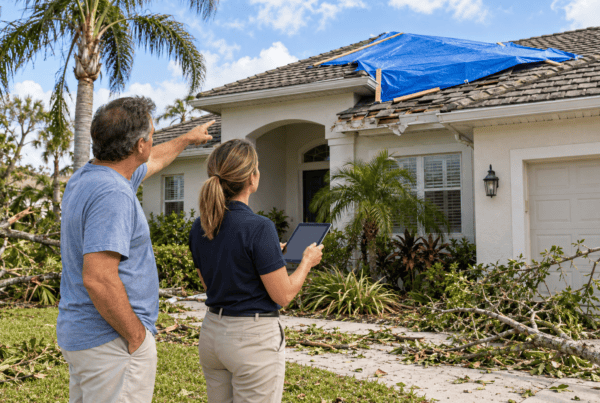
A hurricane has passed, the winds have calmed, and you finally have an opportunity to assess your home. You notice missing roof shingles, water stains spreading across the ceiling, broken branches scattered across the yard, or perhaps standing water inside your home.
Your first thought may be, Where do I even begin?
For Florida homeowners, discovering hurricane damage can be overwhelming. You’re concerned about your family’s safety, the cost of repairs, whether your insurance will cover the damage, and how quickly life can return to normal.
As a licensed Florida insurance agent, I encourage homeowners to focus on a few practical priorities. You don’t need to have every answer immediately. What matters is taking sensible steps, protecting your property when it’s safe to do so, and keeping accurate records as recovery begins.
What Should You Do First After a Hurricane Damages Your Home?
The first steps to take:
After a hurricane damages your Florida home, make sure it is safe before entering. Photograph the damage, take reasonable steps to prevent additional loss, and notify your insurer promptly. Keep receipts and damaged-item records, prepare for the adjuster’s inspection, and report possible flood damage separately if you have flood insurance.
These actions can help you manage the immediate situation without rushing into decisions that may complicate repairs or an insurance claim.
Step 1: Make Sure Your Home Is Safe Before Entering
Before worrying about your roof, flooring, furniture, or insurance paperwork, make sure everyone is safe.
Hurricane damage isn’t always obvious from the street. A home may appear relatively intact while electrical systems, structural supports, or interior ceilings have been compromised.
If you’ve evacuated, wait until local authorities say returning to your area is safe. Even then, inspect the property from a safe location before entering.
Look for fallen power lines, large trees resting against the structure, damaged electrical equipment, standing water, broken glass, unstable roofing materials, or visible damage to load-bearing walls.
Never walk through standing water near electrical equipment or attempt to operate an electrical panel while standing in water. If you smell gas, leave the area and contact emergency services or the appropriate utility provider from a safe location.
A partially collapsed ceiling or roof deserves professional attention before anyone enters the affected area.
If you’re using a portable generator because power is out, operate it outdoors, at least 20 feet from windows, doors, and vents, following CDC safety guidance.
Don’t put yourself at risk to inspect damage or retrieve belongings. A photograph, piece of furniture, or insurance document can wait until the property is safe.
Step 2: Prevent Additional Damage Without Putting Yourself at Risk
Once it’s safe to access the property, the next priority is preventing existing damage from getting worse.
A damaged roof can allow additional rainwater inside. A broken window can expose flooring and furniture to the weather. Standing water can spread into adjacent rooms or damage materials that weren’t initially affected.
Florida homeowners insurance policies commonly require policyholders to take reasonable steps to protect damaged property from further loss. What is reasonable depends on the circumstances, including whether the work can be performed safely.
For example, you might arrange for a qualified professional to place a temporary tarp over an exposed roof, have a broken window boarded up, or hire a water-mitigation company to remove standing water and begin drying the affected areas.
If a plumbing line has broken, turning off the water supply may prevent further damage, provided you can do so safely.
Before temporary work begins, photograph the existing conditions if it is safe and practical. Then document the completed work and keep all receipts.
You generally shouldn’t postpone necessary emergency protection simply because an insurance adjuster hasn’t arrived. However, contact your insurer as soon as practical to ask about emergency-work requirements, approved vendors, managed-repair provisions, and documentation.
Necessary emergency work doesn’t automatically mean every contractor charge will be covered. The cause of loss, reasonableness of the expense, and applicable policy conditions still matter.
For more information about different sources of water intrusion and potential coverage limitations, see our Water Damage and Homeowners Insurance in Florida article.
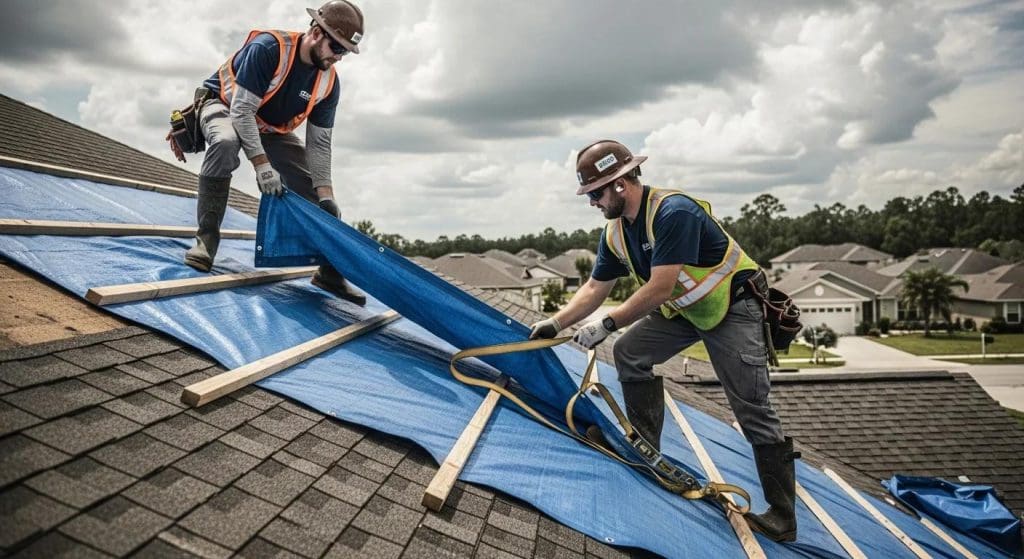
Temporary roof protection may help prevent additional water intrusion while permanent hurricane damage repairs are being arranged.
Step 3: Document the Hurricane Damage Before Cleanup
Good photographs can tell the story of what happened to your home long after the debris has been removed.
Start by documenting the property as you find it, provided you can do so safely.
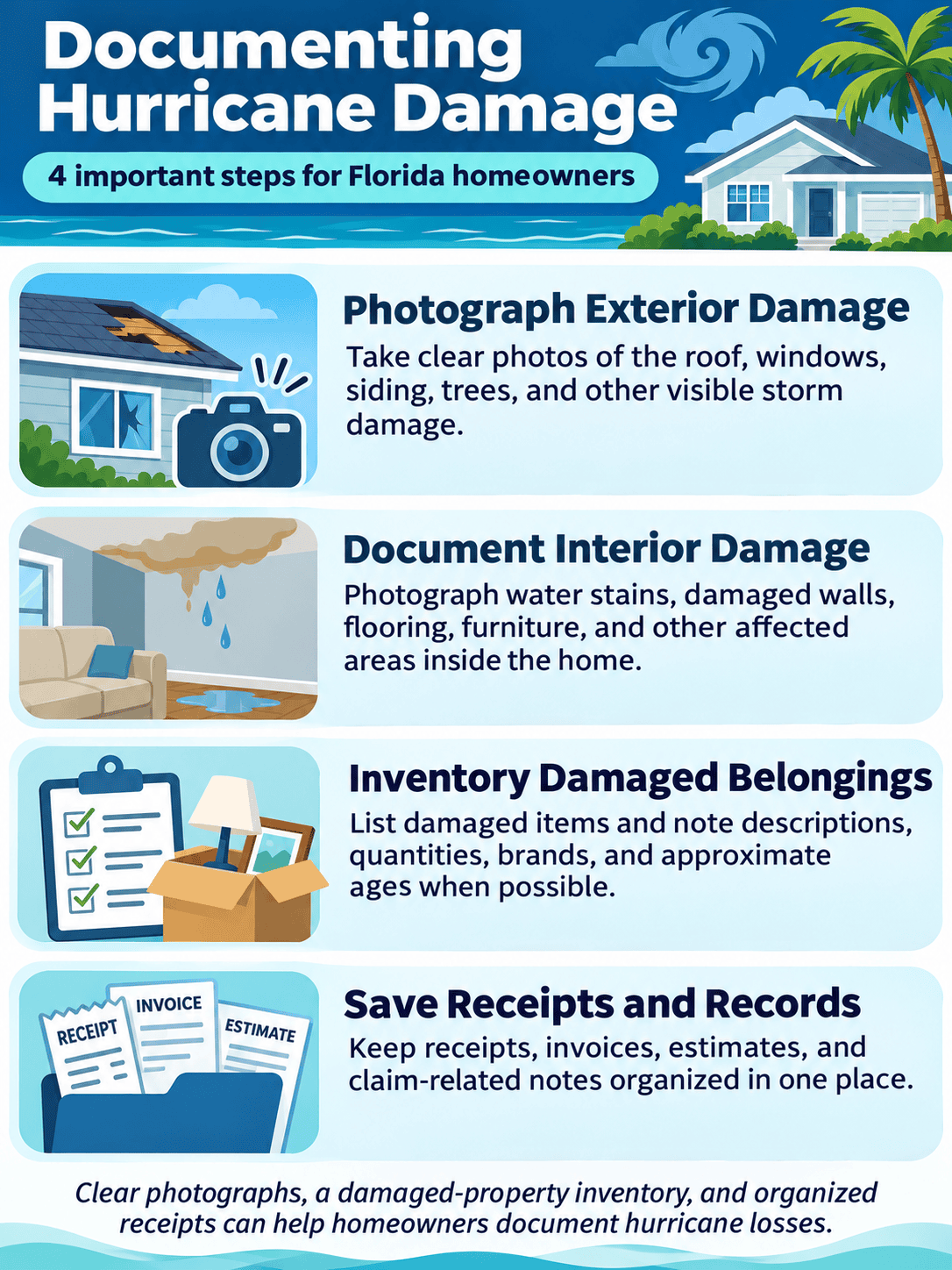
Take wide photographs showing the condition of each affected area, followed by closer photographs of individual damage. A picture of a stained ceiling is useful, but a wider image showing which room the ceiling belongs to provides additional context.
Outside, photograph visible roof damage from the ground, damaged windows, exterior walls, garage doors, fallen trees, broken fencing, and other affected structures.
Inside, move room by room. Document wet drywall, ceiling stains, damaged floors, cabinets, furniture, appliances, electronics, and other belongings.
A short video walkthrough can also help show how the damage extends from one area to another.
If water entered the home, photograph any visible waterlines, staining, debris, or areas where water appears to have entered. These details may become especially important when a hurricane produces both wind and flood damage.
For damaged belongings, record descriptions, quantities, brands, models, and approximate ages when available. Receipts, previous photographs, or online purchase histories may help establish what you owned.
Don’t feel obligated to preserve an item that presents a serious health hazard. Photograph unsafe items and their identifying information before disposal when possible, and ask your insurer about its procedures if circumstances allow.
Describe what you actually observed rather than guessing about the cause of damage.
For example, it’s useful to record that several shingles are missing and water is visible on the bedroom ceiling. Whether the resulting damage is covered is a separate question for the insurer to evaluate.
Step 4: Contact Your Insurance Company as Soon as Possible
You don’t need to know the full repair cost before reporting hurricane damage.
Contact your insurance company directly through its claims department, website, application, or published claims telephone number. Your insurance agent may also help you identify the appropriate carrier contact information.
Explain when you discovered the damage, what you observed, whether the property is currently safe to occupy, and what temporary protective work has already been performed.
You may not know the complete extent of the damage yet. That’s normal. Additional problems sometimes become visible after standing water is removed, damaged materials are inspected, or contractors begin evaluating the structure.
When you report the loss, make sure you understand:
-
Your claim number and how to contact the assigned claim representative.
-
How and where to submit photographs, invoices, and receipts.
-
Whether the insurer has instructions for emergency repairs or damaged-property disposal.
-
What happens next and how an inspection will be arranged.
-
What additional information or documentation the insurer needs.
Keep the claim confirmation and any written instructions.
Ask which deductible may apply, including whether the policy has a separate hurricane deductible. Florida hurricane deductibles can work differently from ordinary property deductibles, so don’t assume the same deductible applies to every type of damage.
Our Florida Hurricane Deductibles Explained article provides additional background.
For homeowners who need a more comprehensive explanation of the insurance process, including settlement calculations and disputed claims, our Florida Hurricane Insurance Claims Guide for Homeowners covers those topics in greater detail.
Report damage promptly and pay attention to instructions, policy requirements, and applicable claim deadlines. Waiting until all repairs have been estimated can create unnecessary complications.
Step 5: Understand the Difference Between Wind and Flood Damage
One of the most important things Florida homeowners should understand after a hurricane is that different types of water damage may be treated differently by insurance companies.
Consider a home in Ponte Vedra Beach.
Strong hurricane winds damage part of the roof, creating an opening through which rain enters the house. Later, storm surge pushes water across the property and into the first floor.
Although both events occurred during the same hurricane, they may involve two different insurance policies.
Wind damage and rain entering through an opening created by covered wind damage may fall under a homeowners or separate wind policy, depending on the policy’s specific provisions.
Storm surge, rising water, and qualifying surface flooding generally require separate flood insurance.
The same distinction can matter farther inland. A home in Nocatee, Jacksonville, or St. Johns County could experience wind-related roof damage while heavy rainfall or overflowing drainage areas produce a separate flooding problem.
If both wind and flood may have contributed to the damage, notify the appropriate insurers. Separate claims and inspections may be necessary.
Photographs showing roof openings, interior water damage, exterior waterlines, and the apparent location of water entry can help document the different conditions.
Avoid deciding on your own that all the water damage must have resulted from one cause. Describe what you observed and allow the insurers and qualified professionals to evaluate the circumstances.
For a closer look at coverage options and how flood insurance works, read our Florida Flood Insurance Guide.
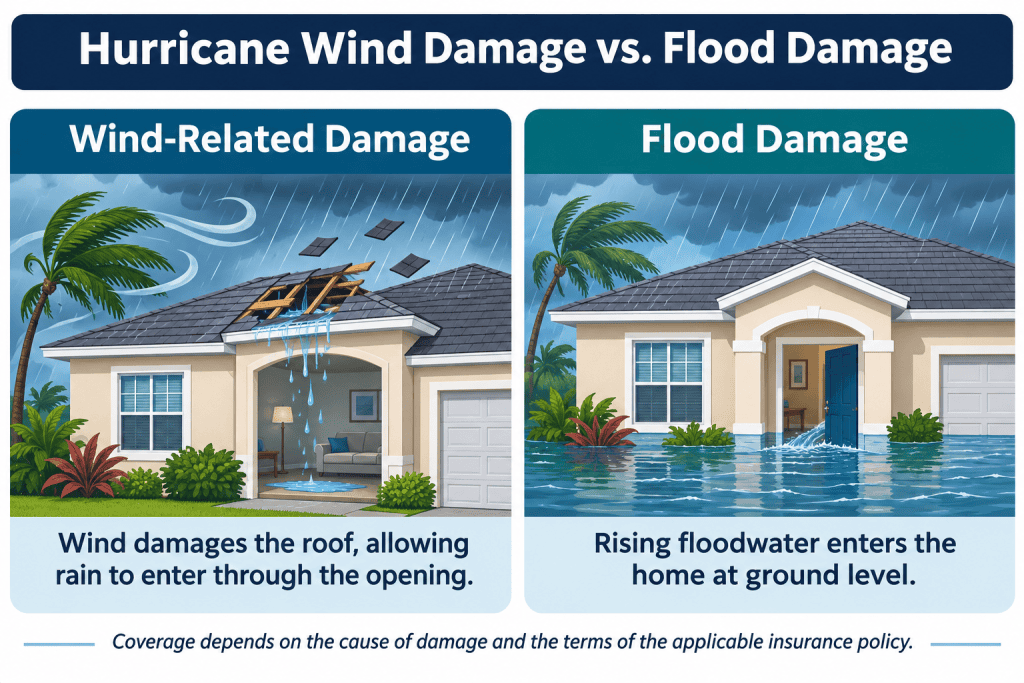
Hurricane wind damage and flooding may involve different insurance coverages, making it important to document how water entered the home.
Step 6: Prepare for the Insurance Adjuster’s Inspection
After your claim is reported, the insurance company will generally arrange for an adjuster to evaluate the damage.
Preparing for the inspection doesn’t have to be complicated. The goal is to make it easier for the adjuster to understand what happened and see the areas affected.
Before the appointment, review your photographs and write down damage you want to discuss.
It’s easy to remember a large hole in the roof and overlook a smaller water stain in another bedroom, damage behind a cabinet, or moisture that spread beneath flooring.
If possible, be available during the inspection to answer questions and point out areas of concern.
Show the adjuster any photographs taken before temporary repairs were completed. Explain what emergency work was performed, why it was necessary, and whether additional work is scheduled.
If contractors have already inspected the property, keep their written findings available.
Ask what happens if additional damage is discovered after the inspection. You should also confirm how to submit documentation that wasn’t available at the initial appointment.
The adjuster may need access to areas that are difficult or unsafe to inspect immediately. Never attempt to expose concealed damage or access dangerous spaces yourself simply to assist the inspection.
If your home is uninhabitable and you’ve temporarily relocated, provide updated contact information so communication doesn’t become another obstacle.
The initial inspection may not identify every damaged area. Continue documenting problems that become apparent during cleanup and repairs.
Step 7: Be Careful With Repair Offers and Contractor Agreements
After a major hurricane, homeowners may face an influx of roofing companies, restoration contractors, tree-removal services, and other businesses offering immediate assistance.
Many provide legitimate and valuable services. Unfortunately, storm damage also creates opportunities for unlicensed contractors and dishonest sales practices.
You may encounter someone who offers to inspect your roof, promises a completely free replacement, or claims they can guarantee that your insurance company will pay for everything.
Be cautious of anyone making promises about insurance coverage or payment before the insurer has evaluated the claim.
In Florida, you can verify contractor licensing through the Department of Business and Professional Regulation.
Before hiring a contractor, request a written, itemized estimate. Confirm the contractor’s license, insurance, references, proposed work, payment schedule, and any required permits.
Be particularly cautious when someone requests full payment upfront, demands cash, pressures you to sign immediately, or refuses to provide clear written terms.
Also review agreements involving insurance payments, financing, directions to pay, or transfers of claim rights. Florida has specific restrictions on assignments of post-loss property insurance benefits.
A contractor promising to waive your deductible by adding nonexistent damage or inflating the insurance estimate is a serious warning sign and may involve insurance fraud.
Emergency protection may need to happen quickly. Permanent repairs, however, deserve careful planning and a clear understanding of the agreement you’re signing.
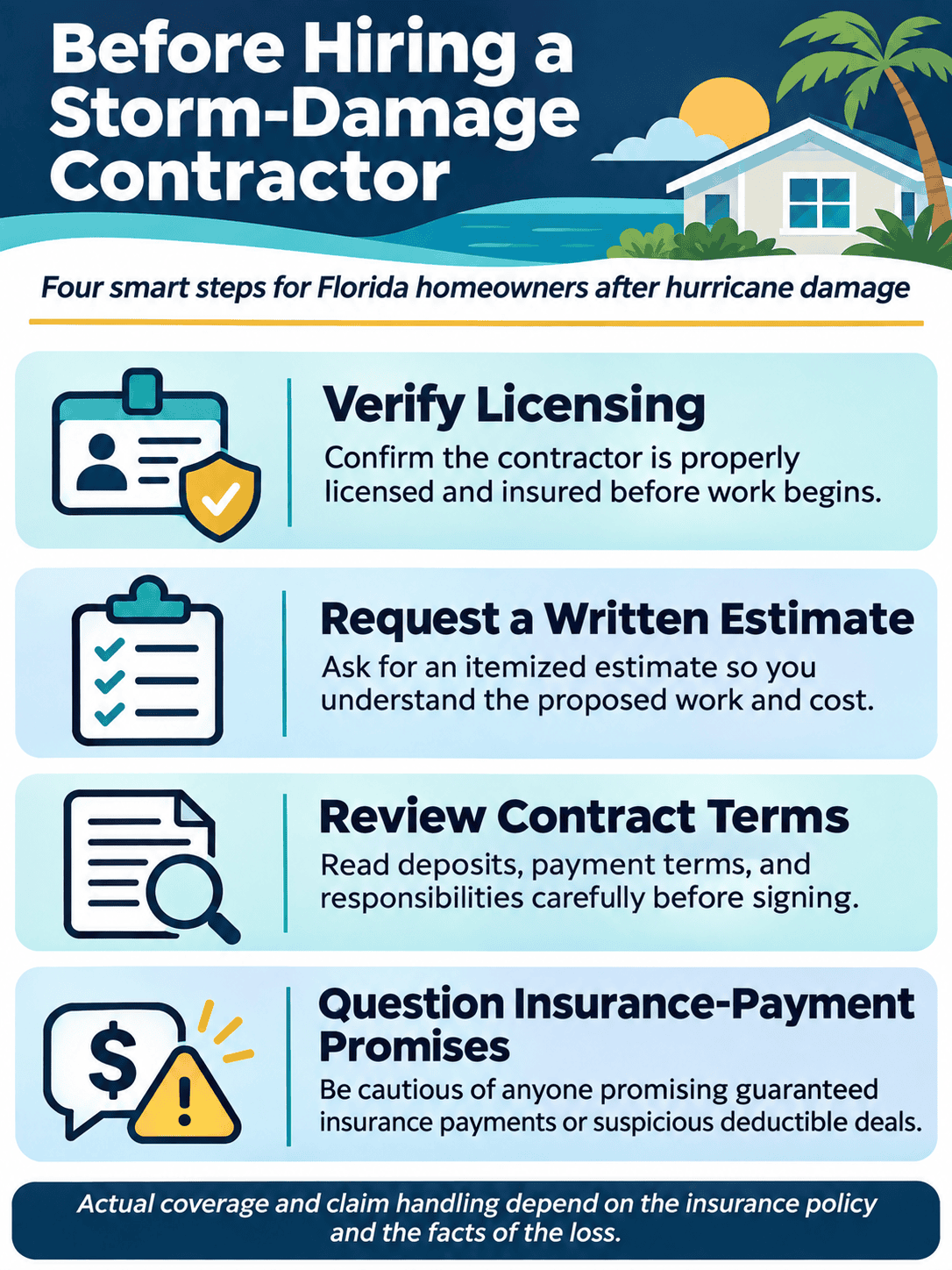
Verify contractor credentials, review written agreements, and be cautious of promises about insurance payments after a hurricane.
Step 8: Keep Your Claim Records and Recovery Expenses Organized
After a hurricane, it’s easy for paperwork to pile up.
You may receive calls from an adjuster, emails from the insurance company, estimates from several contractors, invoices for temporary repairs, and receipts for unexpected living expenses.
Keeping these records together makes the recovery process easier to manage.
Create a dedicated digital folder for the hurricane damage. Save photographs, videos, emails, written estimates, contracts, invoices, proof of payment, and insurance correspondence.
A simple claim journal can be equally useful. Whenever you speak with someone about the claim, record the date, person’s name, what was discussed, and any next steps.
If a conversation results in an important decision, consider confirming your understanding by email.
Keep copies of everything you submit to the insurance company, including documentation uploaded through an online claims portal.
What if you cannot live in your home?
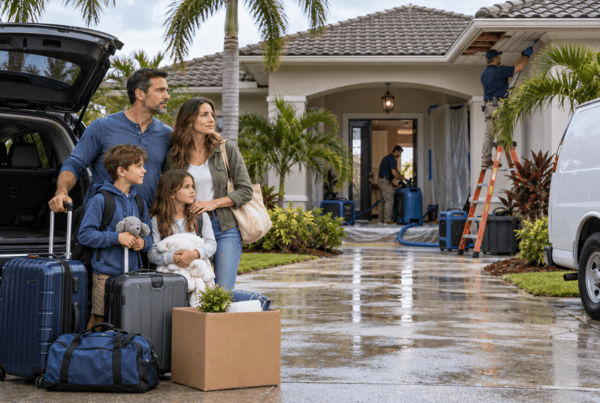
If hurricane damage makes your residence unsafe or unsuitable to occupy, notify your insurer and explain the situation.
Some homeowners policies provide Loss of Use or Additional Living Expense coverage when a covered loss makes the insured residence unfit to live in. Whether these expenses qualify depends on the policy, the underlying cause of damage, and applicable limits and conditions.
Keep receipts for temporary lodging, additional meal expenses, storage, and other necessary expenses associated with being displaced.
Ask your insurer which expenses may qualify and what documentation is required. Don’t assume every hotel, meal, or temporary rental expense will be reimbursed.
The standard National Flood Insurance Program policy generally does not include additional living expense coverage, although some private flood policies may offer different provisions.
Our Loss of Use Coverage After a Florida Disaster article explains this protection in greater detail.
Step 9: What to Do When Additional Damage Is Discovered
Not every problem is visible during the first walkthrough.
A water stain may turn out to involve wet insulation. Flooring that initially looked undamaged may begin to separate. A contractor might discover additional deterioration or storm-related damage after opening an affected wall.
When new damage is discovered, document it before further work changes the area, provided doing so is safe.
Ask the contractor to explain the findings in writing and provide photographs and an itemized estimate when appropriate.
Notify the insurance company promptly, share the new information, and ask whether an additional inspection or supplemental claim submission is required.
Don’t assume that an earlier inspection or initial payment means newly discovered damage will automatically be included.
Similarly, don’t assume that every newly discovered condition is hurricane-related or covered. The insurer will evaluate the cause of loss, policy terms, and supporting evidence.
Continue saving records until the necessary repairs, payments, and outstanding claim questions have been addressed. Follow any deadlines communicated by the insurer and applicable Florida law.
The recovery process may take time, but organized documentation and prompt communication can help you make informed decisions as the work progresses.
For a broader understanding of the types of protection available under a Florida homeowners policy, see our Florida Homeowners Insurance: A Complete Guide.
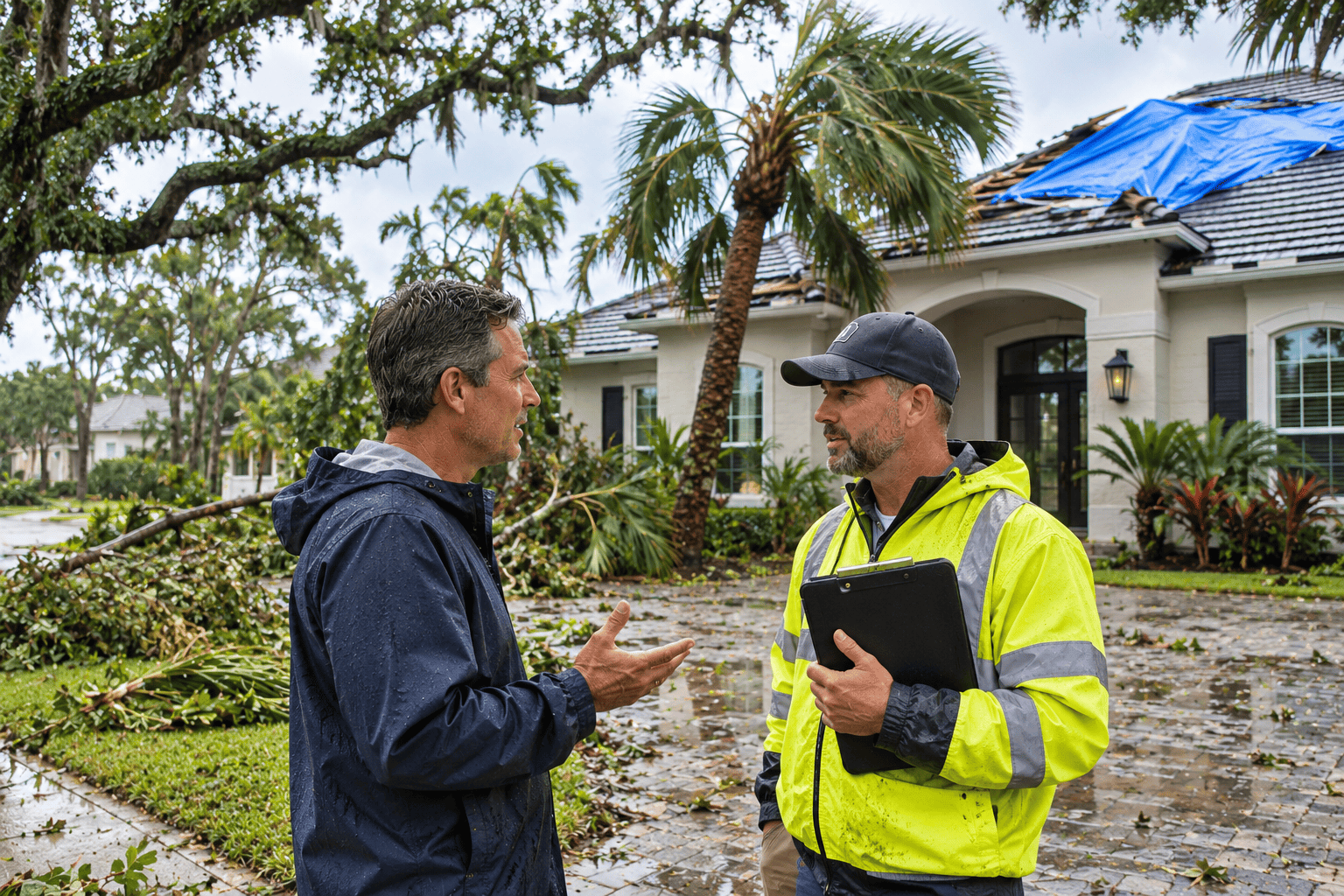
Homeowners in Nocatee, Ponte Vedra, Jacksonville, St. Augustine, and throughout Northeast Florida can benefit from careful documentation and informed decisions throughout hurricane recovery.
Frequently Asked Questions
1. Should I wait for the insurance adjuster before making temporary repairs?
Not when reasonable emergency measures are necessary to prevent additional damage or protect safety. Document the original conditions when possible, use qualified professionals for hazardous work, save receipts, and notify your insurer promptly. Ask about any policy-specific emergency-repair requirements.
2. Can I file a hurricane damage claim without a contractor’s estimate?
Yes. You can report the loss before you know the total repair cost. Provide the information you have and submit additional photographs, estimates, and invoices as they become available.
3. What if I cannot return to my home immediately after the hurricane?
Report the damage or suspected loss to your insurer as soon as reasonably possible. Explain any evacuation orders, restricted access, flooding, or unsafe conditions preventing you from inspecting the property. Keep records of those circumstances.
4. Should I climb onto my roof to photograph hurricane damage?
No. Avoid climbing onto a wet, unstable, or damaged roof. Take photographs from a safe ground-level location or arrange for a qualified professional to inspect the roof when appropriate.
5. Can I throw away furniture and belongings damaged by hurricane flooding?
Photograph and inventory damaged items before disposal when safe. Ask the insurer for instructions when practical. Items creating serious health hazards may need to be discarded promptly, so document their condition and identifying details first when possible.
6. Can I file both a homeowners insurance claim and a flood insurance claim?
Yes, when the hurricane may have caused both wind-related and flood-related damage and you have potentially applicable policies. Report the losses to the appropriate insurers and preserve evidence showing the different damage conditions.
7. Does homeowners insurance cover rainwater that enters during a hurricane?
It may, depending on how the water entered and the terms of the policy. Rain entering through an opening created by covered wind damage may be treated differently from flooding, storm surge, or water entering through a deteriorated roof.
8. Can a roofing contractor waive my hurricane deductible?
Be cautious of such promises. A contractor should not inflate an insurance estimate, report nonexistent damage, or use prohibited incentives to conceal your deductible. Florida DFS identifies these practices as potential fraud or violations of contractor restrictions.
9. What if the adjuster misses damage during the initial inspection?
Photograph the damage, obtain supporting documentation when appropriate, and notify the insurer promptly. Ask whether another inspection, revised estimate, or supplemental claim is necessary, and follow applicable policy and legal deadlines.
10. Will my homeowners insurance pay for a hotel after hurricane damage?
It may, if a covered loss makes your home unfit to live in and the policy includes applicable Loss of Use coverage. Expenses, limits, time periods, and documentation requirements vary. Ask your insurer before assuming lodging costs will be reimbursed.
Request a Florida Personal Insurance Review
Recovering from hurricane damage is difficult enough without uncertainty about the insurance protection you have.
Once the immediate situation is under control, understanding your homeowners, windstorm, and flood insurance can help you make informed coverage decisions for the future.
Request a Florida personal insurance review with First Florida Agency, or call (904) 822-8800.
Our independent insurance agency serves Nocatee, Ponte Vedra, Ponte Vedra Beach, Jacksonville, St. Augustine, St. Johns County, and homeowners throughout Florida.
About the Author
John Closterides is the founder and principal agent of First Florida Agency, an independent insurance agency based in Ponte Vedra, Florida. As a Florida-licensed 2-20 General Lines insurance agent, John helps individuals, families, and businesses understand their insurance options and make informed coverage decisions.
Through First Florida Agency, he focuses on providing clear, practical insurance education and personalized guidance for Florida’s unique property and liability risks.
Recommended External Resources
The following official resources provide additional information about hurricane recovery, insurance claims, safety, and contractor verification.
-
Florida Department of Financial Services — Hurricane Ready — Florida insurance consumer information, post-storm assistance, and disaster recovery resources.
-
Florida Department of Financial Services — Contractors and Residential Property FAQs — Guidance on contractor offers, insurance-related representations, deductible promises, and fraud warning signs.
-
Florida Department of Financial Services — Understanding Assignment of Benefits — Important information about contractor agreements and the handling of property insurance claims.
-
Florida Department of Business and Professional Regulation — Verify a License — Check whether a contractor or other regulated professional holds an applicable Florida license.
-
National Flood Insurance Program — How to Start a Flood Insurance Claim — Official guidance for reporting and documenting damage under an NFIP flood insurance policy.
-
Centers for Disease Control and Prevention — Safety Guidelines After a Hurricane — Safety recommendations involving damaged buildings, floodwater, electrical hazards, and generator use.
Florida residents with insurance questions may also contact the Florida Department of Financial Services’ Insurance Consumer Helpline at 1-877-693-5236.
Related Articles
-
Florida Home Insurance Claim Guide (2026) — General steps for reporting and managing a Florida home insurance claim involving several possible causes of loss.
-
Actual Cash Value vs. Replacement Cost in Florida Homeowners Insurance — How different loss-settlement methods may affect insurance payments for qualifying damaged property.
-
Named Storm vs. Hurricane Deductibles in Florida — Learn when a named tropical storm could trigger a different deductible from a qualifying hurricane.
Insurance Disclaimer
This article is provided for general educational purposes only and does not constitute legal advice, insurance claims adjusting, construction advice, emergency safety instructions tailored to an individual property, or a guarantee of coverage or claim payment.
Insurance coverage, deductibles, exclusions, limits, claim requirements, deadlines, repair procedures, and loss-settlement provisions vary by insurance company, policy form, endorsements, and the circumstances of each loss.
The issued insurance policy and applicable law determine the rights and obligations of the parties. The insurance company is responsible for evaluating claims and determining coverage under the applicable policy.
Homeowners should follow emergency officials’ instructions, report losses promptly, review insurer correspondence and policy requirements, and consult appropriately licensed professionals when necessary. Florida laws, regulations, and official guidance may change.