
Last Updated: September 14, 2026
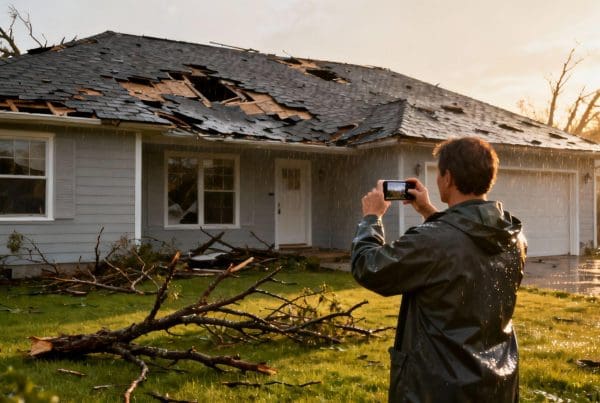
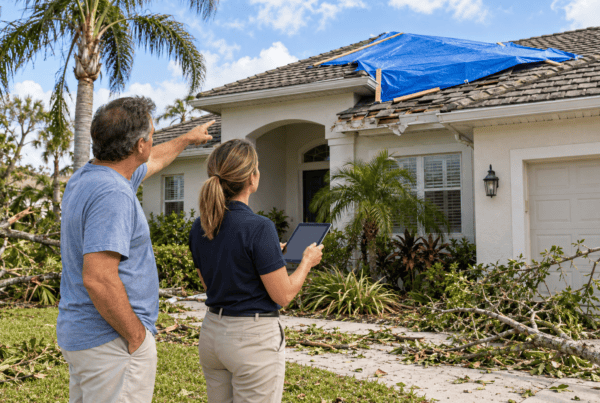
After serious damage to a Florida home, rebuilding may involve much more than replacing what was physically damaged.
A house built 20, 30, or 40 years ago may have been constructed under very different building requirements than those in effect today. If a hurricane, fire, or another covered loss causes significant damage, the local building department may require certain repairs or reconstruction to comply with current codes.
Those additional requirements can increase the cost of rebuilding substantially.
That is where Ordinance or Law Coverage can become important.
Ordinance or Law Coverage, sometimes called Law and Ordinance Coverage, can help pay certain additional costs created by the enforcement of current building laws or ordinances after a covered property loss. Depending on the circumstances and policy, those expenses may involve code-required construction changes, demolition, debris removal, and other qualifying costs beyond simply replacing the damaged property with what existed before.
Florida law specifically addresses this coverage for homeowners policies and provides important protections and choices that homeowners should understand before a loss occurs.
For a broader explanation of dwelling coverage, deductibles, exclusions, hurricane protection, flood insurance, inspections, claims, and other Florida property-insurance issues, see Florida Homeowners Insurance: A Complete Guide.
Quick Answer: What Is Ordinance or Law Coverage in Florida?
Ordinance or Law Coverage helps address certain additional rebuilding costs caused by the enforcement of current building laws or codes after a covered loss.
For qualifying Florida homeowners policies, state law generally provides for Ordinance or Law Coverage equal to 25% of the dwelling limit unless the policyholder rejects the applicable coverage in writing, and insurers subject to the statute must also offer a 50% option. Coverage remains subject to the policy’s terms, exclusions, limits, and the circumstances of the loss.
For example, if a home carries $500,000 of Coverage A dwelling insurance:

These amounts do not mean the insurer automatically pays $125,000 or $250,000 after a claim. They represent the maximum applicable Ordinance or Law limit in this simplified example. Payment depends on qualifying expenses actually incurred, policy provisions, applicable code requirements, the covered loss, and other claim conditions.
Why Does Ordinance or Law Coverage Matter in Florida?
Florida homes are exposed to hurricanes, severe wind, lightning, fire, water losses, falling trees, and other events that can result in major repairs.
But after a covered loss, the homeowner may not simply be allowed to reconstruct the damaged portion exactly as it was.
A home built decades ago may contain materials, construction methods, electrical components, roofing systems, structural connections, windows, doors, plumbing, or other features that no longer satisfy current requirements. When permits are issued for substantial repairs, the building official may require qualifying work to comply with current laws and codes.
The Florida Department of Financial Services advises consumers to compare Ordinance and Law Coverage because it helps address the cost of rebuilding to comply with the current building code.
This distinction can become particularly important after widespread hurricane damage, when a homeowner is already dealing with deductibles, contractor demand, material costs, and potentially extensive reconstruction.
What Does Ordinance or Law Coverage Actually Pay For?
The exact coverage depends on the policy and the code requirements triggered by the loss.
Florida’s statute expressly addresses additional costs necessary to meet applicable laws and ordinances regulating the construction, use, or repair of property, as well as laws that require property to be torn down, including qualifying debris-removal costs.
In practice, a qualifying claim might involve expenses associated with areas such as electrical systems, plumbing, roofing, structural components, wind-resistant construction, permits, required demolition, or other code-related work.
The important word is required.
Ordinance or Law Coverage is not normally intended to pay for optional remodeling or improvements simply because the homeowner would prefer them. There generally must be an applicable law or ordinance being enforced in connection with a covered loss, and the expense must fall within the coverage provided by the policy.
Example: An Older Florida Home Is Damaged by Fire
Consider a Northeast Florida home constructed in the 1980s.
A covered electrical fire causes extensive damage to the kitchen, attic, roof structure, and part of the electrical system.
The homeowners policy may cover the direct physical damage caused by the fire, subject to the deductible and policy terms.
But once reconstruction begins, the local building department may determine that qualifying portions of the electrical, structural, roofing, or other systems affected by the permitted work must comply with current requirements.
Suppose repairing the home as it existed immediately before the fire would cost $180,000, but satisfying applicable code requirements adds another $35,000.
The ordinary cost of replacing the damaged property and the additional $35,000 of code-related expense are not necessarily the same category of loss.
Adequate Ordinance or Law Coverage may help address qualifying additional code-compliance expenses, subject to the policy.
This is one reason replacement-cost coverage alone should not automatically be assumed to cover every expense involved in rebuilding.
Is Ordinance or Law Coverage the Same as Replacement Cost Coverage?
No.
This is one of the most important distinctions for homeowners to understand.
Replacement-cost coverage generally addresses the cost of repairing or replacing covered damaged property with materials of comparable kind and quality, subject to the policy’s limits and terms.
Ordinance or Law Coverage addresses certain additional expenses created because current laws or building codes require something different or additional during reconstruction.
Florida law expressly distinguishes replacement-cost coverage that does not include the additional cost of complying with laws and ordinances from coverage that does include qualifying law-and-ordinance costs.
For example, imagine an older component could be replaced for $20,000 using a comparable pre-loss construction method, but the building code requires a different system that costs $27,000.
The additional $7,000 may represent a code-related increase rather than simply the replacement cost of what was damaged.
For a deeper explanation of how rebuilding values differ from real-estate value, see Replacement Cost vs. Market Value in Florida.
How Much Ordinance or Law Coverage Does Florida Law Provide?
Florida Statute §627.7011 establishes important requirements involving qualifying homeowners policies.
Under the statute, insurers must offer replacement-cost coverage that includes qualifying law-and-ordinance costs. The additional Ordinance or Law limit may be selected at 25% or 50% of the dwelling limit. Unless the insurer obtains the policyholder’s written refusal of the applicable coverage, a policy covering the dwelling is generally deemed to include law-and-ordinance coverage limited to 25% of the dwelling limit. The insurer must also offer the 50% option.
Florida’s Insurance Consumer Advocate similarly tells homeowners that regulated insurers must include at least 25% Ordinance and Law Coverage and offer 50%.
There are important exceptions and policy-specific issues, so homeowners should not assume every residential policy in Florida is governed identically. For example, §627.7011 states that the section does not apply to policies not considered homeowners policies or to mobile-home policies.
The declarations page and endorsements should always be reviewed to determine what coverage actually applies.
What Does 25% Ordinance or Law Coverage Mean?
The percentage is generally based on the dwelling limit shown on the homeowners policy.
Suppose Coverage A is $400,000.
Twenty-five percent of $400,000 equals $100,000.
That does not add $100,000 to every type of loss and does not automatically increase Coverage A to $500,000 for all purposes. Instead, it represents the applicable Ordinance or Law limit for qualifying expenses, subject to the policy.
If Coverage A later increases because of inflation or an updated replacement-cost estimate, the dollar amount represented by 25% may also change.
That is one reason homeowners should review both the percentage and the actual Coverage A amount at renewal.
What Does 50% Ordinance or Law Coverage Mean?
Using the same $400,000 Coverage A example, a 50% Ordinance or Law option would equal $200,000.
The 50% option can provide substantially more room for qualifying code-related expenses following a major loss.
That does not mean every homeowner automatically needs the 50% option. The appropriate amount depends on factors such as the home’s age, construction, replacement cost, renovation history, location, available policy forms, potential code-compliance exposure, and the homeowner’s tolerance for an uncovered rebuilding expense.
The additional coverage may also increase the premium. Florida consumer guidance specifically notes that selecting additional Ordinance and Law Coverage may increase insurance cost.
The important point is to evaluate the choice intentionally rather than selecting 25% or 50% without understanding what the dollar amount represents.
Two Different “50% Rules” Florida Homeowners Should Not Confuse
This is an area where insurance discussions can become misleading because two completely different 50% concepts may arise.

Florida’s insurance statute states that the law-and-ordinance coverage described there generally applies to repairs of the damaged portion unless total damage to the structure exceeds 50% of the replacement cost of the structure.
Separately, floodplain regulations use a concept called substantial damage. Florida’s Division of Emergency Management explains that, for NFIP purposes, substantial damage generally means damage where the cost of restoring the structure to its pre-damage condition equals or exceeds 50% of the structure’s pre-damage market value. Local building and floodplain officials make substantial-damage determinations.
Those are not the same calculation.
One uses the replacement cost of the structure in the insurance statute. The floodplain substantial-damage calculation generally uses the pre-damage market value of the structure, not the land.
Homeowners should therefore be cautious when someone simply says, “Florida has a 50% rule.” The correct question is:
Which 50% rule, under which law or policy, and which valuation is being used?
That distinction is exactly the kind of issue that should be confirmed with the insurer, contractor, building official, floodplain administrator, or other appropriate professional depending on the situation.
Does Damage Over 50% Mean the Entire Florida Home Must Always Be Rebuilt?
No universal statement like that should be made.
The scope of required reconstruction depends on the applicable building code, local ordinances, type of damage, location of the property, permits involved, floodplain status, and determinations made by the appropriate building officials.
Florida floodplain rules provide a good example. The state’s Division of Emergency Management explains that substantial-damage determinations are made by local Building Officials and Floodplain Administrators, not simply by an insurance adjuster or homeowner applying a generic formula.
Therefore, homeowners should not assume that any loss exceeding a particular percentage automatically requires complete demolition or reconstruction of the entire home.
Likewise, homeowners should not assume their Ordinance or Law limit will automatically pay every expense once a threshold is crossed.
The actual policy and the enforced building requirements control.
Does Ordinance or Law Coverage Apply Only to Older Homes?
No, but older homes can have greater exposure.
A recently constructed home is more likely to have been built under relatively recent requirements. That can reduce—but not eliminate—the difference between the home’s existing construction and the rules in effect when a future loss occurs.
An older home may have gone through several generations of code changes.
For example, a home constructed many years ago might have older electrical systems, roof construction, structural connections, plumbing, openings, or other components that differ materially from current standards.
Even a newer Florida home can eventually become “older” relative to future code editions.
The Florida Building Commission periodically updates the Florida Building Code, which means today’s compliant new construction will not necessarily match every requirement applicable decades from now.
For homeowners buying newly built property today, keeping permits, certificates of occupancy, product approvals, construction specifications, and inspection records can be valuable later. Our New Construction Insurance in Florida guide explains why that documentation matters.

Older Florida homes may face higher rebuilding costs when repairs must comply with newer building codes. After a covered loss, Ordinance or Law Coverage may help pay certain additional expenses required to bring damaged portions of the home up to current standards, subject to the policy’s terms and limits.
How Can Building Codes Increase the Cost of a Roof Claim?
Roof losses provide a useful illustration because roofing methods and wind-resistance requirements have evolved substantially over time.
After a covered roof loss, permitted repairs may involve requirements different from the way the roof was originally constructed. Depending on the building, loss, jurisdiction, policy, and code requirements, added costs could potentially involve roof-deck work, attachment methods, underlayment, structural connections, materials, or other required improvements.
However, Ordinance or Law Coverage should not be confused with coverage for an old or worn-out roof.
Homeowners insurance generally does not function as a maintenance contract. The fact that a component no longer meets the newest construction standard does not by itself mean the policy pays to replace it.
There generally must first be a covered loss, and then the policy’s Ordinance or Law provisions determine whether qualifying additional code-related costs are covered.
How Roof Age Affects Homeowners Insurance in Florida guide explains the separate insurance issues involving roof age, condition, remaining useful life, and underwriting.

Roof repairs after a covered loss may involve more than replacing damaged shingles or materials. If current building requirements call for updated decking, underlayment, attachment methods, or other qualifying improvements, Ordinance or Law Coverage may help address certain additional code-related costs, subject to the policy’s terms and limits.
Does Ordinance or Law Coverage Pay to Upgrade an Undamaged Home?
Generally, it should not be viewed as a home-improvement allowance.
A homeowner cannot normally decide that because today’s building code is better than the code from 20 years ago, the insurance company should pay to modernize an otherwise undamaged house.
Ordinance or Law Coverage generally comes into play when enforcement of an applicable law or ordinance creates qualifying additional expense in connection with a covered loss.
That distinction matters.
A voluntary kitchen remodel, routine roof replacement, aging electrical system, maintenance project, or elective renovation does not become an insurance claim merely because current construction must comply with today’s code.
Does Ordinance or Law Coverage Pay for Damage That Is Excluded by Homeowners Insurance?
Not necessarily—and this is one of the biggest misconceptions about the coverage.
Ordinance or Law Coverage does not generally turn an otherwise excluded cause of loss into a covered homeowners claim.
Suppose rising floodwater enters a home and damages the structure. Standard homeowners insurance generally excludes flood damage. The fact that rebuilding after the flood requires code upgrades does not automatically mean the homeowners policy’s Ordinance or Law Coverage now pays for a loss that the underlying policy excludes.
Florida law itself emphasizes that Ordinance or Law Coverage is subject to other policy provisions. It also requires prominent flood warnings on homeowners policies that do not provide flood coverage.
Separate flood insurance may provide its own forms of protection for qualifying flood-related compliance costs.
This is why homeowners should evaluate flood insurance and homeowners insurance separately rather than assuming one fills every gap in the other.
Ordinance or Law Coverage vs. Flood Increased Cost of Compliance
These concepts are related but not interchangeable.
Homeowners Ordinance or Law Coverage is part of the property-insurance discussion involving qualifying code-related expenses after a covered homeowners loss.
Flood Increased Cost of Compliance, often called ICC, is a separate concept associated with qualifying flood-insurance situations and floodplain-management requirements.
A property can therefore face building-code requirements following a flood even though the homeowners policy does not cover the flood itself.
Florida’s Division of Emergency Management explains that communities participating in the NFIP must perform substantial-damage functions after disasters and that local Building Officials and Floodplain Administrators are responsible for those determinations.
For a broader explanation of homeowners-versus-flood coverage, see the Florida Flood Insurance Guide and What Homeowners Insurance Does Not Cover in Florida.
What Does Ordinance or Law Coverage Typically Not Pay For?
The exact exclusions depend on the policy, but homeowners should not assume Ordinance or Law Coverage pays for every construction expense encountered during a claim.
It generally should not be relied upon for voluntary remodeling, ordinary maintenance, pre-existing deterioration, optional upgrades, correcting unrelated defects, losses caused solely by an excluded peril, expenses above the applicable Ordinance or Law limit, or work that is not actually required by an applicable law or ordinance.
There may also be important distinctions between the cost of repairing covered direct physical damage and the incremental additional cost caused by code enforcement.
The policy language and facts of the claim determine how those expenses are categorized.
Example: Hurricane Wind Damage and Building-Code Costs
Consider a home insured for:

Suppose covered hurricane wind severely damages the roof and portions of the structure.
The claim may involve several different financial components: direct covered physical damage, the $12,000 hurricane deductible, replacement-cost provisions, applicable depreciation or claim-payment procedures, and qualifying code-related expenses.
The $150,000 Ordinance or Law limit should not be interpreted as additional money automatically available for ordinary repairs. It applies to qualifying expenses under the coverage.
Likewise, the hurricane deductible and Ordinance or Law Coverage perform completely different functions.
For a detailed explanation of percentage hurricane deductibles, see Florida Hurricane Deductibles Explained.
Can Ordinance or Law Coverage Include Demolition of an Undamaged Portion?
Potentially, depending on the circumstances, policy, extent of damage, and code enforcement.
Florida’s statute expressly contemplates laws or ordinances that may require property to be torn down and includes qualifying debris-removal costs within the statutory description of law-and-ordinance coverage. It also distinguishes losses where total damage exceeds 50% of the replacement cost of the structure.
This can matter after a severe loss where portions of the building remain physically standing but applicable law prevents those portions from simply remaining as they were.
The key is that the demolition or additional work must be required and must fall within the applicable insurance coverage.
Are Permits and Inspections Covered by Ordinance or Law Coverage?
They may be part of qualifying code-related rebuilding expenses, depending on the policy and claim.
Major reconstruction frequently requires permits, plan reviews, inspections, engineering, and other professional or governmental requirements.
However, the existence of a permit fee does not automatically mean every associated cost falls under Ordinance or Law Coverage. Some expenses may already be included in the normal covered reconstruction estimate, while others may qualify as an increased cost created by code enforcement.
This is another reason claim estimates should clearly distinguish ordinary repair costs from incremental code-upgrade expenses.
How Should You Document Ordinance or Law Costs During a Claim?
Documentation can become especially important because the homeowner may need to establish not only what work is being performed, but why the additional work is required.
After a substantial covered loss, keep the insurer’s estimates, contractor estimates, engineering reports, permits, inspection reports, building-department correspondence, code citations provided by officials, invoices, change orders, receipts, photographs, and written explanations identifying code-required upgrades.
If a contractor states that an additional expense is required by code, ask for the requirement to be identified clearly rather than accepting a vague statement that “the city requires it.”
The building official or permitting authority ultimately determines which construction requirements apply.
For the broader claim process—including documentation, mitigation, reporting and recordkeeping—see Florida Home Insurance Claim Guide (2026).
How Does Ordinance or Law Coverage Affect Claim Payments?
A large property loss may involve several layers of the homeowners policy simultaneously.
The insurer first determines whether the cause of loss is covered. The applicable deductible is then considered. Damaged property is evaluated under the policy’s loss-settlement provisions, which may involve replacement cost, actual cash value, or other settlement terms.
If code enforcement creates additional qualifying expenses, the Ordinance or Law provisions may then become relevant.
Florida law also addresses how replacement-cost losses are paid. For qualifying dwelling losses, insurers generally must initially pay at least the actual cash value, less the applicable deductible, with remaining qualifying replacement-cost amounts paid as repairs are performed and expenses incurred.
Homeowners should therefore avoid thinking of a large claim as one single number. Direct physical damage, deductible, depreciation, replacement cost, Ordinance or Law expenses and policy limits may all affect the final settlement differently.
Should Florida Homeowners Choose 25% or 50% Ordinance or Law Coverage?
There is no universal answer for every property.
A homeowner evaluating the choice should consider the actual dollar amounts, not just the percentages.
For a $300,000 dwelling, the difference is $75,000 versus $150,000.
For an $800,000 dwelling, it is $200,000 versus $400,000.
For a $1.2 million dwelling, it is $300,000 versus $600,000.
The potential need for additional coverage can be influenced by the home’s age, construction, size, design, prior renovations, local building requirements, replacement cost, potential demolition exposure, coastal or floodplain considerations, and the insurer’s policy form.
An older custom home may present a very different code-compliance exposure from a recently constructed home built under modern standards.
The best approach is to review the additional premium for the 50% option alongside the additional protection it provides rather than choosing based on percentage alone.
How Can You Find Ordinance or Law Coverage on Your Homeowners Policy?
Start with the declarations page and endorsements.
Look for terminology such as:
Ordinance or Law, Law and Ordinance, Building Ordinance or Law, or similar wording.
Determine whether the policy shows a percentage or specific dollar limit.
Then compare that amount with the Coverage A dwelling limit.
Do not stop with the declarations page. The endorsement or policy form explains what qualifying expenses are covered, when the coverage applies, exclusions, conditions, and how the limit operates.
If the policy language is unclear, ask your agent specifically:
“If a covered loss requires my home to be repaired to current building code, what Ordinance or Law limit do I have, and how would it respond?”
That question is considerably more useful than simply asking whether the policy has “replacement cost.”
Why Comparing Only Homeowners Insurance Premiums Can Be Misleading
Two Florida homeowners quotes can have similar dwelling limits and significantly different protection.
One policy might provide 25% Ordinance or Law Coverage while another offers 50%. One may provide broader water coverage, stronger roof settlement terms, different deductibles, or additional endorsements.
A policy that saves several hundred dollars annually may not necessarily be the better value if it creates a meaningful coverage reduction.
Florida’s Insurance Consumer Advocate specifically advises homeowners to make apples-to-apples comparisons, including the percentage of Ordinance and Law Coverage.
This is why First Florida Agency evaluates more than the bottom-line premium when comparing available homeowners insurance options.
Ordinance or Law Coverage for Northeast Florida Homeowners
Ordinance or Law Coverage deserves particular attention throughout Jacksonville, Ponte Vedra, Ponte Vedra Beach, Nocatee, St. Augustine, St. Johns County and surrounding Northeast Florida communities.
The region contains everything from newly constructed master-planned communities to older coastal homes, historic properties, waterfront residences, high-value custom homes and properties located in flood-hazard areas.
Those homes can have very different rebuilding and code-compliance exposures.
A newer Nocatee home may have been constructed under relatively recent wind and structural requirements, while an older Jacksonville or St. Augustine property may have decades separating its original construction from the standards applicable after a major future loss.
The right insurance approach depends on the individual property—not merely its ZIP code.
For homeowners in Nocatee specifically, Homeowners Insurance in Nocatee: 2026 Guide provides additional local guidance about coverage, wind, flood, inspections and other Florida property-insurance considerations.

Established homes throughout Ponte Vedra, Jacksonville, St. Augustine, Nocatee, and St. Johns County may have been built under older construction standards. After a covered loss, Ordinance or Law Coverage may help address certain increased costs associated with rebuilding or repairing parts of the home to comply with current building requirements.
What Should Florida Homeowners Review Before Renewal?
At each renewal, check the Coverage A dwelling limit and the corresponding Ordinance or Law percentage and dollar amount.
Also consider whether the home has undergone a major addition, renovation, roof replacement, enclosure, outdoor-kitchen installation, interior upgrade, structural modification, or other improvement that could affect reconstruction cost.
A dwelling limit that has not kept pace with the actual home may also reduce the practical value of percentage-based Ordinance or Law Coverage.
For example, 25% of an accurate $800,000 dwelling limit is $200,000. Twenty-five percent of an outdated $550,000 dwelling limit is only $137,500.
Properly reviewing Ordinance or Law Coverage therefore begins with a reasonable dwelling replacement-cost estimate.
Frequently Asked Questions About Florida Ordinance or Law Coverage
1. Is Ordinance or Law Coverage required in Florida?
Florida law generally requires insurers subject to §627.7011 to offer qualifying law-and-ordinance coverage. Unless the policyholder rejects the applicable coverage in writing, a policy covering the dwelling is generally deemed to include coverage limited to 25% of the dwelling limit. A 50% option must also be offered. Exceptions and policy-specific provisions apply.
2. Is 25% Ordinance or Law Coverage automatically enough?
Not necessarily. Twenty-five percent may be adequate for one property and insufficient for another. The home’s age, construction, replacement cost, applicable code requirements, extent of a future loss, and available coverage should all be considered.
3. Does 50% Ordinance or Law Coverage mean my entire house is covered for 150% of Coverage A?
No. The 50% figure represents an Ordinance or Law limit relative to the dwelling amount; it should not be interpreted as a blanket increase in Coverage A for every type of loss. Coverage applies only according to the Ordinance or Law provisions and applicable policy limits.
4. Does Ordinance or Law Coverage pay for an old roof that needs to be brought up to code?
Not merely because the roof is old. Homeowners insurance generally requires a covered cause of loss. Ordinance or Law Coverage is not routine maintenance or a way to replace an undamaged aging roof.
5. Does Ordinance or Law Coverage cover flood-related code upgrades?
Do not assume that it does. Standard homeowners insurance generally excludes flood, so homeowners Ordinance or Law Coverage does not automatically make flood damage covered. Separate flood insurance may contain different provisions involving qualifying compliance costs.
6. Does the Florida 50% rule always require a damaged home to be demolished?
No. Several different “50%” concepts exist, and their application depends on the insurance policy, applicable building or floodplain regulations, the valuation being used, and determinations by local authorities. A generic statement that every Florida home damaged more than 50% must be demolished is too broad.
7. Can Ordinance or Law Coverage help pay to demolish an undamaged part of a house?
It may in qualifying circumstances when applicable law or ordinance requires demolition and the policy provides coverage. Florida’s statute specifically contemplates laws requiring property to be torn down and certain associated debris-removal costs.
8. How do I know how much Ordinance or Law Coverage I currently have?
Review your homeowners declarations page and policy endorsements. Identify the Coverage A dwelling limit and the Ordinance or Law percentage or dollar limit. If it is unclear, ask your agent or insurer to identify the applicable endorsement and explain how it operates.
Request a Florida Homeowners Insurance Review
Ordinance or Law Coverage is easy to overlook because most homeowners focus first on premium, dwelling coverage and the hurricane deductible.
But after a major covered loss, current building requirements can become a significant part of the reconstruction cost.
First Florida Agency can help review your Coverage A dwelling limit, Ordinance or Law percentage, hurricane deductible, roof provisions, flood coverage and other important homeowners policy features and compare available options from multiple insurance markets.
We serve homeowners throughout Nocatee, Ponte Vedra, Ponte Vedra Beach, Jacksonville, St. Augustine, St. Johns County, Northeast Florida and communities throughout Florida.
Call First Florida Agency at 904-822-8800 or request a homeowners insurance review online.
About the Author
John Closterides is the Founder and Principal Agent of First Florida Agency, an independent insurance agency based in Ponte Vedra, Florida.
As a Florida-licensed 2-20 General Lines insurance agent with decades of insurance-industry experience, John helps homeowners, families, and business owners understand coverage options, identify potential coverage gaps, and make informed insurance decisions.
He works with homeowners, flood, auto, umbrella and commercial insurance and regularly helps Florida clients navigate property-insurance considerations involving dwelling replacement cost, hurricanes, roofs, inspections, flood exposure, underwriting requirements and policy coverage.
Recommended External Resources
For homeowners who would like to review the laws, building-code information, and government guidance discussed in this article, the following official resources provide additional information:
Related First Florida Agency Resources
Insurance Disclaimer
This article is for general educational purposes and is not legal, engineering, construction, claims, or insurance-coverage advice for any specific situation. Insurance coverage varies by insurer, policy form, endorsements, property, cause of loss, and circumstances.
No coverage is created or modified by this article. The terms, conditions, definitions, exclusions, endorsements, limits, and declarations of the issued insurance policy control. Florida laws, building codes, and local ordinances can change, and local building officials determine which code requirements apply to a particular project or property.